|
 |
 | | | | | | |||||||||||||||||||||||||||||||||||||||||||||||||||||||||||||||||||||||||||||||||||||||||||||||||||||||||||||||||||||||||||||||||||||||||||||||
| | | You are in: Science/Nature | |||||||||||||||||||||||||||||||||||||||||||||||||||||||||||||||||||||||||||||||||||||||||||||||||||||||||||||||||||||||||||||||||||||||||||||||||
|
| | Tuesday, 20 August, 2002, 17:27 GMT 18:27 UK Prize for 'big picture' mathematicians 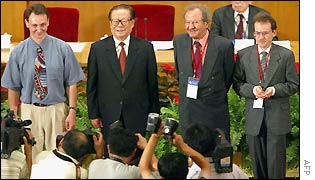
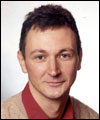
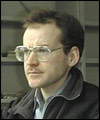
Mathematicians from France and the United States have been awarded the world's top maths prize, the Fields Medal. The medal is given every four years, and is regarded as the maths equivalent of the Nobel Prizes. Laurent Lafforgue and Vladimir Voevodsky won the medal for their work on some of the big current ideas in mathematics.
In the audience was John Nash, the genius whose life formed the basis of the Russell Crowe movie "A Beautiful Mind". Gold and glory The Fields Medal is named after John Fields, a Canadian mathematician who established the award in the 1930s. Made of gold, the medals bear the inscription "Congregati ex toto orbe mathematici ob scripta insignia tribuere" - "the mathematicians assembled here from all over the world pay tribute for outstanding work". The Fields Medal is different from the Nobel Prizes in one important aspect - it can only be given to researchers under the age of forty. "This saves us a lot of trouble," explained Professor John Coates of Cambridge University, UK, a former member of the international committee which makes the award. "With the Nobels many of the old men on the committee are possible winners themselves, but that's not the case with the Fields." Big sums This year's winners both work on wide-ranging, ambitious areas of mathematics.
This approach has yielded dividends in the past, most notably in the mid-1990s when researcher Andrew Wiles used a seemingly unrelated field of maths to solve Fermat's Last Theorem, a feat which had eluded mathematicians for over 300 years. Lafforgue, aged thirty-five, works on the "Langlands program", a concept which seeks an underlying unity among various mathematical disciplines. He is a Professor at the Institut des Hautes Etudes Scientifiques, or Institute for Advanced Scientific Studies, near Paris. Voevodsky, a year older, specialises in abstract algebraic geometry, linking the science of numbers to the science of shapes. He was born in Russia and studied at Moscow State University before moving to the USA. He is currently a Professor at the Institute for Advanced Study in Princeton, New Jersey. "They are both working with vast mathematical machinery," commented John Coates. "They are both very good choices." | | See also:  09 Aug 02 | South Asia 23 Jul 02 | Science/Nature 14 Mar 02 | Science/Nature 19 Nov 99 | Science/Nature Internet links: The BBC is not responsible for the content of external internet sites Top Science/Nature stories now: Links to more Science/Nature stories are at the foot of the page. | |||||||||||||||||||||||||||||||||||||||||||||||||||||||||||||||||||||||||||||||||||||||||||||||||||||||||||||||||||||||||||||||||||||||||||||||
| |
|  E-mail this story to a friend E-mail this story to a friend |
| |
| Links to more Science/Nature stories |
| | | ||
 | ||||
 | | Back to top
| ||
| ---------------------------------------------------------------------------------- To BBC Sport>> | To BBC Weather>> | To BBC World Service>> ---------------------------------------------------------------------------------- © MMIII | News Sources | Privacy |