|
 |
 | | | | | | ||||||||||||||||||||||||||||||||||||||||||||||||||||||||||||||||||||||||||||||||||||||||||||||||||||||||||||||||||||||||||||||||||||||||||||||||
| | | You are in: Science/Nature | ||||||||||||||||||||||||||||||||||||||||||||||||||||||||||||||||||||||||||||||||||||||||||||||||||||||||||||||||||||||||||||||||||||||||||||||||||
|
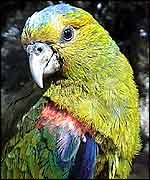
| | Tuesday, 20 August, 2002, 14:59 GMT 15:59 UK Parrots return after nine decades 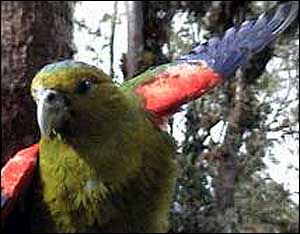 Survivor: The indigo-winged parrot back after 91 years
Ornithologists spotted a flock of the parrots on 28 July on an Andean volcano in central Colombia. The species was first recorded in the region in 1911, but since then there have been no confirmed sightings. Conservationists hope the parrots' rediscovery may be the prelude to safeguarding their future.
An unconfirmed sighting in 1989 was thought at the time to be reliable, but ornithologists are now doubtful. They know nothing about the species' feeding and breeding habits. The leader of the team which saw the flock in July as they headed 3,000m up the volcano is Jorge Velasquez. He had been searching the Andean forests in vain for months with a colleague, Alonso Quevedo. Jorge Velasquez described the moment when they heard the birds: "Suddenly, a parrot's sharp cry pierced the gloom of the cloudy forest, and was immediately joined by a chorus of other birds in the mist. Flying free "The ghostly silhouettes of fourteen parrots spiralled downwards to alight in the trees nearby. "In those few seconds, brilliant flashes of emerald greens, cobalt blues and scarlet reds flashed before us and we thought we were witnessing a miracle from heaven, as one of the world's rarest birds descended before our very eyes." The team won a gold award in the 2002 BP Conservation Programme, a partnership of BP, BirdLife International and Fauna and Flora International.
Dr Robert Prys-Jones, of the Natural History Museum in London, said the team had made a remarkable find, "one of the greatest wildlife discoveries in Colombia". The area where the parrots were found is said to be severely threatened by forest clearance for firewood, agriculture, road construction and cattle grazing. Managed recovery Dr Nigel Collar of BirdLife told BBC News Online: "The indigo-winged parrot is unquestionably an incredibly rare bird, and its reappearance is extremely welcome. "Species are being rediscovered fairly regularly as people get into more and more remote areas. "I hope this one can be re-established - I never give up hope till the last one has gone. "All it needs is a bit of intervention and management, and a bird like a parrot can be turned round relatively quiclly." Images by Jorge Velasquez, copyright Fundacion ProAves-Colombia | | See also:  29 Apr 02 | Science/Nature 20 Mar 02 | Science/Nature 05 Mar 02 | Science/Nature Internet links: The BBC is not responsible for the content of external internet sites Top Science/Nature stories now: Links to more Science/Nature stories are at the foot of the page. | ||||||||||||||||||||||||||||||||||||||||||||||||||||||||||||||||||||||||||||||||||||||||||||||||||||||||||||||||||||||||||||||||||||||||||||||||
| |
|  E-mail this story to a friend E-mail this story to a friend |
| |
| Links to more Science/Nature stories |
| | | ||
 | ||||
 | | Back to top
| ||
| ---------------------------------------------------------------------------------- To BBC Sport>> | To BBC Weather>> | To BBC World Service>> ---------------------------------------------------------------------------------- © MMIII | News Sources | Privacy |