
|
 |
 | | | | | | |||||||||||||||||||||||||||||||||||||||||||||||||||||||||||||||||||||||||||||||||||||||||||||||||||||||||||||||||||||||||||||||||||||||||||||||||||||||||||||||||||||||
| | | You are in: Science/Nature | |||||||||||||||||||||||||||||||||||||||||||||||||||||||||||||||||||||||||||||||||||||||||||||||||||||||||||||||||||||||||||||||||||||||||||||||||||||||||||||||||||||||||
|
| | Friday, 16 August, 2002, 07:48 GMT 08:48 UK Experimental jet 'a success' 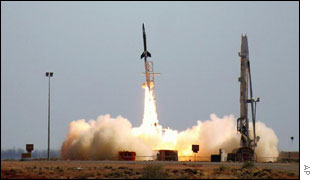 The craft reached 7.6 times the speed of sound Researchers in Australia say they have achieved supersonic ignition in the atmosphere for the first time with the successful test of an experimental hypersonic aircraft.
The scramjet works by using air in the atmosphere to burn its rocket fuel rather than carrying its own oxidant - thus reducing the weight of the craft. The project leader, Allan Paull, said the craft had reached 7.6 times the speed of sound. "Our honest understanding from preliminary data is that the experiment worked," he said. Correspondents say the scramjet raises the possibility of a flight between London and Sydney in only two hours, though it is more likely to revolutionise the launch of small space payloads by dramatically lowering costs. The hypersonic engine was strapped on to a rocket and blasted more than 300 kilometres (190 miles) into the sky. Scientists were hoping the engine would work under its own power on its descent to Earth - reaching a target speed of Mach 7.6 just before hitting the ground. Having examined all the data, they now believe the experiment worked. More efficient The first ever free flight of a scramjet was conducted by the US Defense Advanced Research Projects Agency (Darpa) almost a year ago. But its conceptual engine was fired from a gun in an enclosed facility on the ground.
What was left of the hypersonic engine crashed into the desert 400 km (250 miles) west of Woomera. The technology was first proposed in the 1950s and 60s. Scramjets are much lighter than conventional engines of equivalent power. Most of their oxidant, in the form of oxygen, comes from the atmosphere. This is drawn into the engine, compressed and mixed explosively with a small amount of hydrogen. However, this process only starts happening efficiently at Mach 5, which means conventional rocket technology is required to get the scramjets to their critical operating speed. Whilst much of the attention surrounding scramjets has focussed on the shorter journey times they could bring to long-haul passenger air travel, the first applications are likely to be in the space delivery business - launching small payloads, such as communications satellites, into orbit. 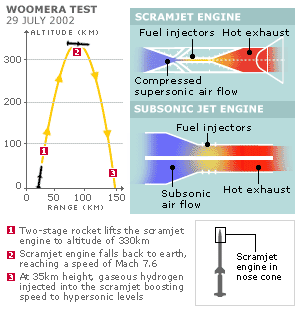 | |
See also:  30 Jul 02 | Science/Nature 30 Jul 02 | Science/Nature 06 Sep 01 | Science/Nature 04 Jun 01 | Science/Nature 25 May 01 | Science/Nature 31 Oct 01 | Science/Nature 30 Oct 01 | Science/Nature Internet links: The BBC is not responsible for the content of external internet sites Top Science/Nature stories now: Links to more Science/Nature stories are at the foot of the page. | |||||||||||||||||||||||||||||||||||||||||||||||||||||||||||||||||||||||||||||||||||||||||||||||||||||||||||||||||||||||||||||||||||||||||||||||||||||||||||||||||||||||
| |
|  E-mail this story to a friend E-mail this story to a friend |
| |
| Links to more Science/Nature stories |
| | | ||
 | ||||
 | | Back to top
| ||
| ---------------------------------------------------------------------------------- To BBC Sport>> | To BBC Weather>> | To BBC World Service>> ---------------------------------------------------------------------------------- © MMIII | News Sources | Privacy |






