|
 |
 | | | | | | |||||||||||||||||||||||||||||||||||||||||||||||||||||||||||||||||||||||||||||||||||||||||||||||||||||||||||||||||||||||||||||||||||||||||||||||||
| | | You are in: Science/Nature | |||||||||||||||||||||||||||||||||||||||||||||||||||||||||||||||||||||||||||||||||||||||||||||||||||||||||||||||||||||||||||||||||||||||||||||||||||
|
| | Wednesday, 14 August, 2002, 11:28 GMT 12:28 UK Asian rhinos face new threat 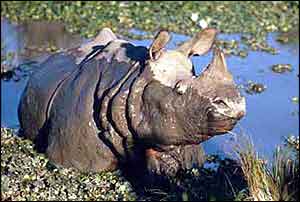 A one-horned rhino enjoys a wallow: Poachers are moving in (Image: WWF-CANON/J Rey-Millet)
With probably fewer than 3,000 rhinos in the region, almost 100 have been killed in the last four years. The campaigners say the UK should do more to suppress demand for rhino products. The animals are also under pressure as their home areas are cleared for farming and timber. The alert comes from WWF, the global conservation campaign, in a report, Wanted Alive: Asian rhinos in the wild.
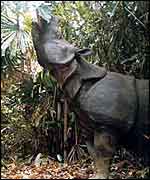
WWF says the Javan rhino is "on the brink of extinction" in Vietnam, which has probably fewer than eight animals. Doubtful recovery The species is found also in Indonesia, where the survivors number no more than 60.
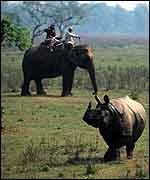
But WWF says the greater one-horned rhino has been "a terrific conservation success story of the last century". From only twelve animals a hundred years ago, the species has now recovered to about 2,400 in India and Nepal. Yet the 86 animals killed by poachers in the last four years - a conservative figure - have died mainly in the two countries. WWF says they were shot, speared, poisoned, electrocuted or trapped in pits. It says: "The poachers are mainly in pursuit of rhino horn and other body parts, used in traditional Asian medicine systems to treat a wide range of illnesses." Squeezed out Stuart Chapman of WWF-UK said: "Recently 15 rhinos were killed in a five-month spate of poaching in Nepal. "The Asian rhino's future hangs in the balance unless we reduce the persistent demand for its horn.
"The UK needs to tighten its wildlife trade laws to help stamp out the demand for illegal wildlife products." More pressure comes as the rhinos' habitat is converted for agriculture, logging and commercial plantations of crops such as oil palm, coffee, rubber and cocoa. Loth to reproduce WWF says clearing the land makes the rhinos more accessible to the poachers: they are also vulnerable to genetic threats, like inbreeding, and to natural disasters and disease. It has launched an Asian Rhino and Elephant Action Strategy (Areas) to protect both animals. The strategy's aims include safeguarding and linking networks of protected areas with corridors which allow the animals to migrate in safety. Stuart Chapman told BBC News Online: "The plight of the Sumatran rhinos is catastrophic - they're in a tailspin. "They've fallen from about 600 animals to 300 in under 10 years. "With that rate of decline in a slow-breeding species, they'll be highly vulnerable to extinction unless we can reverse it soon." | | See also:  08 May 02 | Science/Nature 26 Mar 02 | South Asia 18 Feb 02 | Science/Nature 11 Oct 01 | Science/Nature Internet links: The BBC is not responsible for the content of external internet sites Top Science/Nature stories now: Links to more Science/Nature stories are at the foot of the page. | |||||||||||||||||||||||||||||||||||||||||||||||||||||||||||||||||||||||||||||||||||||||||||||||||||||||||||||||||||||||||||||||||||||||||||||||||
| |
|  E-mail this story to a friend E-mail this story to a friend |
| |
| Links to more Science/Nature stories |
| | | ||
 | ||||
 | | Back to top
| ||
| ---------------------------------------------------------------------------------- To BBC Sport>> | To BBC Weather>> | To BBC World Service>> ---------------------------------------------------------------------------------- © MMIII | News Sources | Privacy |