|
 |
 | | | | | | ||||||||||||||||||||||||||||||||||||||||||||||||||||||||||||||||||||||||||||||||||||||||||||||||||||||||||||||||||||||||||||||||||||||||||||||||||||||||||||||||||||||||||||||||||||||||
| | | You are in: Science/Nature | ||||||||||||||||||||||||||||||||||||||||||||||||||||||||||||||||||||||||||||||||||||||||||||||||||||||||||||||||||||||||||||||||||||||||||||||||||||||||||||||||||||||||||||||||||||||||||
|
| | Sunday, 11 August, 2002, 16:58 GMT 17:58 UK Asian haze poses 'widespread threat' 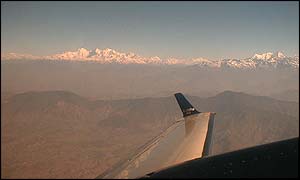 Brown cloud reaching up to the top of the Himalayas
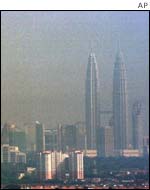
They say the region's brown haze affects rainfall and farming, and puts hundreds of thousands of people in jeopardy. They fear the pollution's impacts will worsen over the next 30 years.
The scientists, working for the UN Environment Programme (Unep), have based their work on data gathered by the Indian Ocean Experiment (Indoex), supplemented by satellite readings and computer modelling. The team includes Professors V Ramanathan of the Scripps Institution of Oceanography, US, Paul Crutzen, of the Max Planck Institute for Chemistry, Germany, and A P Mitra, of India's National Physical Laboratory. The head of Unep, Dr Klaus Toepfer, told journalists in London the threat was real. He said: "The haze is the result of forest fires, the burning of agricultural wastes, dramatic increases in the burning of fossil fuels in vehicles, industries and power stations, and emissions from millions of inefficient cookers burning wood, cow dung and other 'bio-fuels'." Monsoon warning These initial findings clearly indicate that this growing cocktail of soot, particles, aerosols and other pollutants is becoming a major environmental hazard for Asia. "There are also global implications, not least because a pollution parcel like this, which stretches three kilometres (two miles) high, can travel halfway round the globe in a week."
They believe this is altering the winter monsoon, sharply cutting rainfall over north-western Asia and increasing it further east. The models they used suggest the haze may reduce rain and snow over north-west India, Pakistan, Afghanistan and neighbouring parts of western central Asia by between 20% and 40%. 'Premature deaths' The report's authors say the reduction in solar energy reaching the Earth's surface also means less oceanic evaporation of the moisture which controls summer rainfall. They estimate that the haze could be reducing India's winter rice harvest by up to 10%. And they fear "several hundreds of thousands" of premature deaths from haze-related respiratory diseases. The south Asian region judged to be especially affected includes Afghanistan, Bangladesh, Bhutan, India, the Maldives, Nepal, Pakistan and Sri Lanka. But Unep says the haze problem is at least comparable, and perhaps worse, in south-east and eastern Asia. The report, commissioned by Unep, was prepared by the Center for Clouds, Chemistry and Climate. Main image courtesy Unep. | |
See also:  10 Jun 02 | Asia-Pacific 10 Jul 01 | Asia-Pacific 14 Aug 99 | Asia-Pacific Internet links: The BBC is not responsible for the content of external internet sites Top Science/Nature stories now: Links to more Science/Nature stories are at the foot of the page. | ||||||||||||||||||||||||||||||||||||||||||||||||||||||||||||||||||||||||||||||||||||||||||||||||||||||||||||||||||||||||||||||||||||||||||||||||||||||||||||||||||||||||||||||||||||||||
| |
|  E-mail this story to a friend E-mail this story to a friend |
| |
| Links to more Science/Nature stories |
| | | ||
 | ||||
 | | Back to top
| ||
| ---------------------------------------------------------------------------------- To BBC Sport>> | To BBC Weather>> | To BBC World Service>> ---------------------------------------------------------------------------------- © MMIII | News Sources | Privacy |