
|
 |
 | | | | | | |||||||||||||||||||||||||||||||||||||||||||||||||||||||||||||||||||||||||||||||||||||||||||||||||||||||||||||||||||||||||||||||||||||||||||||||
| | | You are in: Science/Nature | |||||||||||||||||||||||||||||||||||||||||||||||||||||||||||||||||||||||||||||||||||||||||||||||||||||||||||||||||||||||||||||||||||||||||||||||||
|
| | Wednesday, 24 July, 2002, 12:45 GMT 13:45 UK Could an asteroid be deflected? 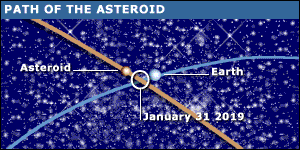 Near miss or impact? It is too early to tell
In the very unlikely event that 2002 NT7 did turn out to be on a direct collision course, astronomers would have plenty of time to make accurate predictions about the time and location of the impact, and, with luck, to come up with a plan to deflect it. "It's not like dealing with space debris, where the object may be irregularly shaped and tumbling and where even hours before impact you don't know exactly when and where it's going to come down," said Professor Bailey. "With an asteroid impact, it's more like when Shoemaker-Levy 9 hit Jupiter. "There we were able to calculate the exact time of impact almost to the second," he said. Asteroid rendezvous In the most unlikely event that it were on collision course, there would be no more important project than to try to deflect it, he added. "It orbits roughly every 2.2 years, so there would be several opportunities to rendezvous with it. "There'd be opportunity to assess what it's made of, find out whether it's made of rock and ice, or iron, whether it's a rubble pile or a solid body. "It would make sense to put a beacon on it so that you'd then have a very precise knowledge of its orbit," Professor Bailey said. Few detailed plans to deflect an incoming asteroid have been devised, but given years of warning and an asteroid which orbits relatively frequently, giving the rock a small nudge early on might do the trick. "Relatively benign deviations imparted years ahead are magnified each time the asteroid goes around the Sun and would hopefully be enough to turn a projected impact into a near miss. Solar option "One could even imagine landing on it and firing a rocket engine. "People have talked about some kind of a mass driver, where pieces of rock would somehow be broken off the asteroid and cast off into space. "Even a solar sail might be a possibility," Professor Bailey told BBC News Online. Such a device would "catch" the small, but constant pressure of sunlight to drive the asteroid out of harm's way. | | See also:  24 Jul 02 | Science/Nature 15 Jul 02 | Science/Nature 05 Apr 02 | Science/Nature Internet links: The BBC is not responsible for the content of external internet sites Top Science/Nature stories now: Links to more Science/Nature stories are at the foot of the page. | |||||||||||||||||||||||||||||||||||||||||||||||||||||||||||||||||||||||||||||||||||||||||||||||||||||||||||||||||||||||||||||||||||||||||||||||
| |
|  E-mail this story to a friend E-mail this story to a friend |
| |
| Links to more Science/Nature stories |
| | | ||
 | ||||
 | | Back to top
| ||
| ---------------------------------------------------------------------------------- To BBC Sport>> | To BBC Weather>> | To BBC World Service>> ---------------------------------------------------------------------------------- © MMIII | News Sources | Privacy |






