|
 |
 | | | | | | ||||||||||||||||||||||||||||||||||||||||||||||||||||||||||||||||||||||||||||||||||||||||||||||||||||||||||||||||||||||||||||||||||||||||||||||
| | | You are in: Science/Nature | ||||||||||||||||||||||||||||||||||||||||||||||||||||||||||||||||||||||||||||||||||||||||||||||||||||||||||||||||||||||||||||||||||||||||||||||||
|
| | Friday, 11 October, 2002, 14:12 GMT 15:12 UK Humanity in my hands 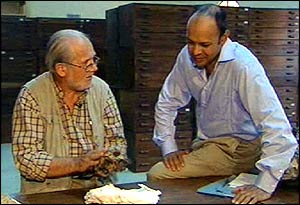 He had to wait - he kept me waiting
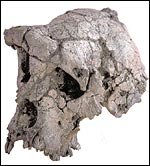
But when I heard about the discovery of what's been described as our most ancient ancestor, I knew that this was one of the most important scientific stories I'd ever cover. It's important because it gives us a glimpse into that crucial moment in time when some apes evolved into human-like creatures. So off I went on the first plane to Chad. Long wait On arrival, I met the lead researcher, Professor Michel Brunet. He's an engaging and slightly eccentric character, a latter-day Indiana Jones if you like. He'd been searching for clues to our origins for 25 years, always a risk-taker, always going to unfashionable and uncomfortable areas, most recently exploring the harsh and blisteringly hot deserts of Chad. Most of the important finds had been discovered in east and southern Africa, but Professor Brunet chose to go to Chad because he felt there was something extraordinary to be found there. As I enquired about the location of the skull, he teasingly said "don't worry - in time, in time - I've waited 25 years for the skull, I'm sure you can wait another two hours". And then he slammed the door and went off to visit the President of Chad no less. Tissue paper On his return, and true to his word, he showed me his incredible find, carrying it in white tissue paper like a babe in swaddling. He carefully brought it over to me. I gasped as he unwrapped it and my excitement grew as I realised I was one of the few people in the world to have seen an object of such overwhelming significance. I asked him what he felt about the discovery and he told me that it was not only an insight into the story of humanity but also a human story - his story. He's spent his entire working life searching and now in his hand was a find that could be the key to our human lineage. I put it to him that some critics had said they weren't convinced that the skull was an early human. Straight line His only answer was a Gallic shrug. I was working my way to asking him whether the object could possibly be the fabled "missing link". I was wary because anthropologists don't ever say those words. The term has been discredited by false alarms and also an emerging view that there was no straight line between apes and humans but instead a multitude of human-like creatures evolving throughout the African continent. It's a concept that Brunet's find confirms. But even so, theoretically, if we had enough fossil evidence to build up a family tree, we could trace our origins back to a creature that was the first human-like animal. So would Brunet rule out the possibility that his discovery would one day prove to be the missing link? "It's possible," he said, then gave a mischievous laugh, and then left with a wink - on his way to see the Chadian Prime Minister. | | See also:  10 Jul 02 | Science/Nature 10 Jul 02 | Science/Nature 10 Jul 02 | Science/Nature 21 Mar 01 | Science/Nature 07 Feb 01 | Science/Nature Top Science/Nature stories now: Links to more Science/Nature stories are at the foot of the page. | ||||||||||||||||||||||||||||||||||||||||||||||||||||||||||||||||||||||||||||||||||||||||||||||||||||||||||||||||||||||||||||||||||||||||||||||
| |
|  E-mail this story to a friend E-mail this story to a friend |
| |
| Links to more Science/Nature stories |
| | | ||
 | ||||
 | | Back to top
| ||
| ---------------------------------------------------------------------------------- To BBC Sport>> | To BBC Weather>> | To BBC World Service>> ---------------------------------------------------------------------------------- © MMIII | News Sources | Privacy |