|
 |
 | | | | | | ||||||||||||||||||||||||||||||||||||||||||||||||||||||||||||||||||||||||||||||||||||||||||||||||||||||||||||||||||||||||||||||||||||||||||||||||||||||||||||||||||||||||||||||||
| | | You are in: Science/Nature | ||||||||||||||||||||||||||||||||||||||||||||||||||||||||||||||||||||||||||||||||||||||||||||||||||||||||||||||||||||||||||||||||||||||||||||||||||||||||||||||||||||||||||||||||||
|
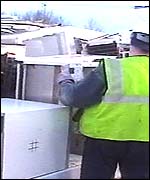
| | Thursday, 20 June, 2002, 06:52 GMT 07:52 UK �40m cost of fridge 'mountain' Old fridges are now banned from household tips
About a million old appliances have had to be stockpiled at local authority dumps because the correct technology is not in place to recycle them properly. The House of Commons Environment Committee says the debacle will cost the taxpayer �40m. It criticises the government for not acting quickly enough and European bureaucrats for not explaining clearly enough the requirements of their recycling initiative. Special equipment Any fridge which is six years old is likely to have an insulation lining impregnated with CFCs (chlorofluorocarbons), the chemicals which have been blamed for thinning the ozone layer over the South and North Poles.
This means the appliances can no longer be exported to developing countries or buried underground - the fate that once befell most of the two and a half million fridges Britons throw out every year. But treating them properly needs specialist kit. The UK only has about one tenth of the recycling capacity needed, and failed to build more in time for the 1 January deadline for the introduction of the new regulation. 'Lack of clarity' Any fridge disposed of since the beginning of 2002 has either been stacked by a local council or sent to an approved facility abroad - both expensive options. Thursday's report chronicles how the regulation emerged from the European Commission and how it confused the British Government.
The Commons committee reaches this conclusion: "Whilst the European Commission must accept some blame for the lack of clarity, the overwhelming responsibility for mishandling the implementation of the regulation lies with the government." It goes on to criticise government officials: "They argued about the phrase 'if practicable' when in fact the practicality of dealing with the foam was abundantly demonstrated by practice in other European countries." A spokesman for the Department for Environment, Food and Rural Affairs said: "We welcome the select committee's report, and the prominence it gives to the lessons identified by the government in its submission to the committee. "We are already taking forward action on many of these lessons." Clearing the mountain Commenting on the financial fallout from the fridge fiasco, the report added: "This debacle will cost the UK around �40m, a cost which would otherwise not have been incurred." There are now at least one million fridges piled up across the country, and because of this backlog many local authorities will charge consumers �40 to take away an old appliance. More dedicated disposal and recycling plants are being built and the backlog should be cleared by the end of 2003. In Newport, South Wales, the stockpile has grown to 30,000 in six months. Stephen Davison, of Newport City Council, told BBC Breakfast: "We only had a lead-in time of three or four months to find places to dispose of fridges. "Clearly there were no places to dispose of them fully and we had to put them in store, but it's been very difficult to find sites." | |
See also:  20 Jun 02 | UK Politics 16 Mar 02 | England 05 Dec 01 | UK 23 Nov 01 | UK Internet links: The BBC is not responsible for the content of external internet sites Top Science/Nature stories now: Links to more Science/Nature stories are at the foot of the page. | ||||||||||||||||||||||||||||||||||||||||||||||||||||||||||||||||||||||||||||||||||||||||||||||||||||||||||||||||||||||||||||||||||||||||||||||||||||||||||||||||||||||||||||||||
| |
|  E-mail this story to a friend E-mail this story to a friend |
| |
| Links to more Science/Nature stories |
| | | ||
 | ||||
 | | Back to top
| ||
| ---------------------------------------------------------------------------------- To BBC Sport>> | To BBC Weather>> | To BBC World Service>> ---------------------------------------------------------------------------------- © MMIII | News Sources | Privacy |