|
 |
 | | | | | | ||||||||||||||||||||||||||||||||||||||||||||||||||||||||||||||||||||||||||||||||||||||||||||||||||||||||||||||||||||||||||||||||||||||||||||||||
| | | You are in: Science/Nature | ||||||||||||||||||||||||||||||||||||||||||||||||||||||||||||||||||||||||||||||||||||||||||||||||||||||||||||||||||||||||||||||||||||||||||||||||||
|
| | Wednesday, 19 June, 2002, 18:17 GMT 19:17 UK Die-cast future for computer chips Twice as fast in 18 months Image: Intel
Fabs - the fabrication plants where chips are made - are vastly expensive, with companies like Intel and AMD spending billions of dollars to keep up the pace of improvement expected by consumers. But now Professor Stephen Chou of Princeton University says he has a way of stamping out chips with a die which could keep Moore's Law in operation for decades and maybe even beat it. "We're probably 20 years ahead of the curve," he told BBC News Online. Billion-pound business Standard chip production involves printing a tiny intricate pattern of transistors and wiring on to a silicon wafer.
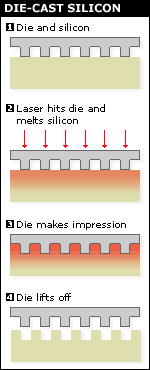
Because the individual features of the chip are so tiny, as narrow as 130 nanometres (millionths of a millimetre) in current chips, the printing machine can cost well over �10m. An entire chip factory can cost in the order of a billion pounds. The etching and image removal stages of the manufacturing process involve use of substantial amounts of chemicals which can place a load on the environment. Chemical-free process Professor Chou's process, described in the scientific journal Nature, involves a simple mechanical printing of the features of the chip. A quartz die is pressed against the silicon, which is melted briefly by a laser.
If he manages to put his invention into practice, it will enable chip builders to pack 100 times as many components into the same area of silicon. The more densely packed the components on a chip, the faster the chip can run, because the signals passing through its circuitry arrive more quickly. Professor Chou's process has the potential to be cleaner, too. "In our process there is no waste. It's a purely physical process with no chemicals," he said. Moore's Law The observation that the computing power which can be incorporated in a given sized piece of silicon doubles roughly every 18 months was put forward by the head of Intel, Gordon Moore, in 1965. It has remained true ever since, despite countless predictions that chip builders would soon reach the limits of technology. Today's chip builders are beginning to approach the physical limits of the current printing process, as the size of components they need to print falls beneath the wavelength of light. They are turning towards even more expensive printing machines, using electron beams and extreme ultra-violet light. Professor Chou's process could eventually save them the trouble. | | See also:  28 Feb 02 | Science/Nature 18 Oct 01 | Science/Nature 26 Jun 01 | Science/Nature Internet links: The BBC is not responsible for the content of external internet sites Top Science/Nature stories now: Links to more Science/Nature stories are at the foot of the page. | ||||||||||||||||||||||||||||||||||||||||||||||||||||||||||||||||||||||||||||||||||||||||||||||||||||||||||||||||||||||||||||||||||||||||||||||||
| |
|  E-mail this story to a friend E-mail this story to a friend |
| |
| Links to more Science/Nature stories |
| | | ||
 | ||||
 | | Back to top
| ||
| ---------------------------------------------------------------------------------- To BBC Sport>> | To BBC Weather>> | To BBC World Service>> ---------------------------------------------------------------------------------- © MMIII | News Sources | Privacy |