|
 |
 | | | | | | |||||||||||||||||||||||||||||||||||||||||||||||||||||||||||||||||||||||||||||||||||||||||||||||||||||||||||||||||||||||||||||||||||||||||||||||||
| | | You are in: Science/Nature | |||||||||||||||||||||||||||||||||||||||||||||||||||||||||||||||||||||||||||||||||||||||||||||||||||||||||||||||||||||||||||||||||||||||||||||||||||
|
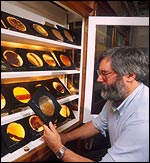
| | Friday, 14 June, 2002, 13:20 GMT 14:20 UK Tapeworm evolution revealed Dr Eric Hoberg: Looking to pre-human history
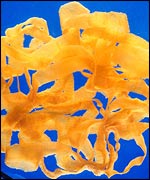
The research reveals that the three species of tapeworm that infect humans have been bothering us for millions of years. When modern man emigrated from Africa in the past million years or so, he took the tapeworm with him. Researchers believe that an improved understanding of the origins of tapeworms will help them combat the diseases the parasites cause. Intriguing parasites Tapeworms occur worldwide, causing malnutrition and sickness and even sometimes the death of their hosts. Yet despite their medical and economic significance, relatively little has been known about where they came from and when they first started infecting humans.
According to Dr Eric Hoberg, of the US Agricultural Research Service, so-called Taenia tapeworms can range in size from less than a millimetre to over 20 metres. They are internal parasites infecting all types of mammals. They have complex lifestyles. They always require a herbivore as one intermediate host and a carnivore as their final host. The final host is the one in which the adult tapeworm lives. Present and past Three species of tapeworm, T. solium, T. saginata and T. asiatica infect only humans. For the latter two, their life cycles depend upon domesticated cattle and swine being their intermediate hosts. T. solium is often found in raw or undercooked pork and is therefore sometimes called the pork tapeworm. It lives in the human intestine. Each segment, or proglottid, may contain as many as 40,000 eggs. It is hermaphroditic, meaning that male and female sexual organs occur in the same individual. Often, it is self-fertilising. T. solium has a very broad range of intermediate hosts, including dogs. Dr Hoberg is the curator of the US National Parasite Collection in Beltsville, Maryland. It is one of the world's largest collections of human and animal parasites - several million specimens. Dr Hoberg has used the vast collection of parasites to examine evolutionary relationships between hosts and parasites. "The past is the key to the present," he says. 'Tapeworms tell a story' "Traditionally, scientists believed that about 10,000 years ago - coincidental with the domestication of tapeworm hosts such as cattle, swine and dogs - three species of tapeworms started infecting humans," Dr Hoberg told BBC News Online. But detailed study of the characteristics of the three known species of tapeworms that infect man, and a close look at their genetic code, turns all of these assumptions of their head.
He contends that ancient hominids became infected with these tapeworms after they shared food with hyenas or large cats, such as lions. "The tapeworms tell a story about the ecological linkage between hominids and large carnivores that shared prey on the savannas of Africa," he added. Scientists believe that T. saginata and T. asiatica are related and have an evolutionary lineage that is independent of T. solium and that they infected humans at different times in different ways. The researchers now think that T. saginata and T. asiatica diverged from a single ancestor species between 780,000 and 1.7 million years ago and that the ancestor tapeworm was already infecting humans. T. solium seems to have an even earlier relationship with humans, having been infecting us for perhaps 2.5 million years. So, the human-tapeworm partnership is a longstanding and successful one - for the tapeworm at least. | | See also:  21 Feb 02 | Health 19 Jul 00 | Science/Nature Internet links: The BBC is not responsible for the content of external internet sites Top Science/Nature stories now: Links to more Science/Nature stories are at the foot of the page. | |||||||||||||||||||||||||||||||||||||||||||||||||||||||||||||||||||||||||||||||||||||||||||||||||||||||||||||||||||||||||||||||||||||||||||||||||
| |
|  E-mail this story to a friend E-mail this story to a friend |
| |
| Links to more Science/Nature stories |
| | | ||
 | ||||
 | | Back to top
| ||
| ---------------------------------------------------------------------------------- To BBC Sport>> | To BBC Weather>> | To BBC World Service>> ---------------------------------------------------------------------------------- © MMIII | News Sources | Privacy |