|
 |
 | | | | | | |||||||||||||||||||||||||||||||||||||||||||||||||||||||||||||||||||||||||||||||||||||||||||||||||||||||||||||||||||||||||||||||||||||
| | | You are in: Science/Nature | |||||||||||||||||||||||||||||||||||||||||||||||||||||||||||||||||||||||||||||||||||||||||||||||||||||||||||||||||||||||||||||||||||||||
|
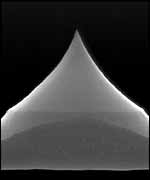
| | Wednesday, 12 June, 2002, 11:42 GMT 12:42 UK IBM's hot tip for data storage The array of tiny levers at the heart of the Millipede system IBM researchers have gone back to the pioneering days of computers to create a novel method of storing data. A miniaturised version of the punch cards used in some of the earliest computers has helped the company store the equivalent of 25 million pages of text in a space no bigger than a postage stamp. The technology, dubbed Millipede, records individual bits of data using tiny heated levers to make holes in a plastic film. Once refined, IBM researchers believe the Millipede technology could pack even more data in by punching out individual atoms. Small wonder At the heart of the prototype Millipede storage system is an array of 1,024 tiny V-shaped levers with very sharp tips. The whole array is only three millimetres square. Each lever is 0.5 micrometres thick and 70 micrometres long. One micrometre measures 1,000th of a millimetre. The tip at the point of the "V" on the levers is two micrometres long.
Bits are written by bringing the tip array close to the plastic film and briefly heating the tip of an individual lever to a temperature of 400 C. This melts the plastic film creating a small dent. The IBM researchers estimate that each individual dent is 50,000 times smaller than the full stop at the end of this sentence. Bits are read by again heating an individual tip, but this time only to 300 C. When a tip drops into a dent it cools slightly because some of the heat is conducted away revealing that a bit is below the tip. Bits are erased by using the heated tips to create smaller pits offset slightly from the original dents that effectively fill in the holes. Big applications Prototype versions of Millipede have gone through more than 100,000 write and erase cycles to prove the durability of the system. Complex electronics on two sides of the array make it possible to heat individual tips. Currently, data can be read and written from the device at a rate of a few kilobits per second, but the IBM researchers estimate that with refinement the system could boost this to megabits per second. The plastic film that data is written to and from is moved around beneath the lever array so each individual tip addresses an area 100 micrometres square. Using this set-up, the IBM researchers managed to cram 500 megabits of data into each three-millimetre square. This is approximately 20 times denser than can be achieved with the best magnetic storage systems today. Peter Vettiger, Millipede project leader, said the technology could mean mobile phones, watches and handheld computers could carry around vast amounts of data. | | See also:  19 Oct 01 | Science/Nature 12 Jun 01 | Science/Nature 21 Sep 01 | Science/Nature 02 Aug 01 | Science/Nature 05 Jun 02 | Science/Nature Internet links: The BBC is not responsible for the content of external internet sites Top Science/Nature stories now: Links to more Science/Nature stories are at the foot of the page. | |||||||||||||||||||||||||||||||||||||||||||||||||||||||||||||||||||||||||||||||||||||||||||||||||||||||||||||||||||||||||||||||||||||
| |
|  E-mail this story to a friend E-mail this story to a friend |
| |
| Links to more Science/Nature stories |
| | | ||
 | ||||
 | | Back to top
| ||
| ---------------------------------------------------------------------------------- To BBC Sport>> | To BBC Weather>> | To BBC World Service>> ---------------------------------------------------------------------------------- © MMIII | News Sources | Privacy |