|
 |
 | | | | | | |||||||||||||||||||||||||||||||||||||||||||||||||||||||||||||||||||||||||||||||||||||||||||||||||||||||||||||||||||||||||||||||||||||||||||||||
| | | You are in: Science/Nature | |||||||||||||||||||||||||||||||||||||||||||||||||||||||||||||||||||||||||||||||||||||||||||||||||||||||||||||||||||||||||||||||||||||||||||||||||
|
| | Thursday, 30 May, 2002, 09:59 GMT 10:59 UK Three nations to share Vostok ice core A thick layer of ice covers the lake
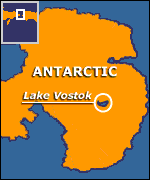
Glaciologists, geochemists and biologists will now be able to scrutinise an 11.7-metre (38.5-foot) segment from the bottom of the core - the part of the ice sample believed to be frozen water from the lake itself and not from the overlying ice sheet. If scientists do eventually find activity in the lake it will help them better understand where to look for extreme lifeforms elsewhere in our Solar System. Valuable insights The ice core was drilled in 1998, to learn more about the subglacial lake known to exist under the ice at Russia's Vostok Station, high on the polar plateau.
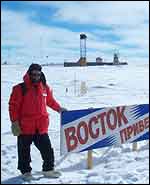
The ice samples were drilled at Vostok Station under the terms of a US, French and Russian scientific collaboration. The drill stopped about 100 metres (330 feet) above the water to avoid contamination of the lake. The ice core has already revealed fascinating information about the past 420,000 years of the Earth's climate. But there was disagreement about who would analyse the so-called basal ice - the ice at the lower end of the core that is probably frozen lake water. Future discussions The samples governed by the agreement were left at Vostok Station until the 2001-2002 austral summer, when arrangements were made to bring out some of the remaining ice from a storage trench. Now that researchers have agreed on the way the ice samples should be studied, they will be able to address major questions such as:
Plans for a future subglacial lake exploration and research are scheduled for discussion at an upcoming meeting in Shanghai, China in July. Eventually, scientists may go into the lake with a probe, but they need to find the technology that will allow them to do this without contaminating any unique ecosystem that may exist there. The American space agency (Nasa) is known to be very interested in the Vostok project because it could say something about how extreme lifeforms might exist on other planets or moons in our Solar System. | | See also:  23 May 01 | Science/Nature 10 Dec 99 | Science/Nature 27 Sep 99 | Science/Nature 22 Oct 99 | Science/Nature Internet links: The BBC is not responsible for the content of external internet sites Top Science/Nature stories now: Links to more Science/Nature stories are at the foot of the page. | |||||||||||||||||||||||||||||||||||||||||||||||||||||||||||||||||||||||||||||||||||||||||||||||||||||||||||||||||||||||||||||||||||||||||||||||
| |
|  E-mail this story to a friend E-mail this story to a friend |
| |
| Links to more Science/Nature stories |
| | | ||
 | ||||
 | | Back to top
| ||
| ---------------------------------------------------------------------------------- To BBC Sport>> | To BBC Weather>> | To BBC World Service>> ---------------------------------------------------------------------------------- © MMIII | News Sources | Privacy |