
|
 |
 | | | | | | |||||||||||||||||||||||||||||||||||||||||||||||||||||||||||||||||||||||||||||||||||||||||||||||||||||||||||||||||||||||||||||||||||||||||||||
| | | You are in: Science/Nature | |||||||||||||||||||||||||||||||||||||||||||||||||||||||||||||||||||||||||||||||||||||||||||||||||||||||||||||||||||||||||||||||||||||||||||||||
|
| | Friday, 24 May, 2002, 10:45 GMT 11:45 UK South Pole light show Curtains of light hover over the base
Like its more familiar counterpart, the Aurora Borealis, or Northern Lights, the southern version is caused by solar wind particles colliding with the Earth's upper atmosphere. The particles from the Sun are electrically charged and are drawn towards the Earth's magnetic poles. 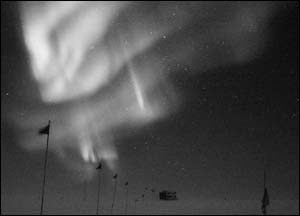 The Aurora Australis is much less frequently observed because few people live in Antarctica during the austral winter. Jonathan Berry, who is wintering at the South Pole station, took the photos against the backdrop of the months-long polar night. 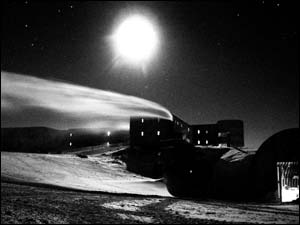 New buildings are being constructed The NSF conducts a wide variety of research in Antarctica and is currently rebuilding and modernizing the station. The images of the aurora and of the full Moon were taken over one wing of the new station and the existing geodesic dome at the South Pole. | | See also:  26 Oct 01 | Science/Nature 28 Sep 01 | Science/Nature 15 Feb 99 | Science/Nature Internet links: The BBC is not responsible for the content of external internet sites Top Science/Nature stories now: Links to more Science/Nature stories are at the foot of the page. | |||||||||||||||||||||||||||||||||||||||||||||||||||||||||||||||||||||||||||||||||||||||||||||||||||||||||||||||||||||||||||||||||||||||||||||
| |
|  E-mail this story to a friend E-mail this story to a friend |
| |
| Links to more Science/Nature stories |
| | | ||
 | ||||
 | | Back to top
| ||
| ---------------------------------------------------------------------------------- To BBC Sport>> | To BBC Weather>> | To BBC World Service>> ---------------------------------------------------------------------------------- © MMIII | News Sources | Privacy |





