|
 |
 | | | | | | |||||||||||||||||||||||||||||||||||||||||||||||||||||||||||||||||||||||||||||||||||||||||||||||||||||||||||||||||||||||||||||||||||||||||
| | | You are in: Science/Nature | |||||||||||||||||||||||||||||||||||||||||||||||||||||||||||||||||||||||||||||||||||||||||||||||||||||||||||||||||||||||||||||||||||||||||||
|
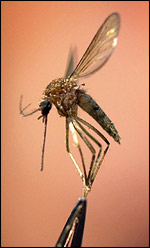
| | Wednesday, 22 May, 2002, 22:55 GMT 23:55 UK GM mosquitoes offer malaria hope Malaria blights the lives of millions of children Genetic engineers have taken the first step towards disarming mosquitoes that carry malaria. They have shown that in principle it is possible to alter the genetic make-up of the insects to stop them passing on the malaria parasite.
So far, it has only been carried out in the laboratory. There are many obstacles to be overcome if the approach is ever to be effective against human malaria in the wild. The new research was carried out by a joint German and US team. They used a form of malaria that affects mice. Commenting on the research in the scientific journal Nature, Gareth Lycett and Fotis Kafatos of the European Molecular Biology Laboratory in Heidelberg, Germany, said: "This is a proof of principle and as such is a milestone in malaria research. "Molecular biologists who study mosquitoes fully appreciate the length of the road ahead... the new work is exciting, nonetheless, and represents a new era of malaria-related research." Slow progress Malaria kills about two million people a year, most of them children in Africa.
In order to complete its life cycle, the parasite must enter the body of the mosquito and man. Current control strategies rely on spraying mosquitoes with insecticide. But scientists hope that one day they will be able to stop the spread of malaria by releasing genetically modified mosquitoes into the wild. The hope is that all mosquitoes would eventually become resistant to the parasite and it might be wiped out altogether. However, experts acknowledge that little progress has been made in the field, after many years of work. No precedent Dr Jo Lines of the UK's London School of Hygiene and Tropical Medicine told BBC News Online: "If we're going to transform wild mosquitoes so that they can't get malaria using genetically modified insects like this then we need two elements. "We need the gene that makes mosquitoes refractory to malarial infection and we need some mechanism, probably a genetic mechanism, that will carry the gene through the wild population automatically.
"In most insect control techniques, agriculture leads the way and there are no agricultural precedents for introducing desirable genes in this way." The latest research, published in Nature, involved creating a gene that interferes with the development of the parasite in the gut of the mosquito. The technique will eventually have to be tested on the human form of malaria and on wild rather than lab-bred mosquitoes. Moreover, the environmental implications of releasing genetically modified insects into the wild are unknown. Substantial numbers would have to be released so that they "swamped" the wild types, driving them out of existence. Such moves may well be opposed by environmentalists. | | See also:  28 Nov 01 | Health 06 Nov 01 | Science/Nature 25 Jul 00 | Science/Nature 05 Jul 00 | Health 21 Jun 00 | Science/Nature 09 Feb 01 | Science/Nature 26 Jul 99 | Medical notes Internet links: The BBC is not responsible for the content of external internet sites Top Science/Nature stories now: Links to more Science/Nature stories are at the foot of the page. | |||||||||||||||||||||||||||||||||||||||||||||||||||||||||||||||||||||||||||||||||||||||||||||||||||||||||||||||||||||||||||||||||||||||||
| |
|  E-mail this story to a friend E-mail this story to a friend |
| |
| Links to more Science/Nature stories |
| | | ||
 | ||||
 | | Back to top
| ||
| ---------------------------------------------------------------------------------- To BBC Sport>> | To BBC Weather>> | To BBC World Service>> ---------------------------------------------------------------------------------- © MMIII | News Sources | Privacy |