
|
 |
 | | | | | ||||||||||||||||||||||||||||||||||||||||||||
| | You are in: Sci/Tech | ||||||||||||||||||||||||||||||||||||||||||||||
 | | Monday, 11 March, 2002, 08:54 GMT Digital cameras save artworks 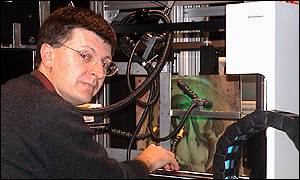 Dr Saunders has worked on the system for the 10 years
The National Gallery in London, UK, is leading the way in the use of this technology to make high quality digital reproductions of paintings. For the past 10 years, it has been developing a system to monitor tiny changes in the artworks and build up a precise record of the colour of paintings to see if there are any changes over time. "It means we can be a lot more confident that we will notice if there any changes going on in the paintings we are looking at," explained Dr David Saunders, conservation scientist at the National Gallery. "In the past, the potential for error was high," he told the BBC's Go Digital programme. Focus on colours During 2001, the National Gallery made digital copies of its major paintings. It is now aiming to digitise its entire collection by the end of this year.
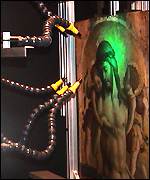
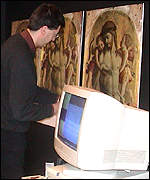
The job has fallen to Vasari (Visual Art System for Archiving and Retrieval of Images), which uses what is called a colourimetric imaging system. A special digital camera is used to capture each square metre of a painting's surface with a resolution of at least 10,000 by 10,000 pixels "The kind of camera you would buy in a shop measures just red, green and blue," said Dr Saunders. "But this doesn't really provide us with enough information. So the present system uses seven colour bands, like the seven colours of the rainbow." Invaluable record The imaging system enables researchers to monitor tiny changes in colour or surface texture without handling the painting.
Future images can then be compared to determine if there has been any damage caused to artworks in storage or when they are moved for exhibition. The system was developed in a project sponsored by the European Community. Several other galleries are adopting the technology, including the Uffizi Gallery in Florence, as it provides an invaluable record of the artwork for curators and art historians. | |
See also:  Internet links: The BBC is not responsible for the content of external internet sites Top Sci/Tech stories now:  Links to more Sci/Tech stories are at the foot of the page. | ||||||||||||||||||||||||||||||||||||||||||||
|
Links to more Sci/Tech stories |
 | | ^^ Back to top News Front Page | World | UK | UK Politics | Business | Sci/Tech | Health | Education | Entertainment | Talking Point | In Depth | AudioVideo ---------------------------------------------------------------------------------- To BBC Sport>> | To BBC Weather>> ---------------------------------------------------------------------------------- © MMIII|News Sources|Privacy  |








 E-mail this story to a friend