
|
 |
 | | | | | ||||||||||||||||||||||||||||||||||||||
| | You are in: Sci/Tech | ||||||||||||||||||||||||||||||||||||||||
 | | Friday, 15 February, 2002, 12:08 GMT First pet clone is a cat 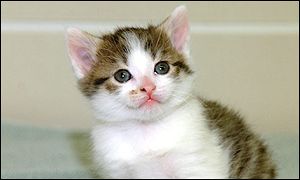 This is CopyCat: the first cat clone Researchers in Texas have cloned a domestic cat, producing a two-month-old kitten called CopyCat. The work is described in the scientific journal Nature and is the first time anyone has cloned a pet.
The cloned cat "appears healthy and energetic", say researchers at Texas A & M University. The Texas laboratory has already cloned a pig, bull and goat. Work is underway to clone a dog. Mark Westhusin, a member of the cloning team, said there were serious scientific reasons for cloning a cat. Dr Westhusin said: "Cats have a feline AIDS that is a good model for studying human AIDS." Ethical alarm Animal welfare groups have voiced concern over the experiments. Cats Protection, a UK feline welfare charity, said cloning was not the answer to replacing a lost pet. Chief Executive Derek Conway said: "The cloning of cats interferes with nature and raises serious questions concerning whether a pet can ever be truly replaced." Previous animal cloning experiments have concentrated on livestock and laboratory animals with a view to duplicating expensively created transgenic animals. Such animals have been genetically modified to make them produce valuable drugs in their milk or to make them potentially suitable for organ transplants. Rescue dogs CopyCat is the only surviving animal of 87 kitten embryos created by cloning. The success rate will have to improve if pet cloning is to become a reality. According to the Wall Street Journal, the cloning experiments were funded by an 81-year-old financier called John Sperling, who wants to charge wealthy pet owners to clone their animals. He was quoted by Reuters news agency as saying that he would also like to see cloning used for socially useful animals such as rescue dogs. | |
See also:  Internet links: The BBC is not responsible for the content of external internet sites Top Sci/Tech stories now:  Links to more Sci/Tech stories are at the foot of the page. | ||||||||||||||||||||||||||||||||||||||
|
Links to more Sci/Tech stories |
 | | ^^ Back to top News Front Page | World | UK | UK Politics | Business | Sci/Tech | Health | Education | Entertainment | Talking Point | In Depth | AudioVideo ---------------------------------------------------------------------------------- To BBC Sport>> | To BBC Weather>> ---------------------------------------------------------------------------------- © MMIII|News Sources|Privacy  |


 E-mail this story to a friend