|
 |
 | | | | | | ||||||||||||||||||||||||||||||||||||||||||||||||||||||||||||||||||||||||||||||||||||||||||||||||||||||||||||||||||||||||||||||||||||||||||||||||||||||||||||||||||||||||||||||||||||||||||||||||||||||||||||||||||||||||||||||||||
| | | You are in: Programmes: Working Lunch: Education | ||||||||||||||||||||||||||||||||||||||||||||||||||||||||||||||||||||||||||||||||||||||||||||||||||||||||||||||||||||||||||||||||||||||||||||||||||||||||||||||||||||||||||||||||||||||||||||||||||||||||||||||||||||||||||||||||||||
|
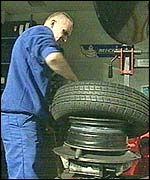
| |  Wednesday, 13 November, 2002, 14:23 GMT Wednesday, 13 November, 2002, 14:23 GMT Lunch Lesson 10 - Management buyouts 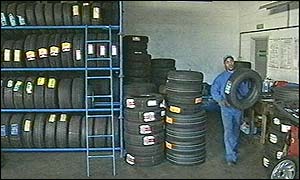 The buyout team have acquired 37 garages When we last met Ian Grant, the managing director of Just Tyres, it was October 2001 and he was working with the receiver, preparing the business for a sale or closure. Business had not been going well - debts were high, and the banks would not hold out any longer. They wanted to see something for their money, so the official receiver was called in. But while all this was happening, Ian Grant was actually hatching his own plan to buy the business back from the receiver and start again. Stripping the business The receiver closed 40 of the original 94 Just Tyres outlets almost immediately. The wholesale business was sold off, and the fleet billing division closed down.
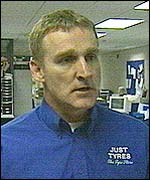
Trading name Ian, who was to take a 40% stake in the company, led the management buyout (MBO). He was supported by two colleagues, both putting in their own money, and the team raised additional finance from a business angel. Together they acquired 37 of the stores as well as the trading name, Just Tyres, from the receiver in November. Money worries Raising the finance was never going to be easy. It wasn't the fact that the company had gone into receivership that was the problem, or that Ian himself was seen as too much of a risk. The banks weren't interested in giving a new loan because there was no capital in the business to support a substantial investment from them. The money came from an outside investor, a business angel who Ian and his team found out about through contacts. Finding the right backer was important and Ian spoke to various different angels before settling on the current one. They had to weigh up the needs of all parties, including the receiver, and establish how much involvement and security the business angel wanted for his investment. Swift action Once Ian had decided on the management buyout, he knew he was under pressure to get things sorted quickly. While there's no timescale as such, the business risks going stale very quickly, and the receiver mustn't risk making the business worse than it already is.
The longer he leaves it, the harder that is. The receiver cannot afford to incur losses. "I have to keep the business alive, but it can't carry on indefinitely," explains William Tacon of Ernst and Young, the official receiver of Just Tyres. Success Ian's offer to the receiver was one of a number of alternatives reviewed. So why did the receiver go with the MBO? "It offered the most money and had the ability to proceed to sale with the money within the timescale. It's money that counts," says William. Ian also had the benefit of being on the inside, of knowing what the receiver was looking for. "It took a month from start to finish," says Ian. "If we'd taken any longer, the receiver would have closed the whole business down." The receiver is usually more receptive to a buyout if it can be moved through quickly, because it saves them money. They want to get in and out. Once the buyout was agreed, it was back to business as usual for Ian. But it was like starting over. The receiver had stripped the business of all its inventory, so one of the first tasks was to replenish stocks. Dealing with suppliers To do this, Ian had to go back to his former suppliers and persuade them to do business with him again. This wasn't easy after incurring debts with them when the company went into receivership. "It was a matter of trust," explains Ian. "I had to convince them that it was worth the risk of doing business with me again." Some suppliers stuck with them, others didn't. According to William Tacon, suppliers are used to receivership. Just Tyres is far from the first to suffer in this way. "There is recognition that this is part and parcel of doing business," says William. "Dealing with insolvency is just part of credit management and there is a good understanding of it." Staff morale Whilst all this was going on, morale amongst the staff was terrible. Branches had to close so there was a lot of uncertainty and there were redundancies.
Ian was aware of the feeling of insecurity among the staff, so he spent a lot of time travelling around the different sites, telling the staff what was happening and getting them behind the project. "I did a roadshow, speaking to staff and making notes of their questions. And I tried where possible to answer them," says Ian. Booming Now, a year later, business is very good. The company has just finished its first year trading. It has made good profits and business is looking good. Just Tyres is now starting to look for new sites, and may consider some acquisitions in the near future. It hopes that by this time next year it will have another six shops. One of the problems of the former failing business was that it had too many outlets. So won't it be making the same mistakes by opening up new businesses? "The problem before was that the company was just putting flags on the map, having a site in a town just for the sake of it," explains Ian. "Now we're making sure we have the right centres that will work well for us." Perseverance Going through the receivership process was one of the most trying things Ian has had to go through in his business career, and one that he definitely doesn't want to repeat.
"You've got to move quickly, understand what the receiver wants, and persevere. If you keep talking to enough people, eventually someone will lend you money." A new beginning Going into receivership doesn't have to mean the end for a business. If there is a good, fundamental business there, with the potential for profit, then it has a future. Often, it's the limited company that becomes the burden, saddled with debt, and poor management, but the underlying business is strong. "Just Tyres is a good example of where employment has been preserved and a viable business has emerged," says William Tacon of Ernst and Young. Student guide Working Lunch first met Ian Grant in October 2001 when the future was very uncertain. He was managing director of Just Tyres which had been put into receivership because it couldn't pay its bills. The receiver's job is to sell the business if it is viable or close it down if it isn't. Things had been bad but Ian Grant could see a way out. He worked with the receiver to create a business that would work. Back on the road? The receiver, who is often an accountant, has to work out what's possible. If a company is to survive, it must be kept going while in receivership: The receiver: The leaner, fitter business had a chance to succeed and Ian bought it. The bank wouldn't lend anything so the money came from: Ian owns 40% of Just Tyres. It now has 37 of the original 94 stores and the trading name - Just Tyres. This sort of purchase is known as a management buyout. Just think... Why was the business "leaner and fitter"? Why is it important to keep the cash flowing? Why was it more likely to succeed? What advantages and disadvantages do you think there are in a management buyout? The road to success? It wasn't a simple task to get the business rolling. Staff were fed up. They had lived through a long period of uncertainly and seen friends lose their jobs. Morale was very low. So what did Ian do? He went to visit the Just Tyres stores to talk to the staff, explain what was happening and encourage them to stay on side. Just think... Why do you think Ian decided to visit the stores? How did his visits motivate the staff? What effect do you think this would have on the business? Building trust Suppliers were suspicious. Some suppliers had lost money when the receivers were called in. The creditors had not been paid all they were owed. So what did Ian do? He had to try to persuade them that this was a new business that would work. It wouldn't get into trouble and would pay its bills. Some creditors were used to this situation. It's one of the risks of being in business. Some decided to stay with him, others didn't. Just think... Why do you think most suppliers were happy to go on selling to Just Tyres? Reaching the chequered flag? Just Tyres is now making a good profit. The cash flow is fine and staff and customers are happy. Ian is planning to open more stores but how do they know that they will get it right this time? Choosing the right location is critical so each one must be carefully selected. Just think... If you were opening a Just Tyres store, where would you put it? Explain why. How would costs affect your decision? If you were opening a sandwich bar, how would your decisions be different? What advice would you give Ian to ensure that Just Tyres stays out of trouble in future? | |
| ||||||||||||||||||||||||||||||||||||||||||||||||||||||||||||||||||||||||||||||||||||||||||||||||||||||||||||||||||||||||||||||||||||||||||||||||||||||||||||||||||||||||||||||||||||||||||||||||||||||||||||||||||||||||||||||||||
|  |
|  E-mail this story to a friend E-mail this story to a friend |
|  |
| Links to more Education stories |
| | | ||
 | ||||
 | | Back to top
| ||
| ---------------------------------------------------------------------------------- To BBC Sport>> | To BBC Weather>> | To BBC World Service>> ---------------------------------------------------------------------------------- © MMIII | News Sources | Privacy |