|
 |
 | | | | | | ||||||||||||||||||||||||||||||||||||||||||||||||||||||||||||||||||||||||||||||||||||||||||||||||||||||||||||||||||||||||||||||||||||||||||||||||||||||||||||||||||||||||||||||||||||||||||||||||||||||||||||||||||||||||||||||||||
| | | You are in: Programmes: Working Lunch: Education | ||||||||||||||||||||||||||||||||||||||||||||||||||||||||||||||||||||||||||||||||||||||||||||||||||||||||||||||||||||||||||||||||||||||||||||||||||||||||||||||||||||||||||||||||||||||||||||||||||||||||||||||||||||||||||||||||||||
|
| |  Wednesday, 6 November, 2002, 15:10 GMT Wednesday, 6 November, 2002, 15:10 GMT Lunch Lesson Nine - Advertising 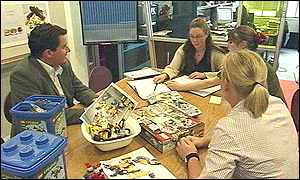 For any ad campaign it's vital to discuss objectives The advertising industry in the UK is one of the most lucrative in the world. It turns over �14bn per year - that's an average of �250 spent on every man, woman and child living in the UK. The ad business has suffered recently with the economic downturn, but remains a cornerstone in the marketing of most companies. From print to television, the Internet to text messaging, advertising is all pervasive, but how does it actually work? Cardinal rules According to Rita Clifton of the branding specialists Interbrand, to succeed all ads must:
The process "Advertising is more of an art than a science," says Marcus Brown, a partner in business development at Raine Kelly Campbell Roalfe/Y&R (RKCR/Y&R). "The best advertising comes when you pursue a vision rather than doggedly follow a process." But you have to start somewhere, and that's usually with a creative brief. Before the creative process begins though, the advertisers and the client have to agree on the role of advertising and ensure that it is distinct to that of the marketing or business objectives. For example, with a new beer, the role of the advert is to make beer drinkers aspire to a certain image. The marketers would like to change attitudes towards the beer and the business objective might be to create more sales. The brief The next stage is to write the creative brief and develop an original creative treatment. The brief is usually just one page of A4 paper but contains the aims and objectives of the client. The creative process begins with a brainstorming session where the advertising team and the client turn the hypotheses about the brand on their heads. By exploring the prevailing view about a current brand, different ways of thinking about that brand come about, and some of those might work better than the original. "You have to be original and creative," says Marcus. "It's the lifeblood of the industry - you've got to be different. The day the customer says he's seen that before, you've had it."
"The convention for environmental advertising is to focus on the physical effects of pollution on the environment and the damage caused, but our advertising for the Trust focuses on the offending products, such as boilers," explains Marcus. Next steps From the original brief, through development to the final production, advertising can take from one day to several months. And advertisers generally work many months ahead. RKCR/Y&R are already working on the Easter and Mothers' Day campaigns for Marks and Spencer next year. "We have to work to make sure the ad campaigns match with the clothes in the store, the window display and the point of sale," says Marcus. "With M&S we usually work nine months in advance so that all the materials tell a coherent story." It is usual practice that the same team works on the process from beginning to end. The team is multi-disciplined so that the production doesn't need to be handed over at any stage. Starting from scratch You don't always have to re-invent the wheel though. While each ad campaign aims to be original, it's only every now and then, or with totally new products, that the advertising team and the client start from a blank page. With Marks and Spencer, for example, the line 'Exclusively for everyone' appears on everything to do with company so the marketing team don't have to start right at the beginning each time. Because the aim is to build a consistent image, some of the stages can be speeded up.
The trick is to make sure that the vehicle remains relevant to the target audience. The Bisto Kids were dropped from Bisto advertising over 10 years ago because they were deemed no longer relevant to Bisto's target market of busy mums. Evolution Advertising has evolved over the years from being purely product derived to being aspiring and lifestyle based. A good example of this would be the Oxo advertising which in 1957 began with the puppet Sooty drinking the Oxo beverage. It was purely product focused. Throughout the 1980s and 1990s we had the Oxo family sitting down to their roast dinner. Today the adverts we see are frequently mini-epics that tell an inspirational story and frequently use humour and sophistication to divert us. The ads filter out the ordinary of everyday life and take us somewhere exotic. The Stella Artois and Guinness commercials use the mini-epic style to great advantage. Measuring Success Because advertising is not an exact science, it's very difficult to measure its success, but advertisers, and more especially their clients, try. The success or failure of advertising is today measured not just in till receipts but in 'footfall' - the number of people that pass through the shopdoors, click on a web-site or pick up the phone during an ad campaign. Manipulation Contrary to what some of us might believe, advertisers maintain that they aim to present consumers with the information they require to make choices and are not deliberately trying to manipulate us. "That argument presumes that consumers are ignorant, but they're not, they're very marketing savvy. It's they who make the final buying decision. The ad just presents choices," claims Marcus. For example, just because you see an ad for one financial services product, doesn't mean that you'll buy it. Advertising is just one of the sources of information that you use to assess the products applicability. And according to Marcus, the more fantastic the claim, the more sceptical consumers are about the product. Failure The advertisers don't always get it right though. Sometimes the wrong image is given out and the consumer just doesn't get what the ad is trying to say.
Marcus freely admits that the style they chose was wrong. "The viewer of the commercials failed to understand what the new company was offering," he says. "The advertising failed to communicate that because the ad used pictures and images that were totally unconnected with the service." And in a competitive environment where the financial stakes are high, the advertiser has to add value to the client's brand. Otherwise it's not working. Student Guide There's advertising all round us, from the moment we wake up untill the moment we fall asleep. It may come from the radio, the TV, a text message or just the back of a cereal pack. Someone out there is trying to affect the way we think. Your mobile's suddenly out of date - your jeans are no longer cool. You know what's happened - the adverts have worked! The business is worth �14bn a year and employs a lot of sharp people who know how to persuade us. How do they go about it? What's the objective? Businesses almost always want to increase sales when they spend money on advertising. If the market is tough, they may be happy if it only means retaining existing customers. The advertising agency, employed by a business, will want a clear image of what's to be achieved - and how to go about it. Many companies have a view about the image they want to portray. If the product's up-market, a business would be dismayed at down market ads. Just think... Have a look at some ads. What sort of image do you think each one is aiming at? Choose a product that you would like to advertise. What sort of image should it have? Be creative Advertising agencies want to make their mark. Every year, the industry's answer to the Oscars celebrates the best ads of the year. Winning an award is great for the agency that made the ad. A new campaign means a new creative team. It's made up of people with all the skills needed from start to finish. It starts by working with the company to develop a brief which combines the aims and objectives of the business and bright ideas for a strategy. All sorts of information is drawn in. In many ads you can see what the company's market research is telling them:
Just think... Have a look at some ads and work out what the market research is saying. Why do you think financial services might use flying pigs as a marketing strategy? Brainstorm strategies for selling the product you chose. Choose one to develop further. Explain why you have chosen it and how it will work. From brief to reality Once the brief has been approved, the process of producing the ad rolls out:
The agency will build a storyboard to show exactly what happens in a TV ad. It will produce a series of possible ads for magazines. Whatever the end product, the rules are the same. Ads must:
Just think... Put together a storyboard or a draft for a magazine ad for your product. Explain how your ad meets the rules above. Adding value Advertising can create an image that becomes part of the product. When you buy something, it's very often because it makes you feel good to own it. It tells the world something about you. Successful advertising not only sells more but helps a product develop an image. Just think... Think of some ads which add value to the product. How does it work? Look at your storyboard. Will your ad add value? How and why? What percentage of your ad is providing information? What percentage is trying to persuade? Which do you think is more important? Legal, decent, honest and truthful Whatever the objectives, an ad must stay within the law and people's expectations of decency. The Advertising Standards Agency (ASA) keeps an eye on what the advertising industry is up to. People ring up and complain when they see something they don't like. Have a look at the ASA's website to see what's acceptable and what's not. Just think... Which ads have recently been a cause for complaint? Did the ASA accept the complaint? Why? Would the ASA object to your ad? If so - why? | |
Internet links:  The BBC is not responsible for the content of external internet sites | ||||||||||||||||||||||||||||||||||||||||||||||||||||||||||||||||||||||||||||||||||||||||||||||||||||||||||||||||||||||||||||||||||||||||||||||||||||||||||||||||||||||||||||||||||||||||||||||||||||||||||||||||||||||||||||||||||
| |
|  E-mail this story to a friend E-mail this story to a friend |
|  |
| Links to more Education stories |
| | | ||
 | ||||
 | | Back to top
| ||
| ---------------------------------------------------------------------------------- To BBC Sport>> | To BBC Weather>> | To BBC World Service>> ---------------------------------------------------------------------------------- © MMIII | News Sources | Privacy |