|
 |
 | | | | | | ||||||||||||||||||||||||||||||||||||||||||||||||||||||||||||||||||||||||||||||||||||||||||||||||||||||||||||||||||||||||||||||||||||||||||||||||||||||||||||||||||||||||||||||||||||||||||||||||||||||||||||||||||||||||||||||||||||
| | | You are in: Programmes: Working Lunch: Education | ||||||||||||||||||||||||||||||||||||||||||||||||||||||||||||||||||||||||||||||||||||||||||||||||||||||||||||||||||||||||||||||||||||||||||||||||||||||||||||||||||||||||||||||||||||||||||||||||||||||||||||||||||||||||||||||||||||||
|
| |  Thursday, 24 October, 2002, 07:14 GMT 08:14 UK Thursday, 24 October, 2002, 07:14 GMT 08:14 UK Lunch Lesson Seven - Good business practice 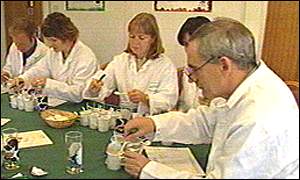 Every stage of the production process is important You'd think putting yogurt into pots wouldn't involve too much effort. But when they roll off the production line at Yeo Valley Organic's factory in Somerset, it's the end of a lengthy process. That's because the company not only produces organic items, but it works to its own strict guidelines. These affect:
Expansion Family-owned Yeo Valley has been producing yogurt for many years, mainly for other companies. But 10 years ago, a group of four dairy farmers approached the firm offering organic milk.
It decided to expand its range and the new lines proved so successful, a separate company was established in 1996. But while the demand was clearly there, Yeo Valley Organic wasn't able to grow as quickly as it would have liked. Encouragement It wasn't easy to get a good supply of organic milk, so the company encouraged more farmers to convert. "We've put our money where our mouth is," says Graham Keating, managing director of Yeo Valley Organic. "We give long term contracts the farmers can make some money on so they can extend their growth in the organic sector."
And the company wanted to treat the farmers fairly, rather than haggling for the lowest price possible. Yeo Valley says it agrees an annual fair price for the milk it buys from the co-operative. The idea is to set this at a level that will allow the farmers to make a profit. And knowing there is a definite market could encourage more farmers to switch to organic. However, because going organic can take more than two years, and involves some cost to the farmer, Yeo Valley also offers to buy non-organic milk from them during this period to sell on. New products As the supply of milk became more secure, the company was able to launch new products. Fortunately it had acquired spacious premises at Cannington near Bridgwater from Dairy Crest.
The next step was to get more organic fruit. Although Yeo Valley likes to source as much produce as possible from the UK, it has to buy fruit from abroad. It is then processed locally into a fruit mix. Currently organic processors have to import 65% of their ingredients, although that figure is falling. There are now 2,000 registered organic processors in the UK. Spin-offs Yeo Valley has also capitalised on spin-offs from the production process. Making yogurt leaves a lot of cream, and now the company is operating on such a large scale, it can sell this cream. Previously it would have been difficult to find a market if it couldn't guarantee a regular supply. More staff have been taken on to develop new products. These have included a range of fromage frais. This involves a different production process, and special equipment had to be bought.
A big expansion is planned at Cannington, both to increase production of the basic yogurt and to continue developing new ideas. The company's annual sales are �48m, about 5% of the total UK organic food market. One in every two organic yogurts sold is a Yeo Valley product. Education Ben Cull, the company's marketing director, says the development of the brand has been about educating the consumer: "It's very new in the market place so we need consumers to taste the products." But it's not just what's in the containers that matters. The company has recently introduced a new type of pot, comprising a thin plastic inner and a cardboard sleeve, designed so it can be split for recycling. That environmental philosophy applies to all parts of the business, from using as little water as possible and ensuring every lorry is carrying a load to encouraging staff to cycle to work. Sharing Yeo Valley Organic is the country's fastest growing dairy business, but it shares its success. It runs a bonus scheme which means the milk producers get an annual sum based on Yeo Valley Organic's sales. When the products hit the shops, the company aims to market them at a price that's comparable to non-organic goods, rather than adding a premium. Last year Yeo Valley won the Queen's Award for Enterprise for the way it works and its commitment to organic farming. Student guide Yeo Valley is the fastest growing dairy business in the country - but it's had to work at it. Being organic is not always easy. The company's website has a section which puts the farmers point of view. Have a look at the links in the lesson and think about their perspective on farm prices and other issues. Find out about organic farming and why Yeo Valley believes in its products. Going for growth All businesses need inputs but an organic company needs very special ones. They can only come from farms which have been approved. This can take a long time - as every trace of chemicals must have disappeared. Yeo Valley couldn't get enough organic milk so it set about persuading farmers to convert. As it's an expensive process, the company decided to help the farmers:
This helped the business too:
Growth can lead to growth. Making lots of organic yoghurt creates lots of organic cream. When the company was small, there was not enough to market but as the amount increased, it developed a new product line and started to sell Yeo Valley Organic Cream. Just think... How did farmers going organic help the business? Why is a secure supply of milk important to the business? Why could the company only sell cream as the business grew? The farmers' view discusses the price farmers get for their output and the effect it is having. Put yourself into the shoes of a. the farmer and work out what you think. Looking after the environment Organic food is growing from a market niche into a market segment. This is often the way that products grow. Organic food has been around for a long time but in recent years it has become a much more important part of the food market. Every supermarket now has a section of organic food among its fruit and vegetables and in its dairy fridges. Yeo Valley has been producing organic yoghurt for nearly ten years. To begin with, it was just a part of its sister company but the pace of growth was so fast that it quickly set up a dedicated organic dairy. The company is not only concerned about where its inputs come from but looks after the environment in other ways too:
Just think... How does each of Yeo Valley's environmental objectives help the UK to be sustainable? How does a business you know look after the environment? A win - win story Many stories have winners and losers but the Yeo Valley story has winners and winners. As the company grows:
The company also tries to sell its products at similar prices to other yoghurt. Organic food is often more expensive that non-organic. Just think... Who are the stakeholders of Yeo Valley? How is the company looking after its stakeholders? Why do you think it is important for a business to look after its stakeholders? Work out how a business you know looks after its stakeholders. | |
Internet links:  The BBC is not responsible for the content of external internet sites | ||||||||||||||||||||||||||||||||||||||||||||||||||||||||||||||||||||||||||||||||||||||||||||||||||||||||||||||||||||||||||||||||||||||||||||||||||||||||||||||||||||||||||||||||||||||||||||||||||||||||||||||||||||||||||||||||||||
| |
|  E-mail this story to a friend E-mail this story to a friend |
|  |
| Links to more Education stories |
| | | ||
 | ||||
 | | Back to top
| ||
| ---------------------------------------------------------------------------------- To BBC Sport>> | To BBC Weather>> | To BBC World Service>> ---------------------------------------------------------------------------------- © MMIII | News Sources | Privacy |