|
 |
 | | | | | | ||||||||||||||||||||||||||||||||||||||||||||||||||||||||||||||||||||||||||||||||||||||||||||||||||||||||||||||||||||||||||||||||||||||||||||||||||||||||||||||||||||||||||||||||||||||||||||||||||||||||||||||||||||||||||||
| | | You are in: Programmes: Working Lunch: Education | ||||||||||||||||||||||||||||||||||||||||||||||||||||||||||||||||||||||||||||||||||||||||||||||||||||||||||||||||||||||||||||||||||||||||||||||||||||||||||||||||||||||||||||||||||||||||||||||||||||||||||||||||||||||||||||||
|
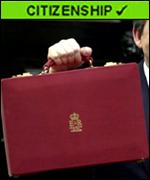
| |  Wednesday, 17 April, 2002, 11:06 GMT 12:06 UK Wednesday, 17 April, 2002, 11:06 GMT 12:06 UK Lunch Lesson 12 - Budget day The Budget involves careful pruning The Budget is the big day of the year for Gordon Brown. As Chancellor of the Exchequer, it's his job to keep the country's economy running smoothly. Like a garden, he spends all year tending it, nurturing it, planting here, trimming there before unveiling it to Parliament and the public. But like any gardener, he has to stick to certain rules - generally promises made by the government which helped it get into power. One of these is the pledge which we hear almost daily - to spend more money on the NHS. Digging around So Mr Brown's big challenge this year was to dig up the extra cash needed. The obvious answer seemed to be income tax, the biggest tool in his garden shed. He uses it to gather in the money which keeps the country going, by pruning people's incomes and using the money to invest as he sees fit. The bigger the income, the more tax you pay. Some earnings come free, some attract a 10% prune, some 22%, while top level income is cut down by 40%. A few more snips and the Chancellor would have raised all the extra taxes he needs. Back to the toolshed But Labour promised in its election manifesto not to put up income tax - Mr Brown had his hands tied. So he's having to use some smaller, less obvious tools to do some fine trimming round the edge of his garden. In the corner of his toolshed, there's another tax, although we call it National Insurance (NI). People who don't earn much don't pay NI. Those earning between �4,600 and �30,400 were paying 10% National Insurance. That has now gone up to 11%. Previously any income above that did not attract NI. In future it will be payable at 1%. Is it a tax? These measures alone will bring in several billion pounds to fund the NHS. But despite claims that National Insurance isn't a tax, critics say Mr Brown has broken the government's promise about not taxing income. Another stealthy snip he has made is by freezing the level of earnings at which tax becomes payable - �4,615. That means people who start earning more money will find themselves having to pay tax for the first time. Value added tax Again that's not technically increasing income tax, so keeps that all-important promise. But when Mr Brown next needs to make the government's income grow, what options will he have left? He could continue the freezing of allowances, and bring more people into the 40% bracket. They are high earners, so that could bring in lots of money. And when he's at the garden centre, he might well see things on sale such as packets of seeds, children's wellies, gardening books and food from the tea shop.
VAT is one tax that's ripe for future consideration by the Chancellor. Currently, we pay 17.5% VAT on top of the price of most things we buy. By raising that rate - or slapping the tax on some of the things, like books and food, which are exempted at the moment - Mr Brown can harvest more income. Reconciled But whatever he decides in future, most shoppers are reconciled to paying higher taxes, anyway. "I would be quite happy, as long as the money was managed well," said James Elms as he rootled through the perennials at a Hertfordshire garden centre. Rowan Hiesler, pushing a trolley filled with babies and plants, added: "I think the NHS does need some funding." But Alan Hume, eyeing up some orchids, complained: "This is the government that said it wouldn't put taxes up - so far they have." Going for growth So you can see the problems Mr Brown has faced. He's trying hard to keep promises, but not everyone sees it that way. But then the Budget is rarely about keeping everybody happy. The main thing is making the garden grow successfully - and sometimes a lot of fertiliser is needed to achieve that. Student Guide Everyone is affected by the decisions that are made on Budget day. Whether in a garden centre, factory, office, at home or at school, we are unlikely to escape the Budget's impact.
The Chancellor runs the Treasury, which is the government department which is responsible for the state finances and looking after the economy. Just think... Make a list of all the things that the government provides for people. Check your list against the Treasury website to see if you have missed anything. Why do you think the government provides these services? Raising the money The Chancellor has a range of taxes to chose from when he decides how to raise the money. Some tax people, some tax businesses and others tax both. These are the main taxes: Just think... What changes have been made to these taxes? Find out from the BBC's Budget website. What effect do you think each of these changes will have? Should the government link tax to paying for specific things like health? Explain your point of view. Controlling the economy The changes that the Chancellor makes have an effect on the economy so he has to think carefully about what he does. Increasing taxes means that people have less to spend. If there is a fear that inflation will increase, increasing taxes can be used to reduce the amount we spend. If we have less in our pockets, we won't be rushing to the shops so demand for the things we buy will be kept under control. This may stop prices rising. Decreasing taxes may encourage us to spend more. If the government wants to encourage the economy to grow, our spending will help. If we buy things, people will be employed to make them. If unemployment is rising, cutting taxes may be one way of helping. Another strategy for controlling the economy, is changing interest rates. The Bank of England decides the level of interest rates every month so the effect is often quicker than changing taxes as this tends to happend only once a year. Just think... Check out the BBC's Budget website to find out what effect the Budget changes will have on how much different groups of people have to spend. What has happened to the total amount that the government has collected in taxes? Why do you think the Chancellor has made these changes? An economic or political decision? Despite the fact that we want the government to provide all sorts of high quality services, people don't seem to like paying taxes. Every government fears that increasing taxes will cut the number of votes it gets at the next election. What a dilemma. Sometimes governments store up money in the early stages of a parliament so that they can spend it before the next election in order to keep people happy. Just think... If the money is left in people's pockets, they can chose how to spend it. They may chose to buy health insurance or pay school fees for their children. If the government has less to spend, the quality of its health and education services may be lower. Do you think people would be willing to pay more tax for better services? If not, why not? | |
Top Education stories now:  Links to more Education stories are at the foot of the page. | ||||||||||||||||||||||||||||||||||||||||||||||||||||||||||||||||||||||||||||||||||||||||||||||||||||||||||||||||||||||||||||||||||||||||||||||||||||||||||||||||||||||||||||||||||||||||||||||||||||||||||||||||||||||||||||
| |
|  E-mail this story to a friend E-mail this story to a friend |
|  |
| Links to more Education stories |
| | | ||
 | ||||
 | | Back to top
| ||
| ---------------------------------------------------------------------------------- To BBC Sport>> | To BBC Weather>> | To BBC World Service>> ---------------------------------------------------------------------------------- © MMIII | News Sources | Privacy |