|
 |
 | | | | | | ||||||||||||||||||||||||||||||||||||||||||||||||||||||||||||||||||||||||||||||||||||||||||||||||||||||||||||||||||||||||||||||||||||||||||||||||||||||||||||||||||||||||||||||||||||||||||||||||||||||||||||||||||||||||||||||||
| | | You are in: Programmes: Working Lunch | ||||||||||||||||||||||||||||||||||||||||||||||||||||||||||||||||||||||||||||||||||||||||||||||||||||||||||||||||||||||||||||||||||||||||||||||||||||||||||||||||||||||||||||||||||||||||||||||||||||||||||||||||||||||||||||||||||
|
| |  Wednesday, 11 September, 2002, 12:43 GMT 13:43 UK Wednesday, 11 September, 2002, 12:43 GMT 13:43 UK Lunch Lesson One - Starting a business 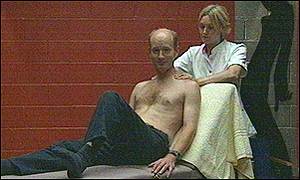 It's a tough job! Simon gets a massage from Tina How difficult is it to start a business and keep going? Over the next twelve months we'll be following the fortunes of three brand new businesses, following them as they look for start-up finance, premises and more importantly customers! This week we're meeting the first two of our barometer businesses: Steven the builder and Tina the massage therapist. Pressure Tina Ellis needs cash to start-up her own business. In just two weeks time she'll be appearing before a panel of business experts to persuade them to lend her the loot. "I used to be a secretary, but after I left on maternity leave I got into doing massage and aromatherapy courses, now I want to turn my that hobby into a business," says Tina. Tina's idea is relatively cheap. It's a mobile business - she'll be visiting clients at their work so she doesn't need to pay for premises. But she still needs equipment. "A good portable massage couch can be expensive, mine cost �180 second hand, but generally the lighter it is, the more expensive it can be. Then there are the oils, towels, massage chairs, head holders and other equipment you can buy. I'll also have to consider my travelling expenses - the cost of running a car so that I can get to my clients." Hope That's where the Princes Trust comes in. The Trust is a charity that helps people to find work and start businesses. She's applied to them for a start-up grant, and to prepare her to take her idea to their lending panel she's been working with one of the Trust's business advisors to come up with a viable business plan. "At the moment I'm working on a cash flow forecast as part of my business plan. It's hard. "Trying to estimate what you'll earn is very difficult, but I can see that it's essential. It gives you a base to work from." Tina's cash flow forecast includes the cost of her equipment and how much she plans to charge her clients: �30 for a full body massage and �15 for a head and shoulders massage. She's also looking into the cost of being able to hire a room at a beauty salon. Good idea Pat Fitzpatrick is Tina's coach from the Prince's Trust. It's his job to prepare her to take her business idea to the panel. He's used to meeting people with no business knowledge, but he doesn't see that as a problem.
"I like to hear that they've got a good idea - something that'll lead to a good business. It can be anything from a painting & decorating business to a web design business. "All they need is a germ of something that'll lead to a good business. "They certainly don't need to come in with a formal business plan. That's what I'm here for. I like to take the business plan bit by bit, and work them through it." To convince the panel to lend her the money, Tina will not only have to prove that she's thoroughly researched her market, she'll also have to show she has the mettle to run her own business. Nerve-wracking Steven Puleston from Brighton knows how nerve-wracking that can be.
Six months ago he persuaded the panel to give him a grant to set-up his own building business. "Before I decided to go it alone, I'd been working for a contractor. "But I lost my job when thieves broke into my van and stole my equipment. "I'd been gathering my tools over the last eight years and they were probably worth �5,000. "Losing them was devastating," says Steven. Without tools he couldn't work. And his bank wouldn't lend him the money he needed for new tools. Then he found out about the Prince's Trust. They lent him the money he needed to start his own business. And he picked a good time to start a business in the building trade. Boom A national shortage of builders has led to a boom in the industry. But although the amount of work is good, it is also a problem for Steve. "I'm run off my feet at the moment. That's good, but there's a lot of pressure. "I'm currently working 7 days a week, often until ten or eleven o'clock at night, taking advantage of the work while it's available." "But I think that's something you have to do in the first 12 months of a new business, hopefully it'll pay back ten times over further down the line." Lesson Steven will have to learn the lesson of time management if he's to survive. He wont be able to sustain working seven days a week, every week, for very long. This is one of the problems associated with being a sole trader. There is no-one else to share the load. Steven is just one of thousands of small businesses set-up by the Princes Trust since it began in the 70s. Two-thirds of businesses helped by the trust are still trading into their third year. Success This is a good success rate, especially when you consider that the national average for business failures is much higher. "Basically in two or three years time I'd be hoping that a new business would be achieving a good livelihood for the person who started it and possibly they'd be looking at expanding," says Pat. Getting a business started is fairly straight forward. Keeping afloat is the real test. Skilled Both Tina and Steven are skilled at what they do. But neither has any previous experience of running a small business. For the first time they are having to actively get work by marketing their talents. They'll have to keep financial records and manage their own time. It's a tall order. Many fail. But thousands don't. We'll be following their progress during the next 12 months. Advice for starting a new business; click on the links below; If you're under 30 there is; Prince's Trust 0800 842 842 Shell Live Wire 0800 842 842 The DTI's website is very useful. As well as lots of useful links, if you are unemployed you can find out about New Deal grants and the Job Centre Plus programme which can help you start a business. To find your local business advisor: Business Link (England) 0845 600 9006 Scotland:Small Business Gateway 0845 609 6611 Wales 08457 96 97 98 Other links: National Federation of Enterprise Agencies Coming soon Next Wednesday we'll be meeting Patrick Ord, a golf fanatic who is setting up an indoor golf centre with two friends. It's a much bigger venture altogether. Find out how they are managing to follow their dream whilst keeping their say jobs going in tandem! Student Guide Tina and Steven both have skills that people want to buy. As the world seems to move faster and faster, people feel more stressed out and go in search of ways to relax. Tina's massage skills should be in demand. It's hard to find a reliable builder who turns up on time and completes the work before disappearing to the next job. As Steve promises to do just that, his skills should be in demand. They have decided to set up in business to make the most of their skills - but - there's a catch. They need to raise money to get going. Lending people money is a risky business. You want to be sure you'll get it back. Banks are often unwilling to lend to new businesses with no track record. Tina and Steve both faced this problem so they turned to the Prince's Trust, which lends to people who have never been in business before and can't find anyone to lend them the money the need. Although it's a charity and not a bank, it wants to be sure that the businesses are likely to succeed so there are some rigorous checks before it hands over any money. Tina and Steve have to produce a business plan and make a presentation to show they know what they are doing. Just think What do you think the bank would want to know about Tina and Steve's businesses? The Business Plan Anyone who wants to borrow money to set up a business has to produce a plan. It's a good idea for any business because it makes you think out whether it really works. Here are some of the questions that must be answered. Just think What do you think would happen if you got the answers to these questions wrong? Look at each one and decide. Imagine that you want to set up a sandwich shop. Work out your answers to the questions. You will have to take a guess at some but get as close as you can. What's in the plan? The business plan is made up of the answers to the questions but they have to be put in a more formal way. The plan Tina talked of her 'cash flow forecast'. This is part of her financial plan. It's very important because it shows when she expects money to come in and when it goes out. If too much goes out before any comes in, she'll be in trouble because she'll run out! She must make sure that her loan will last until she starts earning money. When a business is up and running, it's still important. Lots of businesses get into trouble because they haven't been watching their cash flow. Both she and Steve will also have to show when they expect to break-even. They will draw up a graph showing how much they have to sell before they start covering their costs. It helps them to get a clear picture of their challenge. If they have to sell an enormous amount before the costs are covered, the business is unlikely to be successful. They will, of course, have to work out an estimate of the profit they are expecting to make. Anyone who is thinking of lending them money will be very interested in all this information! Just think Why do you think that people who are deciding whether to lend money are so interested in this information? If you were setting up a sandwich shop, work out when you would expect money to come in and go out. How would this affect your cash flow? Making your presentation Tina and Steve have one chance to persuade the team at the Prince's Trust to lend them the money. They have the advantage of working with an advisor - but they still need to think hard about putting their story over. You need to show that you have It also helps to look the part. If you are planning to run a business, you are taking on responsibilities and people will often judge you on the way you look! If you want to know more about the Prince's Trust | |
See also:  04 Sep 02 | Working Lunch 26 Apr 02 | Business 08 Jan 02 | Business 08 Jan 02 | Working Lunch Internet links: The BBC is not responsible for the content of external internet sites | ||||||||||||||||||||||||||||||||||||||||||||||||||||||||||||||||||||||||||||||||||||||||||||||||||||||||||||||||||||||||||||||||||||||||||||||||||||||||||||||||||||||||||||||||||||||||||||||||||||||||||||||||||||||||||||||||
| |
|  E-mail this story to a friend E-mail this story to a friend |
| |
| Links to more Working Lunch stories |
| | | ||
 | ||||
 | | Back to top
| ||
| ---------------------------------------------------------------------------------- To BBC Sport>> | To BBC Weather>> | To BBC World Service>> ---------------------------------------------------------------------------------- © MMIII | News Sources | Privacy |