|
 |
 | | | | | | ||||||||||||||||||||||||||||||||||||||||||||||||||||||||||||||||||||||||||||||||||||||||||||||||||||||||||||||||||||||||||||||||||||||||||||||||||||||||||||||||||||||||||||||||||||||||||||||||||
| | | You are in: Programmes: Working Lunch | ||||||||||||||||||||||||||||||||||||||||||||||||||||||||||||||||||||||||||||||||||||||||||||||||||||||||||||||||||||||||||||||||||||||||||||||||||||||||||||||||||||||||||||||||||||||||||||||||||||
|
| |  Friday, 6 September, 2002, 14:45 GMT 15:45 UK Friday, 6 September, 2002, 14:45 GMT 15:45 UK Pensions Palaver 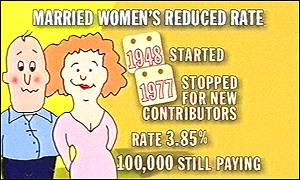 The Married Women's Reduced Rate is at the centre of a row Women are taking sides in a heated debate over pensions. Millions had opted out of paying their full rate of national insurance, taking advantage of the Married Women's Reduced Rate. Now they are up in arms that the Reduced Rate left them with measly state pensions. Horrified But married women who chose to pay their contributions in full are horrified at suggestions that women who took advantage of the discount should be given a better deal. The Reduced Rate was introduced in 1948, allowing women to pay much less national insurance while working, then benefiting from a 60% married woman's pension and a full widow's pension if their husbands died. No right But the Reduced Rate leaves women with no independent right to the state pension. They receive nothing until their husbands retire. Then they they get less than women who have made their contributions in full. The scheme was closed to new contributors in 1977. But 100,000 women are still paying the Reduced Rate, which stands at 3.85% or earnings compared with the 10% paid normally.
Sheila McAdam from Wigan claimed that the implications of paying the lower rate were not fully explained when she opted for the scheme in the 1960s. "I didn't know that when I came to retire I would have no pension," Sheila maintains, "I was always led to believe I would even have a reasonable amount." Sheila has been told that she qualifies for a weekly pension of �1.57, based on the short time in which she did pay National Insurance at the standard rate. She thinks that, at least, she should be given a pension in line with the contributions she made. Women should have been given a 25 page booklet explaining the implications of the scheme, including a form to sign if they want to switch to lower contributions. Missing But Vera Haydock says she was persuaded over the telephone to make the change, leaving her with five years missing on her contributions record.
"I want my five years back," she thunders, "I didn't sign anything. I've written and they haven't got anything signed by anybody. It's my word against theirs." Little sympathy There is little sympathy for the plight of the Reduced Rate pensioners from the thrifty women who stuck with full contributions.
Anne Turrell got married in 1972 and remembers reading the leaflet which explained the difference between the two systems. "I'm fed up with people blaming everyone else for their own mistakes and then the rest of us have to pay," she complains. Angry "I will be very angry if they get their full pensions." Around 3.5 million were paid reduced contributions in 1977 when the scheme was closed to new contributors. Most of them have now retired. Those women who are still contributing can take action to try to improve their position. The first step is to contact your social security office to request a pension forecast -- an indication of the weekly payment you are likely to receive. Then, those married women who want to can enquire about changing back to making full contributions. The department to contact is the Inland Revenue. | |
| ||||||||||||||||||||||||||||||||||||||||||||||||||||||||||||||||||||||||||||||||||||||||||||||||||||||||||||||||||||||||||||||||||||||||||||||||||||||||||||||||||||||||||||||||||||||||||||||||||
|  |
|  E-mail this story to a friend E-mail this story to a friend |
| |
| Links to more Working Lunch stories |
| | | ||
 | ||||
 | | Back to top
| ||
| ---------------------------------------------------------------------------------- To BBC Sport>> | To BBC Weather>> | To BBC World Service>> ---------------------------------------------------------------------------------- © MMIII | News Sources | Privacy |