|
 |
 | | | | | | ||||||||||||||||||||||||||||||||||||||||||||||||||||||||||||||||||||||||||||||||||||||||||||||||||||||||||||||||||||||||||||||||||||||||||||||||||||||||||||||||||||||||||||||||||||||||||||||||||||||||||||||||||||||||||||||||
| | | You are in: Programmes: Working Lunch | ||||||||||||||||||||||||||||||||||||||||||||||||||||||||||||||||||||||||||||||||||||||||||||||||||||||||||||||||||||||||||||||||||||||||||||||||||||||||||||||||||||||||||||||||||||||||||||||||||||||||||||||||||||||||||||||||||
|
| |  Wednesday, 22 May, 2002, 13:47 GMT 14:47 UK Wednesday, 22 May, 2002, 13:47 GMT 14:47 UK Lunch Lesson 16 - Good times, bad times 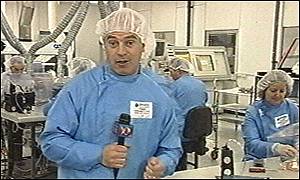 Working Lunch's Rob Pittam reports from Dynex in Lincoln When a company is going through a rough patch, some unpalatable decisions might have to be made. For one Lincoln business that meant asking workers to take a big cut in wages. That seemed to be the only way too stave off insolvency. Dynex Semiconductor makes high-tech microchips, mainly for use in transport and communications. Suffered But, like many others in this sector, it has suffered from global oversupply and falling prices, coupled with a decline in sales of mobile phones, which are big users of chips. Figures from the Semiconductor Industry Association last year showed sales were 43% down on 2000. In August 2001, Dynex laid off 30 workers and hoped it had turned the corner. Drastic But in November it revealed quarterly losses of �500,000. Dynex - a wholly owned subsidiary of a Canadian company - had to take drastic action. "We simply didn't have enough cash to pay our suppliers for the raw materials we needed," explains Dynex's Trevor Boulding. "What we had to do was get hold of large chunks of cash quickly."
In January, the comany's 360 workers were asked to take a 20% pay cut for three months. It was put to a ballot and 85% agreed to the proposal, a figure which surprised management. "Once we explained the situation to the workforce the response was nothing short of miraculous," says Trevor. "We thought it was a great vote of confidence in what we were trying to do." "We all work here and make our living here, we have all got mortgages to pay," says operator Maxine Butterfield. "But we know jobs are scarce here in Lincoln and we want the company to succeed." "When it was explained to us the benefits to the company and how it would secure our jobs for the next few months, it made sense to take it," says senior engineer Stewart Hanson. "The 20% pay-cut that the staff agreed to allowed us to continue, and they're now back on full-pay." The move brought in a much-needed �360,000 in cash - the pay cut applied to managers as well. Dynex made sure employees knew exactly where the extra money was being spent, and published a weekly newsletter. However, these measures could not prevent another 30 workers being made redundant in March because of lack of business. New contract But things did start to pick up; the company recently won a �1.5m contract to make train parts for Alsthom Transport. Alsthom agreed to pay half the money upfront, again helping to ease cashflow problems. This month Dynex announced results for the first quarter of the year, which showed its housekeeping measures had reduced operating costs by 39% from the same period last year. Loyalty Though Dynex was still not totally out of the woods, the Canadian parent company decided it was time to compensate the workers for their loyalty. A private placement was made of 1.5m shares at 28p each. Most of those shares will be allocated to workers who took a pay cut. The company is still working out the numbers but says people are likely to get shares to the value of the wages lost. Accountants are looking at ways of ensuring employees don't become liable to extra tax. Everyone at the plant is now back on full wages, although they realise difficult times could still lie ahead. Dynex is looking to build its production of sensors for car security and industrial semiconductors which use power efficiently, both potential growth areas. "Dynex came through last year the single biggest contraction in semiconductor history," says chief executive Michael LeGoff. "The market is coming back but very, very slowly, and it's going to be a grind all this year. The 20% pay cut that the employees took for the first quarter was a major inflection point for our business and allowed us to continue on for the rest of this year." Student Guide The mobile phone market is so vast that when it sneezes, many catch a cold. Dynex got a very bad dose of the flu. Parts for communications equipment made up 20% of its business. The worldwide fall in demand for mobiles helped push Dynex towards insolvency. People had already been laid off but losses were still rising. Management were forced to look at their options. Shut down or survive? Shutting down can be the easy way out. People are made redundant and the plant shuts down. As Dynex is part of a much larger company, even the responsibility can be someone else's. Increasing sales was obviously going to be impossible. The world market for semiconductors had collapsed. The market was flooded with ever cheaper chips. Trying to make more of its other products was difficult for Dynex because it didn't have the cash for raw materials. So cutting costs was the only alternative. Just think... What sort of products are sensitive to changes in the market? Choose two and think about the knock on effects for other businesses when demand falls. Cutting costs A business that must cut costs will look at all aspects of the activity. How can it reduce its outgoings without damaging the business? Dynex cut its operating costs by 39% - a massive achievement. What about the workforce? A skilled workforce is precious Recruiting people is expensive, training them is expensive and replacing them when things get better is even more expensive. Having laid off some people initially, Dynex decided to try and save other jobs by taking a different route. It suggested a substantial cut in wages. This would be hard for everyone. People have famillies to keep and mortgages to pay. Twenty percent would make a big hole in people's spending power. But was it better than no job at all? Lincolnshire isn't full of alternative employment - so people accepted the proposal. They could see the long run benefit of keeping the business going. Just think... Why was it possible for this proposal to work for Dynex? What sort of businesses would find it harder? The staff could become very demoralised in a situation like this. How did Dynex restore motivation? Can you think of any other ways in which motivation might have been maintained? Foundations for the future When a business has gone through tough times, tightened its belt and survived, it's often in a very good position to make the most of the upturn when it comes. Dynex has done three things It has become more efficient so it can afford to keep prices low to attract new customers when things pick up. Its workforce might have been out of a job. Instead, they showed loyalty and have been rewarded with shares in the company. As shareholders, they now have a great interest in the success of the business. The business has specialised in high power semiconductors, which enable industry to use power more efficiently. Instead of selling run of the mill micro processors, or chips, it has moved into a more specialist product which offers added value. Just think... Think of two businesses that you know, one that makes a product and another that provides a service. Work out how each of them might survive a set back like this. Would they be stronger or weaker in future? | |
Top Working Lunch stories now:  Links to more Working Lunch stories are at the foot of the page. | ||||||||||||||||||||||||||||||||||||||||||||||||||||||||||||||||||||||||||||||||||||||||||||||||||||||||||||||||||||||||||||||||||||||||||||||||||||||||||||||||||||||||||||||||||||||||||||||||||||||||||||||||||||||||||||||||
| |
|  E-mail this story to a friend E-mail this story to a friend |
| |
| Links to more Working Lunch stories |
| | | ||
 | ||||
 | | Back to top
| ||
| ---------------------------------------------------------------------------------- To BBC Sport>> | To BBC Weather>> | To BBC World Service>> ---------------------------------------------------------------------------------- © MMIII | News Sources | Privacy |