The Government published its ten year plan for reforming the NHS in July 2000.
It has been described as a "radical action plan" aimed at putting patients and people at the heart of the health service.
The plan makes several bold pledges including the promise that there will be more power and information for patients.
But it goes further, saying there will be more hospitals and beds, doctors and nurses, significantly shorter waiting lists and improved care for the elderly.
Under the plan the Government has made battling the big killers in the UK, such as cancer and heart disease, one of the main priorities.
It is also going to focus on finding the changes which are most urgently needed to improve health and well-being.
In order to help achieve these radical changes, a modernisation board led by Alan Milburn, has been formed to advise and help lead the changes.
THE NHS PLAN: in detail
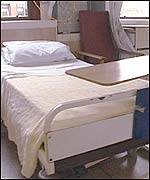 The Government has promised an extra 7,000 beds
|
The NHS national plan includes proposals to:
- Cut hospital waiting times to just three months for outpatients and six months for inpatients by 2005
- Expand cancer screening programmes to cover more patients and more cancers
- Further cut waiting times for patients needing cardiac surgery - plus rapid access chest pain clinics across the country by 2003
- Guarantee surgery within 28 days for patients whose operations are cancelled for non-medical reasons by 2002
- Allow patients to be able to have a GP appointment within 48 hours by 2004
- Provide 7,500 more consultants, 2,000 new GPs, 20,000 more nurses and over 6,500 extra health professionals
- Create 7,000 extra hospital beds and 100 new hospital schemes between 2000 and 2010
- Provide an extra �900 million to develop intermediate care by 2003/4 to allow patients to recover
- Make medical nursing care in nursing homes free - but personal care will not be paid for by the state
- Create new roles and responsibilities and better training for NHS nurses, midwives, therapists and other NHS staff
- Foster an agreement between the NHS and the private sector for using private facilities
- Create a national independent panel to advise on major hospital changes, such as closures
- Offer a free NHS retirement health check
- Community Health Councils will be replaced by a Patient Advocacy Liaison Services, which will include patient representatives on Trust boards
- Merge budgets for social services and the NHS
- Create 1,000 specialist GPs taking referrals from fellow GPs
- Bring in changes for NHS doctors including new consultants' contract, and new quality based contracts for GPs
- A NHS Modernisation Agency and a National Performance Fund to implement changes




 E-mail this story to a friend