|
 |
 | | | | | | ||||||||||||||||||||||||||||||||||||||||||||||||||||||||||||||||||||||||||||||||||||||||||||||||||||||||||||||||||||||||||||||||||||||
| | | You are in: Programmes: Newsnight: Review: Film | ||||||||||||||||||||||||||||||||||||||||||||||||||||||||||||||||||||||||||||||||||||||||||||||||||||||||||||||||||||||||||||||||||||||||
|
| | Wednesday, 28 August, 2002, 11:43 GMT 12:43 UK Rabbit Proof Fence
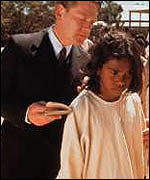
"Rabbit Proof Fence" is a new film by Phillip Noyce. It tells a story concerned with the "lost generation" of Aboriginal children in Australia. It stars Kenneth Branagh. (Edited highlights of the panel's review) KIRSTY WARK: RICHARD HOLLOWAY: It was a bad theory. It was a bad idea. Racism, imperialism, kind of blood aristocracy, that to me was the most devastating thing. Bad people die, bad ideas can live on and on and on. That bad idea is still alive in Australia. It's still a very racist country. I thought to me the most challenging thing about the film was that it made you think because the Neville character is clearly a sincere man. Why don't they get it, he said? KIRSTY WARK: JEANETTE WINTERSON: It's a film of triumph and it's a film of hope. All of us inside have a rabbit-proof fence that would lead us home if we knew how to find it, but we don't. If this has been the century of displacement, we're now looking for home, trying to find our identity. The wonderful thing here is you can take away a woman's family, a woman's land, a woman's place, and she can still find her way back to it because it's integral to the self. That's the triumph. This is a real emotional journey, exactly what you don't get in Porno. This is somewhere for us to go as an audience. KIRSTY WARK: JUDE KELLY: I mean, everything that you both say about the integrity of the film with regard to its intentions, the purposefulness of it with regard to the history that needs to be told again and again since it's enduring and wonderful idea of a journey, a personal journey and particularly three young women's journey, three girls in this case, all of that's a wonderful starting point. I found the film terribly dull. I found the camera shots prosaic. I found the script pedantic and unimaginative. I just felt the characterisation was so shallow and really because it didn't have action and because it was a journey film, it did require great camerawork and a film aesthetic. I felt the director was devoid of that. KIRSTY WARK: JUDE KELLY: KIRSTY WARK: JEANETTE WINTERSON: JUDE KELLY: JEANETTE WINTERSON: RICHARD HOLLOWAY: KIRSTY WARK: Of course, this was territory that they would have heard from their mothers and grandmothers and so forth, but they were working it through themselves. I thought their performances were stunning. JUDE KELLY: JEANETTE WINTERSON: RICHARD HOLLOWAY: They were all clearly very sincere, but they were imprisoned in a terribly bad idea, and that to me I think is the big lesson from this that we create these ideas, these theories, these religions, these race theories, these political theories, and they oppress us. KIRSTY WARK: I think we can safely say this, the sad thing was they did make it home, but something else happens after that. JEANETTE WINTERSON: It doesn't matter what the outside world is doing to you. It's what you have and what you can hold on to. KIRSTY WARK: | | |||||||||||||||||||||||||||||||||||||||||||||||||||||||||||||||||||||||||||||||||||||||||||||||||||||||||||||||||||||||||||||||||||||||
|  |
|  E-mail this story to a friend E-mail this story to a friend |
|  |
| Links to more Film stories |
| | | ||
 | ||||
 | | Back to top
| ||
| ---------------------------------------------------------------------------------- To BBC Sport>> | To BBC Weather>> | To BBC World Service>> ---------------------------------------------------------------------------------- © MMIII | News Sources | Privacy |