|
 |
 | | | | | | ||||||||||||||||||||||||||||||||||||||||||||||||||||||||||||||||||||||||||||||||||||||||||||||||||||||||||||||||||||||||||||||||||||||
| | | You are in: Programmes: Newsnight: Review | ||||||||||||||||||||||||||||||||||||||||||||||||||||||||||||||||||||||||||||||||||||||||||||||||||||||||||||||||||||||||||||||||||||||||
|
| | Wednesday, 6 November, 2002, 12:15 GMT Douglas Gordon
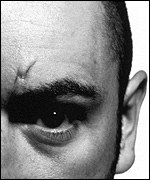
On 1st November, Newsnight Review discussed Douglas Gordon's first major solo show at the Hayward Gallery. The former Turner Prize winner is famous for making the film Psycho a 24-hour experience. (Edited highlights of the panel's review) KIRSTY WARK: GERMAINE GREER: First of all, you enter this chambered black space, where half the time you are groping. I was really interested to see how many people clung to the stairs! We kept sort of making for the stairs as a piece of hard masonry and then back into the darkness. I was fascinated by things like the fetishisation of bits of the body. I realised that as the owner of a body you only understand it in bits. You don't know what it's like as a whole thing. The three inches, that room full of painted black fingers with the nails showing almost like the glans penis peeping through a foreskin. So strange and so pornographic in a way, without being erotic. The extraordinary moments of passage, like the dying of the fly. And the fly trying to right itself. And on the other side, a man, who was apparently hysterically paralysed, who can't get to his feet in a piece of video. It was like being inside the mind of someone, looking at his movie that runs all the time in his head. It's all over the place. All kind of things come up out of sequence, but it just wasn't my head. I am claustrophobic, so by the time I got to the room with light rods in, I was really dizzy. There were so many things that were really hard to handle. KIRSTY WARK: MARK KERMODE: He took a text which he imagines to be one-dimensional, a portrait of evil, and showed you the Song of Bernadette, which is a syrupy, fluffy film. You will notice that within the Exorcist there are elements of good. This is completely moronic. The Exorcist is famous for the fact it's a divided film, it's a film at war with itself. It's a film written by a Catholic, directed by an agnostic Jew which is constantly tearing between religious symbolism and blasphemy. Between transcendence and the stench of human - it does not need to have the Song of Bernadette projected over it. I thought it was offensive. KIRSTY WARK: TOM PAULIN: KIRSTY WARK: TOM PAULIN: MARK KERMODE: TOM PAULIN: GERMAINE GREER: It's much more about art than about life. I fell for it in a way. By the way, the whole point about the Song of Bernadette and the Exorcist is that they are the same film. MARK KERMODE: GERMAINE GREER: KIRSTY WARK: | | |||||||||||||||||||||||||||||||||||||||||||||||||||||||||||||||||||||||||||||||||||||||||||||||||||||||||||||||||||||||||||||||||||||||
|  |
|  E-mail this story to a friend E-mail this story to a friend |
| |
| Links to more Review stories |
| | | ||
 | ||||
 | | Back to top
| ||
| ---------------------------------------------------------------------------------- To BBC Sport>> | To BBC Weather>> | To BBC World Service>> ---------------------------------------------------------------------------------- © MMIII | News Sources | Privacy |