|
 |
 | | | | | | ||||||||||||||||||||||||||||||||||||||||||||||||||||||||||||||||||||||||||||||||||||||||||||||||||||||||||||||||||||||||||||||||||||||
| | | You are in: Programmes: Newsnight: Review | ||||||||||||||||||||||||||||||||||||||||||||||||||||||||||||||||||||||||||||||||||||||||||||||||||||||||||||||||||||||||||||||||||||||||
|
| | Tuesday, 10 September, 2002, 15:22 GMT 16:22 UK 9/11
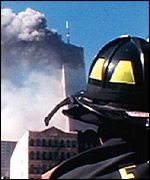
"9/11" is a documentary by the Naudet brothers. It's a film-maker's inside view of September 11th, featuring the only film shot inside the World Trade Centre towers. (Edited highlights of the panel's review) MARK LAWSON: MARK KERMODE: You have a raw footage, people that were there. What they have chosen to do is to incorporate it in something which makes it a fictional story almost. It is introduced by Robert de Niro, who's an actor. He starts talking and then says "I'm Robert." Then you have parts that appear to be not scripted in which people are giving you key phrases again and again but nobody knew what was going to happen. And then you have the withholding of certain information to create narrative tension. One interview is withheld so you wonder whether a certain character made it to the end. Although I think what this does is make it watchable, I think that doing that to these events is not necessarily a good thing. For me it made it a very uncomfortable view. I felt a real-life tragedy had been turned into something, if not a work of entertainment, bordering on a fictional work. MARK LAWSON: ROSIE BOYCOTT: All the stuff at the beginning, it was interesting seeing them. They start because they are making this film about this probie, so we get lots of joshing around in the fire house and that's interesting and they have dinner together and live together. The strange thing is that the entire cast of Ladder 1, they are all all right. You somehow feel that the tragedy didn't hit them. I found it electric when they are under the building and the building falls and the camera is going hay wire and you are running. That was amazing. You felt "There is a bit of footage I could not have got any other way." The rest of it I felt like I had seen it. MARK LAWSON: I thought that was what we were supposed to take from it. You did get a strong sense of New York before and after. They were theoretically facing death but then it happened. ROSIE BOYCOTT: And there seemed to be no sense of all of the rest of the people who were in that building. I found the last half of the film when they are starting the clean up more real. MARK LAWSON: EKOW ESHUN: I think the problem with it is because the first quarter of the film is about fire-fighters before 9/11, being guys. Already what happens from the very beginning they are set up as heroes, we know they are heroes because the commentary tells us so and they are great guys. So, when the terrible things of 9/11 actually happen, well they are heroes again but they are heroes to begin with. So the film itself, as a film, doesn't have a kind of narrative arc to it because we know they are great guys and, yeah, they get to prove it. That would be fine if there was something more going on in the film. But those two film-makers themselves, already say from the very beginning that this isn't a warts and all documentary, it is a tribute to fire-fighters. So at the core of this film is something very sentimental and actually something which, to be honest, slightly turns my stomach. What happens is that at certain crucial moments in the making of the film, in the shooting of the film, they turn their cameras off because they don't want to look at some of those things. That's fair enough, but then don't call it 9/11. If you do, it is actually not an authentic film, it is phoney film. MARK LAWSON: You don't need Robert de Niro or the commentary. There is another film going out on the same night, Roger Graef's September Mourning, that is the exact opposite in terms of what it does. ROSIE BOYCOTT: Actually it is so stark, and so full of tragedy it is almost unwatchable. You find yourself virtually in tears the first five minutes. It brings home to you the tragedy of September 11th in a way that I think 9/11 absolutely doesn't because it kind of just gives you this event of the towers falling down. MARK KERMODE: EKOW ESHUN: There is even a moment when they line up the fire-fighters and there is a black background and there is stirring music. It is serving a function. MARK LAWSON: ROSIE BOYCOTT: MARK LAWSON: | | |||||||||||||||||||||||||||||||||||||||||||||||||||||||||||||||||||||||||||||||||||||||||||||||||||||||||||||||||||||||||||||||||||||||
|  |
|  E-mail this story to a friend E-mail this story to a friend |
| |
| Links to more Review stories |
| | | ||
 | ||||
 | | Back to top
| ||
| ---------------------------------------------------------------------------------- To BBC Sport>> | To BBC Weather>> | To BBC World Service>> ---------------------------------------------------------------------------------- © MMIII | News Sources | Privacy |