|
 |
 | | | | | | ||||||||||||||||||||||||||||||||||||||||||||||||||||||||||||||||||||||||||||||||||||||||||||||||||||||||||||||||||||||||||||||||||||||
| | | You are in: Programmes: Newsnight: Review | ||||||||||||||||||||||||||||||||||||||||||||||||||||||||||||||||||||||||||||||||||||||||||||||||||||||||||||||||||||||||||||||||||||||||
|
| | Monday, 2 September, 2002, 12:00 GMT 13:00 UK Oedipus Rex
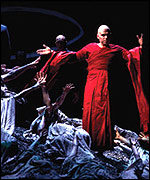
"Oedipus Rex" is a take on the Sophocles myth and is performed by the Canadian Opera Company in the Edinburgh International Festival. (Edited highlights of the panel's review) KIRSTY WARK: PAUL MORLEY: It takes close to 300 people to set it up. I have all their names if you would like to hear them! It's a great assimilation of everything Stravinsky tried before in the music and a hint of the music he was going into that leads up to the Rake's Progress. There is a great combination of Verdi and Mozart and medieval chant, but what's fantastic as well, from the point of view of not really being an opera expert, it has everything you would want from opera. It's got the fat lady, men singing deeply, a great combination of epic intimacy and of sublime nonsense and brilliance. It's also over in less than an hour, which is a help. KIRSTY WARK: PAUL MORLEY: He wanted the sound rather than the meaning. Cocteau did it in French, it was turned into Latin. Cocteau created a narrator that anticipates some of the events. We still had the surtitles. KIRSTY WARK: DENISE MINA: The narrator was Cocteau's idea. He wanted everything to be static about it. It is magnificent. You can tell the director worked in video before this. It is beautifully composed. Everything is a perfect shot, but it's so busy. At one point, all the ladies get up, I think you saw on the film, they get up and they are moving about topless. It's incredibly distracting! You are not listening to the music at all. KIRSTY WARK: ADAM MARS-JONES: It's not busy to me. The interest is kept seething the whole time. There is never distraction. The fact that much of it is done with bodies that we only see the arms of - and I do giggle a lot in opera. There is a moment when Creon put up a sword and all the bodies did the same, and I thought, "Oh, God, it's going to turn into Simon Says." But it sustained the mood. I thought the women there were to give us an idea that there has been a life of tenderness together. The Polish contralto can do everything but express the beauty of young love, because she is one of those power house contralto, with the voice and the tent dress, and they can't do the other bit. We needed something visually to represent that. KIRSTY WARK: ADAM MARS-JONES: PAUL MORLEY: ADAM MARS-JONES: PAUL MORLEY: ADAM MARS-JONES: I thought they had found a hinge in the work and they are letting me take it in. The fact that is a flub and you found a conductor prompting somebody in Latin, what a joy, thank you Edinburgh. PAUL MORLEY: For a moment, you just forget that because it's so seamless, to be reminded that this is an incredible feat. It was almost you felt it was meant. | | |||||||||||||||||||||||||||||||||||||||||||||||||||||||||||||||||||||||||||||||||||||||||||||||||||||||||||||||||||||||||||||||||||||||
|  |
|  E-mail this story to a friend E-mail this story to a friend |
| |
| Links to more Review stories |
| | | ||
 | ||||
 | | Back to top
| ||
| ---------------------------------------------------------------------------------- To BBC Sport>> | To BBC Weather>> | To BBC World Service>> ---------------------------------------------------------------------------------- © MMIII | News Sources | Privacy |