|
 |
 | | | | | | ||||||||||||||||||||||||||||||||||||||||||||||||||||||||||||||||||||||||||||||||||||||||||||||||||||||||||||||||||||||||||||||||||||||||||||||||||||||||||||||||||||||||||||||||||||||||||||||||||||
| | | You are in: Programmes: Newsnight: Review | ||||||||||||||||||||||||||||||||||||||||||||||||||||||||||||||||||||||||||||||||||||||||||||||||||||||||||||||||||||||||||||||||||||||||||||||||||||||||||||||||||||||||||||||||||||||||||||||||||||||
|
| | Tuesday, 13 August, 2002, 10:38 GMT 11:38 UK The Coast of Utopia
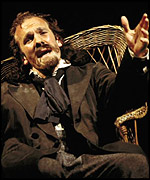
The eagerly awaited trilogy of plays by Tom Stoppard, "The Coast of Utopia". They deal with intellectual ferment and idealised love amongst 19th Century Russians in exile. (Edited highlights of the panel's review) KIRSTY WARK: JOHN GRAY: There can be no world in which everything we want is all possible and the attempt to realise Utopia just brings about tears and farce. That's the basic idea, which I think he transmits through maybe what could be seen as fairly obvious device, but I think it works tremendously well in this event. The device is by constantly juxtaposing the speeches and the discourse which these romantic Russian revolutionaries engage in with the tangle of their lives and with something even more important, which he shows through his imaginative use of children, which is that each stage of the life of a person is valuable for what it is, not what it later becomes. We are not children in order to grow up. We don't grow up in order to grow old. We don't stay alive in order to die. All these aspects are what they are and should be enjoyed for what they are. That's the basic idea which the whole trilogy embodies. That's why the last of the three has a slightly elderly feel. It's about people looking back at these phases of their lives. KIRSTY WARK: GERMAINE GREER: But maybe that's just as well, because one of the things about the way Stoppard deals with questions of ideology and abstract thought is to lead you, as it were, up the garden, as he so charmingly says in one of the plays, and then make a flip joke and leave you. He is basically not interested. One of the things that this whole trilogy wants to tell you is you needn't trouble your pretty head about the great absolutes because they don't mean anything. This is not the case. KIRSTY WARK: GERMAINE GREER: JOHN GRAY: GERMAINE GREER: I would have thought Stoppard understood that. He should understand deconstruction. He was the first post-modernist, but he has forgotten what he did. KIRSTY WARK: You had better not know anything. However, there is a detailed programme. Indeed, when I heard the audience going out, they were saying, "I must go and read a bit about this." EKOW ESHUN: It's actually about how really history isn't made up with great swathes and movements. It's made up of small moments. That's why, for me, the best play isn't the first one, which has Bakunin raving across the stage ad nauseam. The best of the three plays is the second one, when you have 1848, the Paris revolution. Then you have this immense set of tragedies which hit Herzen in the second half of the play. KIRSTY WARK: EKOW ESHUN: JOHN GRAY: KIRSTY WARK: JOHN GRAY: KIRSTY WARK: GERMAINE GREER: KIRSTY WARK: GERMAINE GREER: I am not concerned about it at that level. If what Stoppard was doing was no more than what Starkey does or Simon Schama does, then that wouldn't be the point. It would be a laborious way of telling a historic story and, in a way, emptying of substance when you tell it. These are the most interesting years in Russian history. JOHN GRAY: | |
See also:  05 Apr 02 | Panel Top Review stories now: Links to more Review stories are at the foot of the page. | ||||||||||||||||||||||||||||||||||||||||||||||||||||||||||||||||||||||||||||||||||||||||||||||||||||||||||||||||||||||||||||||||||||||||||||||||||||||||||||||||||||||||||||||||||||||||||||||||||||
| |
|  E-mail this story to a friend E-mail this story to a friend |
| |
| Links to more Review stories |
| | | ||
 | ||||
 | | Back to top
| ||
| ---------------------------------------------------------------------------------- To BBC Sport>> | To BBC Weather>> | To BBC World Service>> ---------------------------------------------------------------------------------- © MMIII | News Sources | Privacy |