|
 |
 | | | | | | ||||||||||||||||||||||||||||||||||||||||||||||||||||||||||||||||||||||||||||||||||||||||||||||||||||||||||||||||||||||||||||||||||||||||||||||||||||||||||||||||||||||||||||||||||||||||||||||||||||
| | | You are in: Programmes: Newsnight: Review | ||||||||||||||||||||||||||||||||||||||||||||||||||||||||||||||||||||||||||||||||||||||||||||||||||||||||||||||||||||||||||||||||||||||||||||||||||||||||||||||||||||||||||||||||||||||||||||||||||||||
|
| | Thursday, 18 July, 2002, 12:05 GMT 13:05 UK Amen
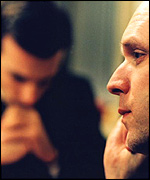
Amen: The new film from Costa-Gavros examines claims that Pope Pius XII deliberately suppressed Vatican's early knowledge of Jewish holocaust. (Edited highlights of the panel's review) MARK LAWSON: GERMAINE GREER: We are expected to go along with the idea that Gerstein should be rehabilitated. He is the good Nazi, but how can he be when he goes on signing the receipts? All moral codes are founded on the assumption that you have one soul to save before you save everybody else's, and he doesn't find anything contradictory between being involved in the massive extermination programme and then running around asking somebody else to stop it. He himself is an evangelical Christian belonging to a German sect. They don't want to know because they are not German nationals, because they are anti-Semitic is the bottom line. But there is a notion that it's the Pope's duty to act as the world's conscience. When I first had anything to do with the play as an undergraduate, it was a very important and shocking thing, for someone who had come through a Catholic school, to realise that the Pope was a politician. You have to come to terms with reality in that sense, but it doesn't make sense for Gerstein to be running around, signing receipts for Zyklon, being involved up to his neck in the whole business of extermination, and then asking the Pope to stop him. It's not the Pope's business to stop him. MARK LAWSON: GERMAINE GREER: The depiction of the Vatican is marvellous. This mad place which is all gilding, where everyone has to go through the motions. The papacy has no power. It's completely a hostage to fortune. It has to play according to guile. MARK LAWSON: TIM LOTT: All the relationships, both within the characters and between the characters, dramatically, they just don't work. Presumably an amazingly powerful friendship would emerge between the priest and the SS man, but we don't see any of that. Some allusions are made to Gerstein's family and where the responsibility between the family and the state lie, that's also not explored. The dominant image in the film is of empty trains passing in the distance. ADAM MARS-JONES: TIM LOTT: MARK LAWSON: ADAM MARS-JONES: We are asked to judge the character by his intentions, and the Pope by his actions. If you examine Gerstein by his actions, by trying to sabotage the poison gas, he has made people die in an hour rather than five minutes. The opposition with Schindler I found fascinating. Schindler's letter is treated according to a Jewish morality. Jews made Hollywood, but usually they use the mask of a Christian ideology of redemption in the stories they tell. But what's important about it is that, although Schindler's motives are mixed, that's not felt to be interesting. The fact that he did something is all that he needs to be buried as a righteous gentile. What is interesting is you can't imagine a moral code which would justify both Gerstein and Schindler, that any moral code which rehabilitates one, condemns the other. MARK LAWSON: GERMAINE GREER: What I thought would have been interesting would have been to flip the coin, so that somehow it reflected upon our inability to stop Israel doing what Israel is doing. There was a terrible kind of mirror image thrown against the wall of history, of what would happen when Jews became embattled defenders of a sovereign state of their own. I thought that was a missed opportunity. Because if the film had had a poetic dimension, it could have got there, but it had no poetic dimension. ADAM MARS-JONES: MARK LAWSON: | |
See also:  05 Apr 02 | Panel Top Review stories now: Links to more Review stories are at the foot of the page. | ||||||||||||||||||||||||||||||||||||||||||||||||||||||||||||||||||||||||||||||||||||||||||||||||||||||||||||||||||||||||||||||||||||||||||||||||||||||||||||||||||||||||||||||||||||||||||||||||||||
| |
|  E-mail this story to a friend E-mail this story to a friend |
| |
| Links to more Review stories |
| | | ||
 | ||||
 | | Back to top
| ||
| ---------------------------------------------------------------------------------- To BBC Sport>> | To BBC Weather>> | To BBC World Service>> ---------------------------------------------------------------------------------- © MMIII | News Sources | Privacy |