
|
 |
 | | | | | | ||||||||||||||||||||||||||||||||||||||||||||||||||||||||||||||||||||||||||||||||||||||||||||||||||||||||||||||||||||||||||||||||||||||||||||||||||||||||||||||||||||||||||||||||||||||||||||||||||||||||
| | | You are in: Programmes: Hardtalk | ||||||||||||||||||||||||||||||||||||||||||||||||||||||||||||||||||||||||||||||||||||||||||||||||||||||||||||||||||||||||||||||||||||||||||||||||||||||||||||||||||||||||||||||||||||||||||||||||||||||||||
|
| | Wednesday, 14 August, 2002, 17:13 GMT 18:13 UK IMF critic hits out 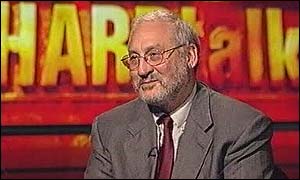 Jospeh Stiglitz is critical of the IMF The International Monetary Fund has brought poor countries to the verge of collapse because of its policies, according to a leading economist. Joseph Stiglitz, former chief economist of the World Bank, says the organisation, which often provides temporary financial assistance to poorer countries, had been a failure. Speaking on BBC's Hardtalk with Tim Sebastian, the Nobel economics prize winner said the restrictions the IMF imposed on countries, such as high interest rates and low spending, has often made the situation worse than before. "They are well intentioned," he said, "but in fact they failed and the price of the failure was borne disproportionately by the poor. "When they came in with billions they imposed policy that led to deeper unemployment." Making mistakes
He said: "Take the case of Indonesia. There were billions of dollars to bail out western creditors to pay back the banks. "When it came to a few measly millions of dollar for food welfare, food subsidies and fuel subsidies for the very poor they (The IMF) said 'no way there's no money.' The next day riots broke out and people died." The IMF has loaned billions of dollars to 56 countries across the globe and has admitted to making mistakes in the past. Yet Mr Stiglitz says the organisation has not learned anything. Crisis
He said the organisation had admitted to imposing the wrong economic policies when it was helping during the east Asian crisis in 1998. This happened when they asked for austerity measures such as higher interest rates and lower spending as a condition of the loan, resulting in the economy plunging deeper into crisis. "But the point is the next crisis that came along was Argentina and they didn't learn their lesson," he said, "they did the same kind of policy." Mr Stiglitz also pointed out that the strategy of lowering expenditure was the opposite of that followed by the US when it was in recession. Washington Despite his clear opposition to the way the IMF is run, he has been a vociferous critic for many years, Mr Stiglitz says he isn't bearing a grudge. Instead, he is making a "simple and obvious point", that as it employs people with stock market links, it is too close to the financial institutions and Washington. He said: "They approach the issue from a particular mindset. They reflect the interest and ideology of the financial market, and the Washington consensus. "Organisations staffed with people who have interests which overlap with Wall Street institutions are less likely to come up with policies which will help the poor countries of the world," added Mr Stiglitz. The World Bank and the IMF were formed in 1944 with differing but similar aims. The IMF was designed to help governments overcome balance-of-payments problems, while the World Bank has the role to invest in programmes mainly promoting reconstruction. | | 
See also:  07 Aug 02 | Business 13 Aug 02 | Business 09 Aug 02 | Business 13 Aug 02 | Business Top Hardtalk stories now: Links to more Hardtalk stories are at the foot of the page. | ||||||||||||||||||||||||||||||||||||||||||||||||||||||||||||||||||||||||||||||||||||||||||||||||||||||||||||||||||||||||||||||||||||||||||||||||||||||||||||||||||||||||||||||||||||||||||||||||||||||||
| |
|  E-mail this story to a friend E-mail this story to a friend |
|  |
| Links to more Hardtalk stories |
| | | ||
 | ||||
 | | Back to top
| ||
| ---------------------------------------------------------------------------------- To BBC Sport>> | To BBC Weather>> | To BBC World Service>> ---------------------------------------------------------------------------------- © MMIII | News Sources | Privacy |






 BBC News 24