|
 |
 | | | | | | ||||||||||||||||||||||||||||||||||||||||||||||||||||||||||||||||||||||||||||||||||||||||||||||||||||||||||||||||||||||||||||||||||||||||||||||||||||||||||||||||||||||||||||||||||||||||||
| | | You are in: Programmes: From Our Own Correspondent | ||||||||||||||||||||||||||||||||||||||||||||||||||||||||||||||||||||||||||||||||||||||||||||||||||||||||||||||||||||||||||||||||||||||||||||||||||||||||||||||||||||||||||||||||||||||||||||
|
| | Saturday, 1 February, 2003, 12:07 GMT Shadow of war falls over Iraq  Saddam Hussein says all Iraqis would resist an attack
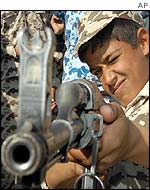
A hundred yards further on a group of other boys, a little older, came up with a cheery "Hello, how are you?" I suppose it was a symbol of what is happening here on a larger scale. There's all the official rhetoric about crushing any force that thinks it can invade Iraq, about sending American and British troops back in body bags.
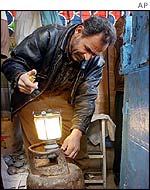
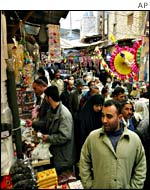
Then there's the Iraq that insists on its reasonableness in the face of US and British pressure. There's one official here who sums up the whole issue of whether Iraq does or does not have weapons of mass destruction this way: "You say I have �500 in my pocket. I say I don't. You look in my pocket and see it's empty and yet still you insist that I prove I don't have the money!" The response in Washington and London, I imagine, would be: "You've put it in another pocket" - the claim that chemical and biological weapons have been concealed. Facade of normality As the argument goes round and round, the UN inspectors carry on with their daily forays and ordinary Iraqis carry on with their lives. I've been asked by officials: "Doesn't everything seem normal?"
They're keen to play down the sense of crisis, feeling that only plays into the hands of the Bush administration. Some things do seem decidedly normal. Twice at my hotel I have found myself in the middle of exuberant wedding celebrations. Some of the cars bringing the wedding parties may be pretty rickety, thanks to the impact of sanctions, but they could hardly have been made to look more festive. But then you get the clues that there is something deceptive about all this, the apparent brushing off of the threat of war. I went to Saddam City on the outskirts of Baghdad, home to at least a million people. Many of those who have migrated from rural areas over the years have settled there; the poor hoping to cash in on Baghdad's boom times of the past. It began life as a shanty district. Today it's still common to see horse-drawn carts transporting all sorts of materials. Goats graze along the central reservations of the main roads. And there are piles of uncleared rubbish outside the businesses, the roadside markets and the homes that seem to stretch away endlessly to the horizon. Preparing for war I called on Hussein al-Durraji, a retired man who brought his family to the area in the 1970s. He was already armed, he said, and he had asked the authorities for more weapons for himself and his sons.
Across the road, I met Hassan Abdullah and her teenage son in the yard of their breeze block home. She dreamt of buying a plot so they could build a new and bigger home. But on her husband's meagre salary as a government worker, there was no chance of finding the �2000 or more it would cost. She hoped her son would become a doctor or an engineer her daughter a teacher. But there are more immediate preoccupations. "We are ready to sacrifice our lives," Hassan said, "but every time we hear about the prospects of war on the news, we die."
President Saddam Hussein has talked this week of preparations for defending the country, of successive trenches to wear down any invading force, of teaching the Americans that - in his words - "Iraq isn't Afghanistan." Drive the country's main highways and at the moment you don't necessarily see much in the way of military movements. On the road across the desert from Jordan, it was a fleet of new dustcarts that caught my attention, not military vehicles. 'In God's hands' There were just a few on a journey north to Mosul. This is one of the most historic cities in the Middle East, "the City of the Prophets", in an area inhabited as early as 6000 BC. In recent times it has seen rapid modernisation.
Now it could find itself in the path of any military advance from Turkey or from the Kurdish region of northern Iraq. That is something its citizens are only too well aware of. Talking to people in the market, the most common response was that the future lay in God's hands. I found a jeweller who was surprisingly buoyant about business. On Yaqdan Rafiq's wall was a fading picture of New York, complete with the World Trade Center's Twin Towers. He said he kept it there for the memory. As the Americans attempt to make a convincing link between Iraq and al-Qaeda, I'd bet that Yaqdan's photograph will get more than a passing glance in the coming weeks. | |
Internet links:  The BBC is not responsible for the content of external internet sites Top From Our Own Correspondent stories now: Links to more From Our Own Correspondent stories are at the foot of the page. | ||||||||||||||||||||||||||||||||||||||||||||||||||||||||||||||||||||||||||||||||||||||||||||||||||||||||||||||||||||||||||||||||||||||||||||||||||||||||||||||||||||||||||||||||||||||||||
 | |
|  E-mail this story to a friend E-mail this story to a friend |
|  |
| Links to more From Our Own Correspondent stories |
| | | ||
 | ||||
 | | Back to top
| ||
| ---------------------------------------------------------------------------------- To BBC Sport>> | To BBC Weather>> | To BBC World Service>> ---------------------------------------------------------------------------------- © MMIII | News Sources | Privacy |






 We are ready to sacrifice our lives