
|
 |
 | | | | | | ||||||||||||||||||||||||||||||||||||||||||||||||||||||||||||||||||||||||||||||||||||||||||||||||||||||||||||||||||||||||||||||||||||||||||||||||
| | | You are in: Programmes: From Our Own Correspondent | ||||||||||||||||||||||||||||||||||||||||||||||||||||||||||||||||||||||||||||||||||||||||||||||||||||||||||||||||||||||||||||||||||||||||||||||||||
|
| | Saturday, 11 January, 2003, 12:51 GMT When images and reality merge  Nasdaq has ever-moving share prices on its outer walls
Much have I travelled already, but a new global project has just sent me round the world for the first time. In quick succession, I visited America, Japan, South Korea and Thailand. And my frazzled conclusion is that most of the urban world is morphing into a television screen. Skyscrapers in Seoul, Bangkok and the main cities of China have been adorned with vast screens displaying relentless advertising for some time.
In Tokyo the other day, one of them displayed more than full-sized video footage of a subway train with such dazzling clarity that it was hard to believe that the carriages were not actually moving across the face of the department store. The messages are pretty dull, as it happens, but the technology is breathtaking. Back in New York, the same thing only more so has broken out in that familiar paradise of neon, Times Square. Of course, Times Square's bright lights used always to be a sharp contrast to the tawdry human squalor on the pavement far below. News, news, news But the crime and the peepshows have been pretty much banished by mayoral crackdowns, and Times Square is now engulfed with easy-going, gawping crowds. They have plenty to gawp at, because in New York, those TV screens have become entire buildings themselves. It happened like this - as vice fled the Square, upright regular businesses moved in. The investment bank Morgan Stanley was among the first some years ago, and its building is completely covered with streams of rapidly scrolling economic news.
Now the British news agency Reuters has gone one step further with its American HQ. At one end of the building is a giant screen that rises, oh, 15 storeys above the Square. Another huge arm of it reaches out horizontally across the face of the building, and this unprecedented display squirts the latest news outwards and upwards into the sky. Video architecture At the same time, as if to reassert the rescue of Times Square from the forces of darkness, several TV studios newly located there allow national and international audiences to have constant glimpses of the place, on the morning news. So the buildings that are screens provide an ever-dynamic backdrop for the television cameras. If this trend goes on, architects of the future will need no designs at all. They can leave the appearance of their buildings in the hands of the video editors, who will turn them into the pyramids (perhaps) in the morning and the Houses of Parliament at sunset.
It's a looking-glass world, and one dangerously close to making the television image more important, more familiar, more recognisable, than the real thing. The American TV news channels have embraced the idea by throwing multiple layers of rolling headlines, sport and weather across the screen while the newsreader and the pictures have dwindled to a postage stamp blob in the corner. Outdoor is best Old people hate this information overload, but for the mobile phone generation it's the way the world looks. It's a technique pioneered by Bloomberg business television, part of the media empire that made a fortune for Mayor Michael Bloomberg of New York. He is now trying to continue the clean-up of Times Square by banning dancing in unlicensed premises, even where the ladies keep their clothes on. Meanwhile, my trip around the world has left me with what I suppose is a moral dilemma of my own. The airlines may be nearly bankrupt, but they've cancelled so many flights that the ones that remain are chock-a-block full. Some 40,000 km (25,000 miles) crushed into economy class is bad enough, but when the seatbelt sign goes out, the first thing that normally happens is that the passenger in front reclines his seat back to within inches of my chin. If I lean back in turn, I'm inflicting the same misery on the person behind. On the mildly ethical principle Do as You Would Be Done By, I've kept my own seat upright all the way round the globe. It probably gives that unknown person behind me twice the space I've been confined to. All this means it's been too painful to look at the in-flight entertainment on those tiny screens just inches from my nose. If I want to watch television, I think I'll stick to the Great Outdoors. | | Top From Our Own Correspondent stories now:  Links to more From Our Own Correspondent stories are at the foot of the page. | ||||||||||||||||||||||||||||||||||||||||||||||||||||||||||||||||||||||||||||||||||||||||||||||||||||||||||||||||||||||||||||||||||||||||||||||||
 | |
|  E-mail this story to a friend E-mail this story to a friend |
|  |
| Links to more From Our Own Correspondent stories |
| | | ||
 | ||||
 | | Back to top
| ||
| ---------------------------------------------------------------------------------- To BBC Sport>> | To BBC Weather>> | To BBC World Service>> ---------------------------------------------------------------------------------- © MMIII | News Sources | Privacy |






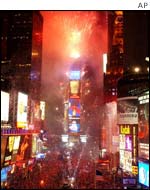
 Reuters' unprecedented display squirts the latest news outwards and upwards into the sky