|
 |
 | | | | | | |||||||||||||||||||||||||||||||||||||||||||||||||||||||||||||||||||||||||||||||||||||||||||||||||||||||||||||||||||||||||||||||||||||||||||||||||||||||||||||||||||||
| | | You are in: Programmes: From Our Own Correspondent | |||||||||||||||||||||||||||||||||||||||||||||||||||||||||||||||||||||||||||||||||||||||||||||||||||||||||||||||||||||||||||||||||||||||||||||||||||||||||||||||||||||||
|
| | Saturday, 4 January, 2003, 12:37 GMT Poll drives change through Kenya  Kenyans chose a 71-year-old with his leg in plaster
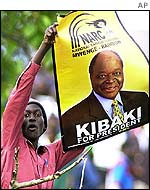
There is a revolution taking place in Kenya. No, it's not the one you heard about on the radio, on the television, and in newspapers. The sweeping victory of Mwai Kibaki, Kenya's first opposition leader to take power, and the crushing defeat of the party that ruled since independence, is just the beginning. This revolution is taking place on Kenya's roads. Hard-pressed commuters are fighting back.
I would see them every morning, as I drove to work, the men in blue, waving down packed commuter buses, and charging them with traffic violations. Real - or imaginary - it didn't really matter. Because Kenya is, in the words of a famous pop tune here, "nychi ya kitu kidogo". In Swahili, that means the "land of something small" - a euphemism for the "land of graft".
One young Kenyan, struggling to raise her son on �60 a month, summed it up graphically. "Moi's people," she told me, "ate from our table." Now, as I go to work, I see the policemen standing uncertainly on the street corners. I have no doubt that they are still busily out there, trying to extort cash. But the response is a bit more unpredictable. Taking a stand The newspaper this morning tells the cautionary story of one officer who didn't realise things had changed. He waved down the commuter bus. Well, isn't that what he always did?
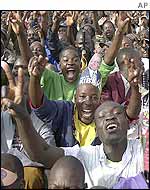
But his bus-load of passengers rebelled. They grabbed the money back - as well as all the other crumpled notes gathered that morning - from the hands of astonished officers. The money - they vowed - would go to charity. "President Kibaki pledged to fight corruption," one passenger said. "The war starts with us, the citizens." Kenyans suddenly feel empowered. When they voted out the old regime, they could hardly have done so more convincingly. The people - weary, fed-up, and impoverished - at last found their voice. They roared, blasting Kanu - the party which had ruled since independence - into oblivion. When I spoke to people at the polling stations, in the streets, or in Uhuru Park, on that memorable, euphoric inauguration day, there was optimism, but also real desperation. Kenya - once a vibrant free-market economy - has drifted far downstream. Can Kibaki deliver? Voters want what anyone else wants - jobs, food for their families, education, an end to the grotesque corruption which has disfigured life here. They chose a 71-year-old man with his leg in plaster from a road accident as their saviour. The question in everyone's mind: will Mwai Kibaki and his Rainbow Coalition be able to deliver? He's the leader of a potentially fractious alliance, formed just two-and-a-half months ago. It's a mix of old Kanu stalwarts, who'd fallen out with President Moi, and opposition politicians who've never before held power. There is plenty of goodwill to buoy the new president and his party along.
Problem is, they could be disappointed very easily. The problems in Kenya are so deep, the corruption so entrenched, that it will take time before the ship of state can be steadied, never mind turned around. But Kenyans want change - and they want it quickly. The polls held a sobering lesson for the new crop of MPs. The people - for the first time - flexed their muscles at the polling booths, and kicked out a rotten government. In five years' time, that could happen to the Rainbow Coalition. Democracy is maturing in Kenya. Politicians can no longer afford to disregard the electorate, while filling their own pockets. Lonely figure There was a lesson too for the new president, at Uhuru Park, scene of his inauguration. The hundreds of thousands who roared Mr Kibaki into office jeered the outgoing president.
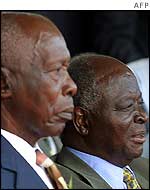
The leader, who up until a few weeks ago commanded awe and deference, had mud thrown at his car. As he flew out of State House for the last time, after a hasty meeting with Mr Kibaki, the former president cut a rather sad, and lonely figure. After 24 years, Kenyans were glad to get rid of him. But one shouldn't feel too sorry. During his two decades in power, Mr Moi has eaten well. Kenyans are ready, now, for a president who will serve them. | |
See also:  03 Jan 03 | Africa 30 Dec 02 | Africa 29 Dec 02 | Africa 13 Dec 02 | Media reports Top From Our Own Correspondent stories now: Links to more From Our Own Correspondent stories are at the foot of the page. | |||||||||||||||||||||||||||||||||||||||||||||||||||||||||||||||||||||||||||||||||||||||||||||||||||||||||||||||||||||||||||||||||||||||||||||||||||||||||||||||||||||
 | |
|  E-mail this story to a friend E-mail this story to a friend |
|  |
| Links to more From Our Own Correspondent stories |
| | | ||
 | ||||
 | | Back to top
| ||
| ---------------------------------------------------------------------------------- To BBC Sport>> | To BBC Weather>> | To BBC World Service>> ---------------------------------------------------------------------------------- © MMIII | News Sources | Privacy |






 Moi's people ate from our table