|
 |
 | | | | | | ||||||||||||||||||||||||||||||||||||||||||||||||||||||||||||||||||||||||||||||||||||||||||||||||||||||||||||||||||||||||||||||||||||||||||||||||
| | | You are in: Programmes: From Our Own Correspondent | ||||||||||||||||||||||||||||||||||||||||||||||||||||||||||||||||||||||||||||||||||||||||||||||||||||||||||||||||||||||||||||||||||||||||||||||||||
|
| | Saturday, 28 December, 2002, 13:07 GMT Free Nelson Mandela - I was there  Mandela ran against and beat the man who released him
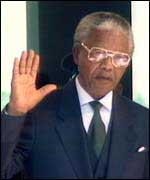
The BBC World Service has just celebrated its 70th anniversary. To mark this, leading BBC correspondents look back on the major world events they have covered in recent decades. Mike Wooldridge was the BBC's Southern Africa Correspondent when Nelson Mandela was released from prison in 1990 and looks back on an amazing day. For more than 40 years, South Africans lived under a system unique for its institutionalised racial divide.
Before apartheid finally gave way to non-racial democracy, thousands were killed in violence and many spent long periods in detention. Nelson Mandela left 27 years of imprisonment behind him to become president and one of the great iconic figures of our time, a symbol of reconciliation and the absence of bitterness. Gallows or life sentence Nelson Mandela became the world's most famous political prisoner, but he might just as easily have gone to the gallows. He knew it - in his famous speech at the Rivonia trail he did not deny planning sabotage, he said he had always fought against white domination and also black domination. He said he cherished the ideal of a democratic and free society and hoped to live to see it, but, if needs be, it was something for which he was prepared to die. His co-defendants had prevailed on him to put in the "if needs be", so as not to encourage the idea that they were seeking martyrdom. In the event, the judge believed that to silence them was enough. The future president began his life sentence crushing rocks on the notorious Robben Island. He was virtually within site of the Cape Town parliament where just four years earlier the then British Prime Minister, Harold Macmillan had talked of the "Wind of Change" blowing through Africa. It was to be many years before it would blow through South Africa itself. Free at last Some aspects of Nelson Mandela's imprisonment were extraordinary. Towards the end there were the secret contacts with the government, but also warders took him out for walks and even to cafes where he went unrecognised - the last published photograph of him was in 1962. Before his release, he lived in a cottage in the grounds of Victor Verster prison in a rural area some 50 kilometres from Cape Town, with his own cook. The suspense on the day he was to be freed was tremendous. The government had lifted the ban on the ANC and other illegal organisations a week earlier. In his cottage, Mr Mandela was filling crates with books and papers - like anyone on the move. Outside the prison gates a swelling crowd of well-wishers sang freedom songs. They brought large black, green and gold ANC flags, among the T-shirt slogans Welcome Leader Mandela. Mr Mandela, a stickler for punctuality, was late emerging, but when he did so a great roar went up - ANC!
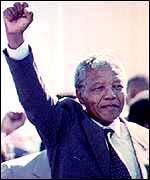
Mr Mandela, hand in hand with a beaming Winnie Mandela, thrust his fist in the air - and the crowd responded. ANC flags were even taken through the prison gates. Nelson Mandela later called the experience "breathtaking" - he said he'd expected to see only a few dozen people and he was taken aback by the sight of the world's media at the gate. I described these dramatic events for BBC listeners courtesy of a passing telephone engineer who rigged up a phone from the overhead line - everyone was caught up in the spirit of the occasion. Tough line So, now we knew what Nelson Mandela looked like - some signs of his years, yes, but a figure who cut a dash too. Now, how would he break the enforced silence of his long incarceration - would he be challenging or conciliatory? He was both. He spoke that evening at a heaving rally in Cape Town. He said the factors that force the ANC to take up its arms struggle still existed and he urged the world not to relax sanctions. But he also called President de Klerk a man of integrity and he appealed to whites to join in shaping a new South Africa. Nelson Mandela then spent his first night of freedom at the home of the Archbishop of Cape Town, Desmond Tutu, one of the most prominent of those who carried the torch of opposition to apartheid while Mr Mandela was in prison. The Archbishop remembers the conversation that night - being interrupted constantly by calls from around the world - the White House included. Soon Mr Mandela was on his way to Johannesburg, to the family home in the sprawling township of Soweto and another rousing reception from youngsters schooled in years of protest - the "liberation now, education later" generation. He thanked them but had another message for them too, firmly delivered - it was time to go back to school. From prison to president Nelson Mandela was known as the Black Pimpernel when he went underground for the ANC, now he was on his way to becoming the country's first black president. Only too well aware that political change was one thing, but removing the huge disparities in wealth and living standards, deepened by apartheid, would be quite another.
And yet it is certainly not unfair to draw comparisons between Nelson Mandela's release and the momentous events in Eastern Europe at the time. Some called it South Africa's 'Berlin Wall'. George Bizos, a lawyer, who's been close to Nelson Mandela for many years and was in the defence team at the Rivonia trial, told me when I was back in South Africa recently that he shed tears of joy when he heard of the release. Mr Mandela fell ill in jail in the 80s - the lawyer said that having been spared from a death sentence at the trial he had lived with the fear that Nelson Mandela might still never have come out of prison alive. | | Top From Our Own Correspondent stories now:  Links to more From Our Own Correspondent stories are at the foot of the page. | ||||||||||||||||||||||||||||||||||||||||||||||||||||||||||||||||||||||||||||||||||||||||||||||||||||||||||||||||||||||||||||||||||||||||||||||||
 | |
|  E-mail this story to a friend E-mail this story to a friend |
|  |
| Links to more From Our Own Correspondent stories |
| | | ||
 | ||||
 | | Back to top
| ||
| ---------------------------------------------------------------------------------- To BBC Sport>> | To BBC Weather>> | To BBC World Service>> ---------------------------------------------------------------------------------- © MMIII | News Sources | Privacy |