|
 |
 | | | | | | ||||||||||||||||||||||||||||||||||||||||||||||||||||||||||||||||||||||||||||||||||||||||||||||||||||||||||||||||||||||||||||||||||||||||||||||||||||||||||||||||||
| | | You are in: Programmes: From Our Own Correspondent | ||||||||||||||||||||||||||||||||||||||||||||||||||||||||||||||||||||||||||||||||||||||||||||||||||||||||||||||||||||||||||||||||||||||||||||||||||||||||||||||||||||
|
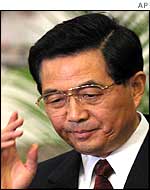
| | Saturday, 16 November, 2002, 13:01 GMT China's old habits die hard 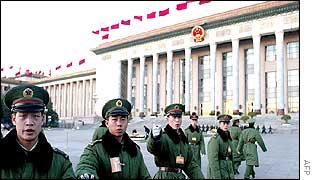 There was tight security around the Great Hall The world's largest ruling party has just ended its five-yearly Congress in Beijing and a new generation of Chinese leaders has emerged. Jiang Zemin is handing over to the virtually unknown Hu Jintao. Former BBC Beijing correspondent Tim Luard went back to report on this week's Congress. Arriving back this week with my young radio producer Kate, I was keen to show off the historic city I had known and for the most part loved in the late 1980s. This was where I crashed my bike into a huge pile of cabbages in the road.
This was where the tanks came in on that awful night. Or was it? Modern Beijing is like something out of science fiction: endless galaxies of ring roads, flyovers, vast intersections and gleaming monolithic tower blocks. The roads are gridlocked with cars and taxis; the air thick with pollution. Cycling or walking is almost out of the question now. As it salutes the end of Jiang Zemin's reign, the official press constantly trumpets the spectacular growth of the past 13 years. Unequal society It doesn't mention that the Communist Party has, in effect, become the capitalists' party. Some people - including party officials and their families - have become very rich indeed. You can see their chauffeur-driven cars outside palatial nightclubs where the three foot tall doorman wears a shiny red suit and a bowler hat - and where you can spend more on a brandy and a dish of pangolin (or scaly anteater) than a Chinese peasant earns in a year.
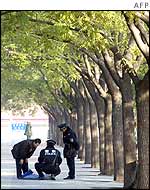
One thing that hasn't changed is the party Congress. I will always remember the awesome spectacle of my first Congress, in 1987, when Deng Xiaoping stepped down. I recall the huge hammer and sickle and billowing red banners in the Great Hall of the People as this tiny figure addressed his one and a quarter billion people. All was identical this time - except the figure in question was the stodgier and less revered one of Jiang Zemin. Tight security He spoke of socialism with Chinese characteristics - what was clear is that economic growth and power are all that matters. His successor - the even less charismatic Hu Jintao - almost certainly thinks the same way. Although officially hailed as the most open Congress yet, this one has been even more secretive and orchestrated than ever. As for security, well if they want to give the impression of a police state they could hardly have done better.
I am afraid Kate and I never even made it to the opening news conference for the record 800 foreign journalists. In fact we were later told that it had left them none the wiser as to what was going on behind all those closed doors. But the Great Hall and the whole of Tiananmen Square were so tightly sealed off we couldn't get anywhere near them. Lines of police frantically waved our taxi ever onward and away from the square. I was forced to record my radio piece - intended to be from the steps of the Great Hall - from a lonely hill, looking at the distant scene across the yellow rooftops of the Forbidden City.
As we approached, his white-gloved hand sprang up to the side like a penguin's flipper to bar our way. A woman at the gatehouse waved us over - one of millions of such women who help monitor the coming and goings of ordinary people throughout the land. Detained When she saw our Congress passes she called the police. We were eventually herded into a small office, subjected to long and rigorous questioning, shouted at and generally made to feel we were guilty of the gravest act of state espionage - all for coming to talk to an old professor. The head policeman stabbed his finger on line after line of official regulations warning police to beware of foreign journalists. He had found some - caught them red-handed - and was clearly savouring his victory.
They eventually handed her a grubby towel, reluctantly gave us back our passports and let us go. But game and tough though she is, Kate was still crying all the way back to the hotel. We were summoned to the foreign ministry next day and told - no more unauthorised interviews. Sinister China But we were also told to forget about the incident - don't let it affect your reporting of the new, open China. We have since heard that other journalists have been suffering similar experiences. And yes, it was a small incident - but not so easy to forget. There is something sinister and perverse about today's China. As the nightlife of the few gets wilder, the control of the many gets tighter. Beijing has been cleared for the Congress of its migrants and beggars. There are no real dissidents left anyway. Private entrepreneurs still have a free rein - they are the engine of economic growth after all - but even they are now being co-opted into the party. As China becomes a bigger power in the world its government is becoming ever more fascist. In the run up to the Beijing Olympic games one can't help thinking of Berlin in the 1930s. | |
See also:  15 Nov 02 | Asia-Pacific Internet links: The BBC is not responsible for the content of external internet sites Top From Our Own Correspondent stories now: Links to more From Our Own Correspondent stories are at the foot of the page. | ||||||||||||||||||||||||||||||||||||||||||||||||||||||||||||||||||||||||||||||||||||||||||||||||||||||||||||||||||||||||||||||||||||||||||||||||||||||||||||||||||
| |
|  E-mail this story to a friend E-mail this story to a friend |
|  |
| Links to more From Our Own Correspondent stories |
| | | ||
 | ||||
 | | Back to top
| ||
| ---------------------------------------------------------------------------------- To BBC Sport>> | To BBC Weather>> | To BBC World Service>> ---------------------------------------------------------------------------------- © MMIII | News Sources | Privacy |