|
 |
 | | | | | | ||||||||||||||||||||||||||||||||||||||||||||||||||||||||||||||||||||||||||||||||||||||||||||||||||||||||||||||||||||||||||||||||||||||||||||||||||||||||||||||||||||||||||||||||||||||||||||||||||
| | | You are in: World: From Our Own Correspondent | ||||||||||||||||||||||||||||||||||||||||||||||||||||||||||||||||||||||||||||||||||||||||||||||||||||||||||||||||||||||||||||||||||||||||||||||||||||||||||||||||||||||||||||||||||||||||||||||||||||
|
| | Saturday, 5 October, 2002, 05:11 GMT 06:11 UK Honduras's child killings 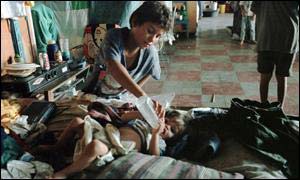 There are some 20,000 street children in the country
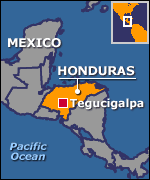
More than a 1,000 children and young people have been murdered during the last four years in Honduras, according to a new UN report. It also claims that the security forces are responsible for many of these killings, acting without fear of punishment. The UN urges the government in Tegucigalpa to take urgent action to prevent the summary executions and to bring those responsible to justice. Cynthia Carolina. She tells me she is 17. But she cannot remember when she was born. To me she looks 14, at a push 15. She has a two-year old-baby. I watch as she blows warm, moist breath into a plastic bag filled with glue. Her breath blends with the fumes of the solvent and then she inhales deeply, sucking it all back into her chest.
The glue is cheap and it delivers oblivion swiftly. It goes from the lungs swiftly into the bloodstream and on to the brain. Cynthia is a citizen of Atomica Street. This narrow, grey thoroughfare in the middle of Tegucigalpa is her world, where her life happens. She shares the doorways and street corner and whatever food she can beg with some other street children. 'Lost and broken' A boy with a face covered in bloody scars says he is Cynthia's boyfriend and the father of her child. Which child, I ask. The two-year-old or the one she is expecting. But the boy is so far gone from glue that he is making little sense. The conversation drifts off into a tumble of mismatched sentences. Just then a man - I guess he was in his 50s - walked by. Cynthia immediately walked up to him. She caressed him. He took some money from his pocket and then, noticing that we were watching, put it back again. They walked to the end of the street, out of sight. But Cynthia reappeared soon after. Nothing had happened, she said.
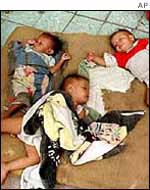
There are 20,000 of these children in Honduras - 150 million around the world. They exist because so much of our world is a mess. They live in countries where families cannot feed their young; where shacks are too small to house growing families; where natural disasters like hurricanes and earthquakes have driven hundreds of thousands from their homes; and where war and drought have reduced once prosperous nations to beggardom. No outcry In some Latin American countries, the police and vigilante groups have come up with their own solution to the problem of street children: shoot them, knife them, beat them to death. Disappear them.
A few days later the boys' bodies are found. They have been savagely tortured. Their genitals have been cut off. A few human rights groups make noise. But the streets are not filled with vast protesting crowds. There is no national uproar. No government falls. Honduras is not alone in this degree of indifference. In the minds of too many, street children equal crime equal social vermin... to be eradicated. Some street children are involved in crime. I have been robbed by them in Nairobi. I watched them pull a knife on a colleague in Mongolia. I have been harassed and annoyed by them and wished they would vanish from my sight. Getting tough on crime Sitting at traffic lights I have averted my gaze from their outstretched hands. Go away. You frighten me. You make me feel guilty. What do you expect me to do about you? Which, of course, is how society responds. But I still struggle to understand how a policeman or vigilante makes the journey to pulling the trigger or wielding the knife that kills a child.
It's a large part of the explanation. We know from all the wars of our time that men can kill children easily enough. What is harder to explain is our collective human indifference. The statistics are published every year; the aid agencies appeal for help for these children and they call for legislation to protect them. But the killing goes on and on. We are not scandalised. I cannot explain our indifference. Is it simply that we are weary of these miseries? In Tegucigalpa, the children have a disconcerting habit. It pulls you to the heart of this matter - to what is needed and what is denied. Some of the smaller ones throw their arms around your waist and cling to you. There is no aggression in the gesture. It is only longing. But you wonder how to respond. If you follow your instinct and show affection will the child expect more? Want to be rescued? But after a while standing there you realise they are not asking for anything at all. They long ago passed the stage of expecting adults to deliver them from the streets. All that is asked here is a gesture that recognises that they are human, not animal, not invisible. Which of course is nothing to ask - and everything. | | See also:  11 Aug 01 | Americas 14 Sep 00 | Americas 20 Jul 02 | Country profiles Internet links: The BBC is not responsible for the content of external internet sites Top From Our Own Correspondent stories now: Links to more From Our Own Correspondent stories are at the foot of the page. | ||||||||||||||||||||||||||||||||||||||||||||||||||||||||||||||||||||||||||||||||||||||||||||||||||||||||||||||||||||||||||||||||||||||||||||||||||||||||||||||||||||||||||||||||||||||||||||||||||
| |
|  E-mail this story to a friend E-mail this story to a friend |
|  |
| Links to more From Our Own Correspondent stories |
| | | ||
 | ||||
 | | Back to top
| ||
| ---------------------------------------------------------------------------------- To BBC Sport>> | To BBC Weather>> | To BBC World Service>> ---------------------------------------------------------------------------------- © MMIII | News Sources | Privacy  |