
|
 |
 | | | | | | |||||||||||||||||||||||||||||||||||||||||||||||||||||||||||||||||||||||||||||||||||||||||||||||||||||||||||||||||||||||||||||||||||||||||||||||
| | | You are in: Programmes: From Our Own Correspondent | |||||||||||||||||||||||||||||||||||||||||||||||||||||||||||||||||||||||||||||||||||||||||||||||||||||||||||||||||||||||||||||||||||||||||||||||||
|
| | Saturday, 7 September, 2002, 11:05 GMT 12:05 UK France in back-to-school mode 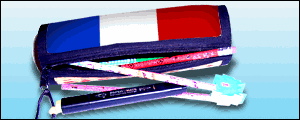
One of the last summer rituals, en-route to the ferry port, would be to pay a visit to one of these glittering emporia.
Or the bewildering array of geometric instruments, neatly packed in metal boxes lined with velveteen - a positive affront to the mangy kits then available at the local W H Smith. My parents would normally be prevailed upon to buy one of these - a special compass perhaps, with a variety of dials and switchable pencil sockets. It would greatly impress friends at school but prove of no practical benefit whatsoever. Yearly ritual Well, 30 years on and not much has changed. The stationers are all still there - every street in Paris has one - and if you are puzzled how they all manage to survive the chill winds of rationalisation, competition and globalisation, there is a very French explanation to it all.
La Rentree in France is much more than just the end of the summer break. As returning British vacationers will know, signs of it are everywhere from the end of August. The advertising hoardings are covered with pictures of beaming school-children, the newspapers carry a series of La Rentree front pages, focussing on the "challenges ahead for the government" and the "mood of the nation". Disgruntled workers - as there always are in France - unveil their plans for an "autumn of discontent". Partly of course it is because August simply doesn't exist as far as public life is concerned in France, so the return to normality is all the more marked. But somehow it is more than that. In French minds, La Rentree is a much-loved annual ritual, a combination of New Year, spring-cleaning, a minor religious festival and the party conference season all wrapped into one. Tools of the trade Anyway, one aspect of this for every family is the great school shopping expedition. At the close of the summer term, schools issue their pupils with lists of all that they must bring back with them at La Rentree. The list is phenomenal, and must be rigidly adhered to at pains of earning your child a severe ticking off. For my six-year-old child, there are sticks of glue, round-handled scissors, a dozen exercise books with varying line-spacings, text-books, dozens of plastic book covers, two pencil cases replete with different selections of writing and drawing utensils, and some of that lovely paper. As the child gets older, more and more is required, to the point where they have to labour to school weighed down by an impossible load of compulsory book-wear. Indeed a perennial concern of the main parent-teachers' association in France is the damage being done to children's backs by the weight of their back-packs. More and more children are quite sensibly resorting to the wheeled variety. Nanny state The point is that all this bumf costs a large amount of money, and where do the parents get it from? The stationers' of course. But then - and this is the deliciously French part of the story - where do the parents get the money from to go to the stationers to buy the material? And the answer - the government, perhaps, as well as their employers. In August the families of 5.5 million children - about half of those attending school - received from the government a one-off hand-out called the Allocation de Rentree Scolaire. This grant, which comes on top of the monthly family allowance - came this year to 250 euros (�158) per child. It is means-tested, which means if you earn more than a certain amount you do not get it. But salaries in France are low by British standards - it is often forgotten that per capita income here is among the lowest in Europe - and 3.2 million families do receive the benefit. And for those who do not, the chances are their employer will be helping out via a hand-out from the comite d'entreprise - the works committee - funded in large businesses by company and employee contributions, which ploughs money back into various subsidies for staff. In other words, it is a classic French example of the managed economy. The government gives money to families and says spend it on stationery - stationers stay open, everyone's happy. Of course you could argue that it is a monstrous intrusion into our private lives by a bossy state, telling us how to spend our own money when it should just let us have more of it and use it how we like. But to be honest the French are quite used to this level of interference and they don't mind it one bit. | | See also:  04 Sep 02 | Europe 02 Apr 02 | Europe 31 Aug 02 | Country profiles Top From Our Own Correspondent stories now: Links to more From Our Own Correspondent stories are at the foot of the page. | |||||||||||||||||||||||||||||||||||||||||||||||||||||||||||||||||||||||||||||||||||||||||||||||||||||||||||||||||||||||||||||||||||||||||||||||
| |
|  E-mail this story to a friend E-mail this story to a friend |
|  |
| Links to more From Our Own Correspondent stories |
| | | ||
 | ||||
 | | Back to top
| ||
| ---------------------------------------------------------------------------------- To BBC Sport>> | To BBC Weather>> | To BBC World Service>> ---------------------------------------------------------------------------------- © MMIII | News Sources | Privacy |






