|
 |
 | | | | | | |||||||||||||||||||||||||||||||||||||||||||||||||||||||||||||||||||||||||||||||||||||||||||||||||||||||||||||||||||||||||||||||||||||||||||||||||||||||||||||||||||||||||||||||||||||||||||||||||||||||||||||||||||||||||||||||||||||||||||
| | | You are in: Programmes: Crossing Continents | |||||||||||||||||||||||||||||||||||||||||||||||||||||||||||||||||||||||||||||||||||||||||||||||||||||||||||||||||||||||||||||||||||||||||||||||||||||||||||||||||||||||||||||||||||||||||||||||||||||||||||||||||||||||||||||||||||||||||||||
|
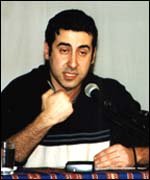
| |  Thursday, 3 April, 2003, 09:14 GMT 10:14 UK Thursday, 3 April, 2003, 09:14 GMT 10:14 UKA radical voice for Europe's Arabs  Dyab Abu Jahjah stresses the goal of "Arab unity"
As tensions increase due to the war in Iraq, Crossing Continents meets a controversial Belgian politician with a mission to shake up disaffected Arabs. At just 31, he has all the confidence, charisma and good looks of a rock star. His stage appearances, flanked by crop-haired bodyguards, are greeted with cheers and chanting from his fans. Giggling young women queue outside his dressing room for autographs. But Dyab Abou Jahjah is no light entertainer. A radical campaigner for the rights of Europe's disenchanted Arab communities, he is one of the most provocative figures in Belgian politics. Next month he will stand in Belgium's parliamentary elections. "He is actually our voice," says Rabhah, a 20-year-old from a Moroccan immigrant family in Antwerp. "What we think, he thinks."
Inequality Although Dyab Abou Jahjah is of Lebanese origin, it is among people like Rabhah, the second generation of Belgium's large Moroccan immigrant community, that he finds most support.
Technically they have full Belgian citizenship. But many feel their status is really second-class. "On television, when somebody is killed, they say... It was a Moroccan... a Moroccan Belgian did that crime," says 18-year-old Zaynab. "Why do they not just say it was a Belgian? Because they do not see us as Belgians." Part of Abou Jahjah's appeal is that he does not mince his words. He demands more jobs, better schools and housing for Belgium's Arab and other Moslem communities. Culture and language He travels to neighbouring countries to drum up support for the Arab European League, which he founded in 2000 to represent the interests of Arabs across Europe. He dismisses integration and assimilation. He sees it as degrading. "Assimilation is giving up your language, giving up your culture, and just keeping some kind of folklore that is irrelevant, " he says. "I could still eat certain dishes from the Middle East, but I cannot have certain thoughts that are based on ideologies and ideas from the Middle East." Far from shying away from Middle East issues, Abou Jahjah pushes them onto Belgium's political agenda. But many feel he goes too far. Anti-semitic?
Abou Jahjah's website is openly anti-Israeli and makes jibes at Antwerp's long-established Jewish community, which for centuries has worked in the city's world famous diamond industry. One entry states, "In Antwerp the power is in the hands of the Zionist lobby and the far-right racists." Abou Jahjah denies this is anti-Semitic. "Zionism is just a political ideology like any other ideology," he says. "It might sound offensive, but this is the reality of Antwerp." Certainly the far right is a reality in Antwerp. The anti-immigration Vlaams Blok party won a staggering 33% there in the last elections. The case against Sharon While Abou Jahjah's supporters say he is a vital counter-balance to Vlaams Blok, his critics accuse him of putting personal ambition before the wider goals he claims to represent.
They point to his involvement - or interference - in a groundbreaking legal case against the Israeli Prime Minister Ariel Sharon, for his alleged role in a massacre of Palestinians in Lebanon 20 years ago. While Abou Jahjah insists he helped initiate the case, Lebanese lawyers and Belgian politicians accuse him of hijacking it for his own political ends. "It is not good for him to say that his organisation filed the lawsuit because it is not true," says Senator Vincent Van Quickenbourne. "Politicising the case as he does makes it more difficult for the victims and lawyers to go ahead." How long Dyab Abou Jahjah will last in Belgian politics is hard to tell. But what is clear is that he has exposed grievances which are widespread amongst many of Europe's Moslem communities, as they feel increasingly threatened by the war against terror, the rise of right-wing parties and a new hostility towards immigration. And these are grievances which Europe's mainstream politicians would be unwise to ignore. BBC Radio 4's Crossing Continents was broadcast on Thursday, 3 April, 2003 at 1102 BST. | |
See also:  29 Mar 03 | Crossing Continents 07 Mar 03 | Country profiles 29 Nov 02 | Europe Internet links: The BBC is not responsible for the content of external internet sites Top Crossing Continents stories now: Links to more Crossing Continents stories are at the foot of the page. | |||||||||||||||||||||||||||||||||||||||||||||||||||||||||||||||||||||||||||||||||||||||||||||||||||||||||||||||||||||||||||||||||||||||||||||||||||||||||||||||||||||||||||||||||||||||||||||||||||||||||||||||||||||||||||||||||||||||||||
 | |
|  E-mail this story to a friend E-mail this story to a friend |
| |
| Links to more Crossing Continents stories |
| | | ||
 | ||||
 | | Back to top
| ||
| ---------------------------------------------------------------------------------- To BBC Sport>> | To BBC Weather>> | To BBC World Service>> ---------------------------------------------------------------------------------- © MMIII | News Sources | Privacy |







 Assimilation is giving up your language, giving up your culture, and just keeping some kind of folklore that is irrelevant