|
 |
 | | | | | | |||||||||||||||||||||||||||||||||||||||||||||||||||||||||||||||||||||||||||||||||||||||||||||||||||||||||||||||||||||||||||||||||||||||||||||||||||||||||||||||||||||||||||||||||||||||||||||||||||||||||||||||||||||||||||||||
| | | You are in: Programmes: Cashing In | |||||||||||||||||||||||||||||||||||||||||||||||||||||||||||||||||||||||||||||||||||||||||||||||||||||||||||||||||||||||||||||||||||||||||||||||||||||||||||||||||||||||||||||||||||||||||||||||||||||||||||||||||||||||||||||||||
|
| |  Tuesday, 17 September, 2002, 09:34 GMT 10:34 UK Tuesday, 17 September, 2002, 09:34 GMT 10:34 UK How Gift Aid can help charities 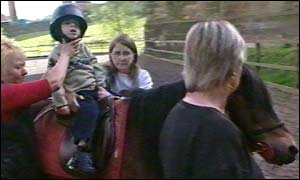 Lewis's riding school needs a special saddle for him Cashing In helped a charitable riding school save tax on donations received, through Gift Aid. How satisfying it would be if the taxman put his hand in his pocket every time you gave some of your hard earned cash to charity! Well there is a way to do just that. It's called Gift Aid and it allows a charity to reclaim from the Inland Revenue the tax on your donations. It's something many charities don't know about, but it is very simple to set up and start claiming valuable extra funds. It was one idea the money experts on Cashing In came up with to help a community riding school in Newcastle. Stepney Bank Stables gives young people from the local area the chance to ride, learn about and care for horses and ponies. It has 200 volunteers and six full-time staff. The cost of riding is kept low so as many people as possible can come along and use the facilities. It means half of the annual running costs of �90,000 has to be found through donations and fund raising. The staff and riders have been trying to raise enough to buy a special saddle for one of their young riders who has Cerebral Palsy.
The staff at Stepney Bank think the saddle could also be used for other children with similar disabilities. With every pound of funding already spoken for it's been difficult to get the money together. But this is where the taxman could help. John Whiting, tax expert at PricewaterhouseCoopers, did a few quick calculations when the people from Stepney Bank came along to the Cashing In roadshow looking for advice. He thinks that, using Gift Aid, they could claim back up to �1,000 from the donations they have had over then past year. That's possibly enough to pay for the saddle for Lewis. John Whiting's guide to Gift Aid Giving to charity Many people are happy to give to charity. What often makes them even happier about giving is the knowledge that, in the vast majority of cases, the Inland Revenue will add to their gift through tax relief. In the past to get tax relief people have had to sign up for Deeds of Covenant - a commitment for at least 4 years to make a regular gift to the charity.
All you need to do is make your donations to charity via the Gift Aid scheme and tax relief will follow. If you pay tax, Gift Aid operates by the charity being able to reclaim from the Inland Revenue basic rate tax on your gift. That increases the value of the gift you make to the charity. For example, if you give a total of �400 to various charities, the charities could reclaim �112.82, with today's 22% basic tax rate, and your gift is worth �512.82 to them. If you are a higher rate taxpayer, you can claim relief on the difference between the basic rate and higher rate of tax. The conditions for using Gift Aid are few. In essence you must:
It's possible to make payments by cash, cheque, credit card or even in a foreign currency. Incidentally, the declaration that you give to the charity must include your name and address, but doesn't even have to be in writing - you can do it by telephone in such a way that the charity can take a note of your details and send you a written record. Some charities, particularly those with membership schemes, might give you some entitlements to benefits. The Inland Revenue does have guidelines to how much these benefits can be by way of value - in essence they must be small, as you would expect. So you can't use Gift Aid when you actually buy things from a charity (though there's nothing to stop you topping up your purchases with additional amounts which are a genuine donation). Gift Aid is a UK relief so it only applies to gifts to charities established in the UK. However, if you support a foreign charity it may well have a branch in the UK that qualifies. One further way of giving to charities is that you can also give quoted shares. If you do this, you can actually get tax relief in full for the market value of the shares at the date of gift. There would be no Capital Gains Tax on the disposal either. The charity can't claim back any tax on the shares as such but can of course sell them and get all the proceeds tax-free. There are further extensions in the pipeline as well - there is a proposal that from next year you will be able to start gifting to charities directly with your Tax Return, perhaps by directing any repayments due to them. It's all part of the Chancellor's aim of "Getting Britain Giving"! | |
Internet links:  The BBC is not responsible for the content of external internet sites | |||||||||||||||||||||||||||||||||||||||||||||||||||||||||||||||||||||||||||||||||||||||||||||||||||||||||||||||||||||||||||||||||||||||||||||||||||||||||||||||||||||||||||||||||||||||||||||||||||||||||||||||||||||||||||||||
|  |
|  E-mail this story to a friend E-mail this story to a friend |
| |
| Links to more Cashing In stories |
| | | ||
 | ||||
 | | Back to top
| ||
| ---------------------------------------------------------------------------------- To BBC Sport>> | To BBC Weather>> | To BBC World Service>> ---------------------------------------------------------------------------------- © MMIII | News Sources | Privacy  |