|
 |
 | | | | | | |||||||||||||||||||||||||||||||||||||||||||||||||||||||||||||||||||||||||||||||||||||||||||||||||||||||||||||||||||||||||||||||||||||||||||||||||||||||||||||||||||||||||||||||||||||||||||||||||||||||||||||||||||||||||||||
| | | You are in: Programmes: Cashing In | |||||||||||||||||||||||||||||||||||||||||||||||||||||||||||||||||||||||||||||||||||||||||||||||||||||||||||||||||||||||||||||||||||||||||||||||||||||||||||||||||||||||||||||||||||||||||||||||||||||||||||||||||||||||||||||||
|
| |  Tuesday, 17 September, 2002, 09:33 GMT 10:33 UK Tuesday, 17 September, 2002, 09:33 GMT 10:33 UK Worth the paper it's written on? 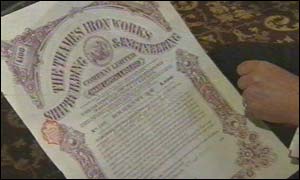 Adam Shaw and Justin Urquhart Stewart discovered another side to shares at the Cashing In roadshow. You're rummaging in the attic and among all the broken tennis racquets and back copies of What Caravan? you find an old share certificate. What can you do with it? The first thing is to find out if the company still exists and whether it's worth anything as a result. Who knows? You might be the long-lost majority shareholder of a FTSE-100 company. So contact the company registrar. If you don't know how to do that, get in touch with Companies House (0870 3333636). Dissolved They can let you know whether the company has changed its name or been dissolved. Their records go back about 150 years. The Stock Exchange also has comprehensive records, including name changes, dating back 100 years. The Stock Exchange Year Book, available at most large city libraries, gives contact information for most companies. If that does not work you can ask a commercial company to do a search for you. You'll have to pay, and most searches are fruitless. Trust Research Services, for instance, charge around �50 for a search and say that about 80% result in finding the shares have no stock market value at all. Debenture
The art of share certificate collecting is called scripophily and it's quite a little hobby. One such certificate is the debenture at the top of the page for the Thames Iron Works, which paid �4 a year. The company built the first armoured iron hulled battleship, called the Warrior, which was launched in 1860. Construction took place on the West Ham side of the River Lea - the works football team eventually changed its name to West Ham United. This share certificate has no stock market value but as a collectable it is worth about �70. Popular Another share certificate for the London and Westminster Bank, which became the NatWest Bank, is worth about �45. Obviously a certificate only has a value if someone is prepared to buy it. Scripophily is relatively new in this country, but it's very popular in countries such as the United States and Germany. Part of the appeal in the US is that share certificates were often very ornate. Some, especially for railroads, were almost works of art, with detailed drawings and beautiful script. Historic
Two years ago a first issue of the Standard Oil Company from 1871 was sold for $134,000 (�93,000). It helped that it carried the signature of John D Rockefeller, the company president. Something like that can really boost the value of a certificate. One of the important things about any certificate is its condition. This is graded on a six-point scale: If you want to become a scripophilist, how do you go about it? There are some dealers who specialise in bonds and shares, while others handle them along with coins, paper money etc. Catalogue Auction houses in Europe and the US hold scripophily sales several times a year. You can obtain a catalogue and vote by post if you wish. And, of course, there are many sites on the internet. Look at the links on the right of this page for some pointers. You do not have to spend a fortune to get into scripophily. Good quality certificates can be had for under �100. But heed the words of the International Bond & Share Society. Your pastime might turn out to be profitable, but if you are in scripophily as an investment, you're likely to be disappointed. | |
Internet links:  The BBC is not responsible for the content of external internet sites | |||||||||||||||||||||||||||||||||||||||||||||||||||||||||||||||||||||||||||||||||||||||||||||||||||||||||||||||||||||||||||||||||||||||||||||||||||||||||||||||||||||||||||||||||||||||||||||||||||||||||||||||||||||||||||||
|  |
|  E-mail this story to a friend E-mail this story to a friend |
| |
| Links to more Cashing In stories |
| | | ||
 | ||||
 | | Back to top
| ||
| ---------------------------------------------------------------------------------- To BBC Sport>> | To BBC Weather>> | To BBC World Service>> ---------------------------------------------------------------------------------- © MMIII | News Sources | Privacy |