|
 |
 | | | | | | ||||||||||||||||||||||||||||||||||||||||||||||||||||||||||||||||||||||||||||||||||||||||||||||||||||||||||||||||||||||||||||||||||||||||
| | | You are in: Programmes: Breakfast with Frost | ||||||||||||||||||||||||||||||||||||||||||||||||||||||||||||||||||||||||||||||||||||||||||||||||||||||||||||||||||||||||||||||||||||||||||
|
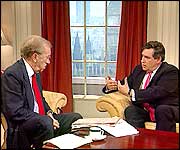
| |  On Sunday, 8 June, 2003, Sir David had a special programme on the Euro - the day before the Chancellor was due to announce the decision on whether or not a referendum was going to be held on Britain's entry to the Euro.
Sir David also talked to the interim President of Afghanistan, Hamid Karzai, who had been in London earlier in the week. The Chancellor insisted that "in principle" he wants Britain to join the European single currency - but only if the economic conditions are right. He said: "In principle I want to join the single currency. In practical terms we have got to be sure that all the conditions are in the right place." The Chancellor said he and Mr Blair had decided that after the public statement due on Monday 9 June, "we should put the pro-European case" and seek to unite the British people around a "pro-European consensus".
He said: "This is, after all, the most rigorous and comprehensive assessment that the Treasury has ever done on an economic issue. "We have been desperate to avoid the mistakes that were made when Britain joined the Exchange Rate Mechanism. The pro-European case "Right at the centre of it is 'what is the national economic interest for the future'. "I believe it is time to put the pro-European case. Indeed Tony Blair and I have decided and the Cabinet agreed on Thursday that after the statement tomorrow we should put the pro-European case. "The idea somehow that you have got to choose between Europe and America is quite ridiculous. "Europe must be working with America. The idea that Europe will never reform is ridiculous. The idea that we sell out our national economic interest every time we go to Brussels is ridiculous. "And I believe we can unite the British people ... around a pro-European consensus which I believe is vital for the future of this country."
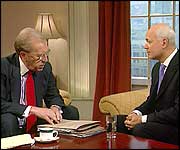
'Dangerous games' But Iain Duncan Smith insisted the government's economic tests were a 'smoke screen' and said the decision on euro entry was political. "The British people do not want to enter. They know it is a political decision and the economic arguments are peripheral. My belief is that the euro would be bad for our democracy and bad for our economy. "The chancellor says that these five economic tests are the only things that matter. In fact they come and go. "I think the whole point to make about this is they believe it in principle and yet they're playing dangerous games. My belief is the euro would be bad for our democracy and bad for our economy." Referendum Charles Kennedy called on the Chancellor to announce a referendum on the single currency but he said he thought it would be unlikely that the chancellor would announce that.
And he called for business and consumer interests to examine the possibilities of dual pricing so that people can 'get used to the idea that they can compare prices.' The Sunday newspapers were reviewed by Koo Stark, actress and photographer, and David Davies, acting chief executive of the Football Association. Disclaimer: The BBC will put up as many of your comments as possible but we cannot guarantee that all e-mails will be published. The BBC reserves the right to edit comments that are published. | | |||||||||||||||||||||||||||||||||||||||||||||||||||||||||||||||||||||||||||||||||||||||||||||||||||||||||||||||||||||||||||||||||||||||||
 |  |
|  E-mail this story to a friend E-mail this story to a friend |
|  |
| Links to more Breakfast with Frost stories |
| | | ||
 | ||||
 | | Back to top
| ||
| ---------------------------------------------------------------------------------- To BBC Sport>> | To BBC Weather>> | To BBC World Service>> ---------------------------------------------------------------------------------- © MMIII | News Sources | Privacy |