|
 |
 | | | | | | |||||||||||||||||||||||||||||||||||||||||||||||||||||||||||||||||||||||||||||||||||||||||||||||||||||||||||||||||||||||||||||||||||||||||||||||||||||||||||||||||||||||||||||||||||||||||||||||||||||||||||||||||||||||||||||||
| | | You are in: Programmes: Breakfast | |||||||||||||||||||||||||||||||||||||||||||||||||||||||||||||||||||||||||||||||||||||||||||||||||||||||||||||||||||||||||||||||||||||||||||||||||||||||||||||||||||||||||||||||||||||||||||||||||||||||||||||||||||||||||||||||||
|
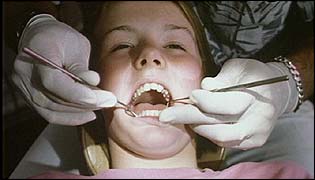
| |  Thursday, 19 September, 2002, 04:55 GMT 05:55 UK Thursday, 19 September, 2002, 04:55 GMT 05:55 UK Why NHS dentists are so hard to find Most of us know how hard it is to find a dentist that will take NHS patients. Exactly how tough has been spelt out in a damning report by the Audit Commission on dental care in England and Wales. It says 40 per cent of Dental Practices no longer take NHS patients - and, when they do, millions of pounds of taxpayers' money is being wasted on uneccessary treatment, such as scaling and polishing teeth. On Breakfast this morning, we put those points to the boss of the British Dental Association, Anthony Kravitz The Audit Commission is calling for urgent reform of dental care. It says, while people can usually access emergency dental care through NHS Direct, continuing care for adults and children is far harder to find. In some areas, no dentists will accept adult NHS patients onto their lists.
Some move into private practice, sometimes leaving communities with no NHS dental provision. On average, dentists estimate 15% of their patients are private, but in the south east that figure can be as high as 50%. And the Audit Commission warns the piecework system, under which dentists are paid per item of treatment provided, means there is a "perverse incentive" for unnecessary or cosmetic work. For example, scaling and polishing teeth is a common procedure which accounts for 11% of NHS family dentist spending. Temporary benefit But for most people, it is of temporary cosmetic benefit and rarely prevents or cures gum disease, the commission warns. The patient pays 80% of the cost of NHS treatment, with the health service footing the rest of the bill. In total, the NHS spends around �1.6bn each year on dental services. The Audit Commission has said the check-up system, which requires people to come in every six months, also needs to be reformed. Experts say because dental health has improved, in most cases a check-up every two to three years for adults and one to two years for children, is enough to pick up dental health problems. Unnecessary check-ups But dentists are not paid a fee for NHS patients who have not attended for 15 months, and they are dropped from the register. The Audit Commission says these rules also lead to huge numbers of unnecessary check-ups, costing the NHS at least �150m in England and �8m in Wales each year. But despite the overall improvements in dental health, people in deprived areas are seeing significant problems, with children's tooth decay levels as high as they were 15 years ago.
The commission is calling for several measures to revamp the system, including better information for patients about how to maintain dental health and how to ensure they receive the right treatments. Sir Andrew Foster, the Controller of the Audit Commission, said the current NHS dental care system did not provide the right incentives to ensure equal access for all. He said: "It needs to be changed, to become more flexible, and more focused on the needs of individual people." Postcode lottery "We all need access to continuing, preventative dental care. Dentists and NHS bodies must work together to empower patients and encourage them to take an active role in maintaining their dental health." The chairman of the British Dental Association's Executive Board, John Renshaw, backed the report's findings, but said: "We don't need more reports, we need action, through changes which are properly thought out and properly funded." Sheila McKechnie, director of the Consumers' Association, which has looked at the problems in NHS dental care in the past, said finding the problems people in many areas had finding an NHS dentist was "another example of our health postcode lottery". But a Department of Health spokesman said a lot of work was being done to improve NHS dental services and that there would be examinations of the check-up system and the benefits of water fluoridation. We want to hear your views: have you had problems finding - or keeping - a dentist? Did you feel your treatment was necessary | |
See also:  06 Aug 02 | Health 25 Apr 02 | Scotland 03 Jan 02 | Health 18 Sep 02 | Health Internet links: The BBC is not responsible for the content of external internet sites | |||||||||||||||||||||||||||||||||||||||||||||||||||||||||||||||||||||||||||||||||||||||||||||||||||||||||||||||||||||||||||||||||||||||||||||||||||||||||||||||||||||||||||||||||||||||||||||||||||||||||||||||||||||||||||||||
| |
|  E-mail this story to a friend E-mail this story to a friend |
| |
| Links to more Breakfast stories |
| | | ||
 | ||||
 | | Back to top
| ||
| ---------------------------------------------------------------------------------- To BBC Sport>> | To BBC Weather>> | To BBC World Service>> ---------------------------------------------------------------------------------- © MMIII | News Sources | Privacy |