|
 |
 | | | | | | ||||||||||||||||||||||||||||||||||||||||||||||||||||||||||||||||||||||||||||||||||||||||||||||||||||||||||||||||||||||||||||||||||||||||||||||||||||||||||||||||||||||||||||||||||||||||
| | | You are in: Programmes: Breakfast | ||||||||||||||||||||||||||||||||||||||||||||||||||||||||||||||||||||||||||||||||||||||||||||||||||||||||||||||||||||||||||||||||||||||||||||||||||||||||||||||||||||||||||||||||||||||||||
|
| |  Tuesday, 27 August, 2002, 07:09 GMT 08:09 UK Tuesday, 27 August, 2002, 07:09 GMT 08:09 UK Tackling Britain's 'waste mountain' 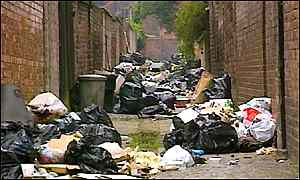 Only 12% of waste is recycled in England At the World Summit on Sustainable Development in South Africa, leaders will be discussing both how our modern way of living has harmed the environment, and also how new technology can be harnessed to protect our natural resources. Well Breakfast has been looking at how people here are doing their bit to improve the environment. Breakfast's Jane O'Brien was in Fife, Scotland. She spoke to various people about how aware they were of the environment. The other day I had a terse letter through my letter box complaining my recycling cans bottles etc had not been thoroughly washed - how much energy is involved in the hot water/soap and cleaning them out - surely in the year 2002 this is not necessary? I used to recycle everything until I realised my efforts were lining the pockets of privatly owned recycling companies. I suggest recycling should be run by and profited by our local authorities, at least we would all then feel a collective responsibility and a better reward factor. I live under the Braintree Council, Our rubbish is collected once a fortnight, one wheely bin only no extra bags. The week in the middle the recycling is collected. 60% of all household waste is successfully recycled. We are a family of three including a baby and even with our disposable nappies we don't fill our bin more than 2/3rds a fortnight. Why can't all boroughs do the same. I would absolutely love to recycle more plastic. Show me the place in North London to do so. There isn't. I end up saving all my plastics to take down to Sussex when I visit relatives and the plastics just pile up in my home. Plastics are one of the worst kinds of waste and there is virtually nowhere in London to recycle them. BBC News Online's Margaret Ryan reports on how Britain lags far behind its European counterparts when it comes to recycling. On any collection day black rubbish bags full of recyclable material line the streets of Britain. But instead of being reused, the majority of the waste ends up being sent to landfill sites. With stringent EU directives on recycling to be met, it is clear that something has to be done fast.
Households in England and Wales produced 25m tonnes of waste in 2000/01. But only 12% of household waste in England is recycled or composted, according to the government's own figures. In stark contrast in Switzerland more than half of all household waste is recycled, while in Germany the figure is at least 48 %. But the countries with the most exemplary recycling records have something in common - they combine kerbside collections with penalties for not recycling household waste. Heavy penalties If you live in Geneva, in Switzerland, and put recyclable material, like paper or glass, in your rubbish, you would be fined about 100 Swiss francs (�35). And in Germany, rubbish disposal is expensive whether paying per bag or per individual wheelie bins.
Dagmar Schmidt, of the UK charity Waste Watch, which encourages recycling, said there was a common element to the various schemes run by local authorities in countries with good recycling rates. "Recycling is made easy for people because there are kerbside collections," she said. This meant that the idea of charging those who chose not to use the recycling facilities was easier to swallow. "But in the UK people on the whole do not have kerbside collections that work," she added. Fly-tipping fears She argues that to guarantee a charging scheme would help encourage recycling, local authorities had to provide easy ways to get rid of waste - the alternative would be more fly-tipping.  But she is optimistic the situation could be turned around quickly once schemes were in place. In Australia the amount of household waste recycled was negligible until the 1990s when kerbside recycling collections were introduced. But within eight years of their introduction, 59% of waste was being recycled. And in Flanders, Belgium, the amount of waste recycled increased from 18% to 59% in just seven years through kerbside collection, Ms Schmidt said. Nearly half of homes in the UK do have access to kerbside collections, according to government statistics. Pilot project Hillingdon Council, in west London, is one authority which has introduced a fortnightly kerbside recycling scheme. Phased in to 80,000 households since 1998, it is to roll out to a further 20,000 homes by next year.
Under the scheme, paper, cardboard, cans and plastic bottles can be put in clear bags for doorstep collections. A spokeswoman said there were no statistics yet on the scheme's success, but early indications were that take-up of the service was gradually improving. The council was already exceeding national targets for recycling, she added. Future initiatives, such as kerbside green waste (garden waste) collection, were being planned from next year subject to government funding. The charity Friends of the Earth wants a new law for mandatory doorstep recycling to ensure such schemes are replicated. Environment Secretary Margaret Beckett said earlier this year: "We need all councils in England to do what they can to provide the public with easy-to-find and easy-to-use recycling facilities. "It is already happening in many parts of the country - it needs to happen in every borough". But there is undoubtedly a long way to go if ministers are to succeed in meeting EU directives to recycle 25% of household rubbish by 2005, rising to at least 33% by 2015. | |
See also:  11 Jul 02 | Politics 04 Mar 02 | Europe 21 Nov 01 | UK Internet links: The BBC is not responsible for the content of external internet sites | ||||||||||||||||||||||||||||||||||||||||||||||||||||||||||||||||||||||||||||||||||||||||||||||||||||||||||||||||||||||||||||||||||||||||||||||||||||||||||||||||||||||||||||||||||||||||
| |
|  E-mail this story to a friend E-mail this story to a friend |
| |
| Links to more Breakfast stories |
| | | ||
 | ||||
 | | Back to top
| ||
| ---------------------------------------------------------------------------------- To BBC Sport>> | To BBC Weather>> | To BBC World Service>> ---------------------------------------------------------------------------------- © MMIII | News Sources | Privacy |