|
 |
 | | | | | | |||||||||||||||||||||||||||||||||||||||||||||||||||||||||||||||||||||||||||||||||||||||||||||||||||||||||||||||||||||||||||||||||||||||||||||||||||||||||||||||||||||||||
| | | You are in: Programmes: Breakfast | |||||||||||||||||||||||||||||||||||||||||||||||||||||||||||||||||||||||||||||||||||||||||||||||||||||||||||||||||||||||||||||||||||||||||||||||||||||||||||||||||||||||||||
|
| |  Sunday, 4 August, 2002, 06:16 GMT 07:16 UK Sunday, 4 August, 2002, 06:16 GMT 07:16 UK Why sonar may harm whales and dolphins 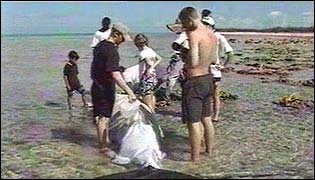 Environmental campaigners in America are concerned about a new danger to the world's whale population. It's sonar - powerful sound waves used by submarines and ships to track activity underwater. Research has shown that the sonar waves can be heard by whales and dolphins - and campaigners believe it may be causing the whales to beach. The American navy starts using a controversial new low-frequency system next month, even though some types of sonar have already been blamed for causing strandings. Breakfast's Jane O'Brien reports from the coast of Cape Cod, in the USA
In spite of the efforts of local people, six whales died.
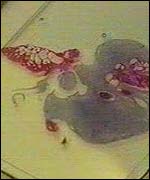
Each whale ear was sliced into a thousand sections and stained to reveal bone and blood. Red areas show the bleeding caused by exposure to military sonar. At the moment, we think sonar precipitated the strandings, " says Dr Darlene Ketten.
The sonar implicated in this stranding was mid-frequency. The new system is lower and louder and travels much further. The noise is the equivalent of a jumbo jet taking off. The American Navy says it needs a more powerful device to keep track of potentially threatening submarines. But it's continuing to research into the effects of sonar on marine life.
Norman Polmar, who's a consultant to the United States Navy says: "There is no finite correlation between low frequency sonar and negative effects on marine wildlife. "Can marine life hear it? Yes. Does it have a major effect? We don't know." This uncertainty alarms wildlife groups. They're now threatening legal action to protect sea-life from the sonar. Whale campaigner Jo Reynolds' view is unequivocal: "Very intense sound can have severe consequences, even death," he says
Whales are already under threat from pollution, fishing nets and collisions with boats. Although the research is inconclusive, conservationists say we should avoid any further risks to them. | |
| |||||||||||||||||||||||||||||||||||||||||||||||||||||||||||||||||||||||||||||||||||||||||||||||||||||||||||||||||||||||||||||||||||||||||||||||||||||||||||||||||||||||||
|  |
|  E-mail this story to a friend E-mail this story to a friend |
| |
| Links to more Breakfast stories |
| | | ||
 | ||||
 | | Back to top
| ||
| ---------------------------------------------------------------------------------- To BBC Sport>> | To BBC Weather>> | To BBC World Service>> ---------------------------------------------------------------------------------- © MMIII | News Sources | Privacy |




 It was a stranding of rare beak nosed whales in the Caribbean which gave scientists their first proof of the harm sonar can inflict.