|
 |
 | | | | | | |||||||||||||||||||||||||||||||||||||||||||||||||||||||||||||||||||||||||||||||||||||||||||||||||||||||||||||||||||||||||||||||||||||||||||||||||||||||||||||||||||||||||||||||||||||||||||||||||||||||||||||
| | | You are in: Programmes: Breakfast | |||||||||||||||||||||||||||||||||||||||||||||||||||||||||||||||||||||||||||||||||||||||||||||||||||||||||||||||||||||||||||||||||||||||||||||||||||||||||||||||||||||||||||||||||||||||||||||||||||||||||||||||
|
| |  Monday, 22 July, 2002, 04:23 GMT 05:23 UK Monday, 22 July, 2002, 04:23 GMT 05:23 UK Foot and mouth: lessons to be learned 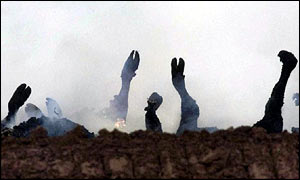 Seven million animals were slaughtered Criticism of the government's handling of the foot-and-mouth crisis last year is expected in an official inquiry's report due out on Monday. The Lessons to be Learned inquiry is expected to highlight ministers' failure to prepare properly for an outbreak on that scale and to halt the spread of the disease quickly enough.
The damage done to tourism from the effective closure of the countryside is also likely to be focused on by the last of three independent inquiries into the epidemic.
This investigation into what went wrong and the lessons that can be learned, chaired by Dr Iain Anderson CBE, included a series of public meetings in areas worst hit by the disease. But the questioning of government witnesses was in private. Rural Affairs Secretary Margaret Beckett will make a statement to the Commons at 1530 BST, after which the report will be made public. Army support The Anderson report will particularly criticise the government for failing to use the military in the worst affected areas in Cumbria and Devon until four weeks after the first confirmed case, says the Times. This was despite the fact that the previous official inquiry report into the 1967 outbreak recommended the immediate call-up of the army. It is anticipated that the report will also highlight on the inadequacy of the contingency plan in place at the outbreak's onset in February last year. This was based on there being 10 infected premises when there were at least 57 before diagnosis. This had risen to more than 2,000 by the time the last case was confirmed in September. Public inquiry The government has been criticised for stopping short of holding a full public inquiry into the outbreak. It did commission three reports into the handling of the disease. A scientific report by the Royal Society into the disease published last week recommended the use of emergency vaccination as an alternative to mass culling. Mass slaughter led to the loss of almost seven million animals and a compensation bill to farmers of �1.3bn. But former Agriculture Minister Nick Brown told an EU inquiry farmers had been against vaccination and there had not been enough doses of vaccine. The first of the three inquiries into the disease - the Policy Commission on the Future of Farming and Food, chaired by Sir Don Curry, reported its findings in January. | |
See also:  16 Jul 02 | N Ireland 16 Jul 02 | Science/Nature 16 Jul 02 | Science/Nature 16 Jul 02 | UK 16 Jul 02 | UK Internet links: The BBC is not responsible for the content of external internet sites | |||||||||||||||||||||||||||||||||||||||||||||||||||||||||||||||||||||||||||||||||||||||||||||||||||||||||||||||||||||||||||||||||||||||||||||||||||||||||||||||||||||||||||||||||||||||||||||||||||||||||||||
| |
|  E-mail this story to a friend E-mail this story to a friend |
| |
| Links to more Breakfast stories |
| | | ||
 | ||||
 | | Back to top
| ||
| ---------------------------------------------------------------------------------- To BBC Sport>> | To BBC Weather>> | To BBC World Service>> ---------------------------------------------------------------------------------- © MMIII | News Sources | Privacy |




 I did not agree with the mass culling, and the not clearing up of dead animals for up to a fortnight. The smell and pollution was intolerable. This should never have happened. I don't agree on mass culling, we have to agree on mass vaccination. We should have gone down this route. Vaccination is the way forward.