|
 |
 | | | | | | ||||||||||||||||||||||||||||||||||||||||||||||||||||||||||||||||||||||||||||||||||||||||||||||||||||||||||||||||||||||||||||||||||||||||||||||||||||||||||||||||||||||||||||||||||||||||||||||||||||||||||||||||||||||
| | | You are in: Programmes: Breakfast | ||||||||||||||||||||||||||||||||||||||||||||||||||||||||||||||||||||||||||||||||||||||||||||||||||||||||||||||||||||||||||||||||||||||||||||||||||||||||||||||||||||||||||||||||||||||||||||||||||||||||||||||||||||||||
|
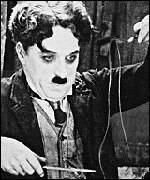
| |  Sunday, 21 July, 2002, 06:33 GMT 07:33 UK Sunday, 21 July, 2002, 06:33 GMT 07:33 UKChaplin's long wait for a knighthood  Chaplin's marriages to teenagers raised eyebrows On Breakfast this morning, we discussed the news that the silent film star Charlie Chaplin was denied a knighthood for twenty years, because of his personal life and political sympathies. "He was a very controversial figure in his day," John Marriott, from the Critics' Circle, told us. "He was never satisfied with his silent film success, he always wanted to direct films - and they were left-leaning and pacifist influenced. "He enjoyed poking fun at the establishment," said Marriott. Chaplin's private life was also colourful, by the standards of the day. He married four times - and two of his wives were just 16 years old, half his own age. "Chaplin ended his days in peace, but he was a disappointed man. After leaving the United States in the early 50s, he wasn't allowed back in. "They resented the fact that he'd never applied for American citizenship, although he'd made his career there," says Marriott. More details from BBC News Online's World Affairs Correspondent Paul Reynolds.
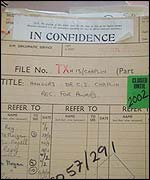
The papers are being put on the Record Office website from Monday, 22 July. They include a hostile report on Chaplin by the Foreign Office research department in 1956. This drew attention to his "communist" sympathies and to his morals - his marriages included two to girls aged sixteen and he had once lost a paternity suit.
Chaplin was eventually knighted in 1975. The episode shows the deep sensitivity of the issue, with views being sought from the British ambassadors in Washington and Switzerland (where Chaplin, still a British citizen, moved to in 1952 after leaving the United States). The damning research department memorandum is headed The United States' case against Mr Charles S Chaplin. 'Lurid' paternity suit Indeed much of the British reluctance to give Charlie Chaplin a knighthood stemmed from concern that the Americans, then in strong anti-communist mood, would not approve and the British honours system would therefore be "brought into disrepute". The memo says: "Mr Chaplin has alienated many of his former champions and admirers by allowing himself to be played up in certain European countries as a martyr to "hyper-Americanism". He has also added grist to his opponents' mill by his acceptance of public marks of favour from the communist orbit - e.g. his consenting to receive the "peace prize" of the communist-sponsored World Peace Council in June 1954".
The report points out: "Mr Chaplin managed to shock even the more broad-minded in the 1920s - e.g. his two marriages to 16-year-olds. Nor has the press allowed its readers to forget the Joan Barry paternity suit, the lurid details of which dominated headlines in 1943 and 1944 before Mr Chaplin was finally declared the legal father of Miss Barry's child." So keen was one official to point out the supposed moral lapse in his marriages that in another document the phrase "16-year-old women" was changed. The word "women" was crossed out and "girls" written in by hand. In 1969, the Foreign Office still opposed a knighthood and even by 1971 after the swinging sixties had redefined sexual and political views, it was very sniffy.
There was a lot of bureaucratic buck passing. From the North America department R A Vining (Miss) writes that an honour "would do no harm to our relations with the US". But she hands the final word to the Washington embassy with a classic piece of official weaselling: "But if Washington thinks otherwise, I would not venture to disagree". In Washington the British Ambassador Lord Cromer is a bit doubtful. Special honour He thinks Bob Hope, born in Britain but a US citizen, might be a better candidate. "I would just question whether such tardy recognition of Mr Chaplin's talents displayed so very long ago would really be desirable now", he comments without making a clear recommendation. But pressure on the British government was kept up. One letter to the Queen in 1972 is preserved. It was from Fergus Horsburgh in Canada. He, too, uses the phrase "let bygones be bygones". And times were a'changin'. In 1972, Charlie was given a special Oscar. The long delayed knighthood came three years later, just two years before Chaplin died.
| |
See also:  16 May 02 | Entertainment 24 Jan 02 | Entertainment 02 Jan 02 | Entertainment Internet links: The BBC is not responsible for the content of external internet sites | ||||||||||||||||||||||||||||||||||||||||||||||||||||||||||||||||||||||||||||||||||||||||||||||||||||||||||||||||||||||||||||||||||||||||||||||||||||||||||||||||||||||||||||||||||||||||||||||||||||||||||||||||||||||
 | |
|  E-mail this story to a friend E-mail this story to a friend |
| |
| Links to more Breakfast stories |
| | | ||
 | ||||
 | | Back to top
| ||
| ---------------------------------------------------------------------------------- To BBC Sport>> | To BBC Weather>> | To BBC World Service>> ---------------------------------------------------------------------------------- © MMIII | News Sources | Privacy |




 Confidential Foreign Office papers just released by the Public Record Office reveal how for years Charlie Chaplin was denied a knighthood.
  Mr Chaplin has alienated many of his former champions and admirers