|
 |
 | | | | | | ||||||||||||||||||||||||||||||||||||||||||||||||||||||||||||||||||||||||||||||||||||||||||||||||||||||||||||||||||||||||||||||||||||||||||||||||||||||||||||||||||||||||||||||||||||||||||||||||||||||||||||||||||||||||
| | | You are in: Programmes: Breakfast | ||||||||||||||||||||||||||||||||||||||||||||||||||||||||||||||||||||||||||||||||||||||||||||||||||||||||||||||||||||||||||||||||||||||||||||||||||||||||||||||||||||||||||||||||||||||||||||||||||||||||||||||||||||||||||
|
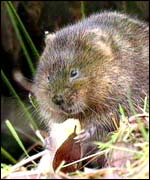
| |  Sunday, 21 July, 2002, 06:16 GMT 07:16 UK Sunday, 21 July, 2002, 06:16 GMT 07:16 UK At home on the river-bank 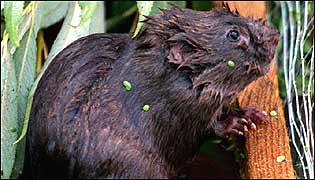 Establishing a Water Vole population in London Two hundred newcomers to London will be looking for homes this month. But these creatures won't be bothered by the capital's spiralling property prices. They're known as water rats or voles and by the end of July, 200 captive bred animals will have been released into Bedfont Lakes Country Park in West London.
The spread of American Mink and the destruction of watery habitats has led to a serious reduction in the water vole population, threatening the hairy tailed creatures with extinction. Wildlife organisation Mammals Trust UK is behind the project and have already released 100 voles. The animals depend on slow moving rivers, lakes and canals to build burrows in steep grassy banks.
The London Wildlife Trust is also involved in the project and wants information about Water Vole sightings. It is because of urban development, the destruction of natural river-banks and the use of concrete and metal reinforcements on canals and rivers that the water vole population has diminished.
Dr Valerie Keeble - who works for the Mammals Trust UK - is involved in the breeding project. She says: "Water voles have now completely disappeared from large areas of the country, and in the long term, reintroductions will be the only way to bring them back." Erosion by boats and the mowing and clearing of waterside areas has also played its part in reducing numbers. But it is worth remembering that they are protected species and it's illegal to disturb them or damage their habitats. | |
See also:  25 May 01 | Science/Nature Internet links: The BBC is not responsible for the content of external internet sites | ||||||||||||||||||||||||||||||||||||||||||||||||||||||||||||||||||||||||||||||||||||||||||||||||||||||||||||||||||||||||||||||||||||||||||||||||||||||||||||||||||||||||||||||||||||||||||||||||||||||||||||||||||||||||
| |
|  E-mail this story to a friend E-mail this story to a friend |
| |
| Links to more Breakfast stories |
| | | ||
 | ||||
 | | Back to top
| ||
| ---------------------------------------------------------------------------------- To BBC Sport>> | To BBC Weather>> | To BBC World Service>> ---------------------------------------------------------------------------------- © MMIII | News Sources | Privacy |