|
 |
 | | | | | | |||||||||||||||||||||||||||||||||||||||||||||||||||||||||||||||||||||||||||||||||||||||||||||||||||||||||||||||||||||||||||||||||||||||||||||||||||||||||||||||||||||||||||||||||||||||
| | | You are in: Programmes: Breakfast | |||||||||||||||||||||||||||||||||||||||||||||||||||||||||||||||||||||||||||||||||||||||||||||||||||||||||||||||||||||||||||||||||||||||||||||||||||||||||||||||||||||||||||||||||||||||||
|
| |  Tuesday, 9 July, 2002, 04:49 GMT 05:49 UK Tuesday, 9 July, 2002, 04:49 GMT 05:49 UK IVF mix-up heads for court 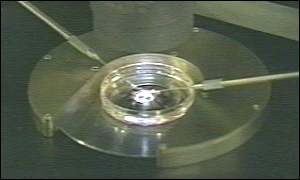 The clinic mixed donor samples A judge may have to decide what happens to black twins born to a white couple after an apparent blunder at an IVF clinic. It is possible that sperm from a black patient was used in error to fertilise eggs from the white woman, or that an embryo was implanted in the wrong woman. Neither the people involved nor the clinic can be named, and a court hearing has been scheduled for October to consider the legal status of the babies. It is thought the couple want to keep the twins. The case has prompted calls - including one from Labour peer and fertility expert Lord Winston - for tighter regulation to prevent a recurrence in the future.
A history of IVF Breakfast talked to Kate Brian has had two children using the IVF method. She has also written about it. She said:
 People are going to be worried about this story. There are already questions over embryos. Some of the women she has spoken to are worried about what happens to their spare eggs. There's a big psychological impact, IVF is already traumatic enough without this shadow being cast. People are going to be worried about this story. There are already questions over embryos. Some of the women she has spoken to are worried about what happens to their spare eggs. There's a big psychological impact, IVF is already traumatic enough without this shadow being cast.  Breakfast also talked to Barbara Hutchinson from the British Association for Adoption and Fostering. And to Clare Gorham, a black film maker and transracial adoptee. IVF involves mixing sperm from the man and eggs from the woman together in the laboratory, before they are placed in the woman. When the babies were born, the couple noticed that they were clearly dark-skinned, and suspected that something had gone wrong. Possible errors Professor Ian Craft, director of the London Fertility Centre, said mistakes have been made before.
"I have been aware of a situation at another centre whereby one couple received the wrong sperm from someone from a different ethnic group. "I fear that they might now be recommending that we have an extra layer of administration, but perhaps we should - we just cannot afford to have these things happen." Dr Vivienne Nathanson, of the British Medical Association, said that legally the woman who carries a child is the mother, regardless of its genetic inheritance. American baby An American mother, Donna Fasano of New York, gave birth to another couple's baby in 1998. Ms Fasano, who is white, gave birth to a black child and a judge ordered that she should hand the infant over to his biological parents. In Holland, suspicions were raised when a woman called Wilma Stuart, who is white, gave birth to dark-skinned twins in 1993. DNA tests showed the hospital had mistakenly mixed sperm from her husband with that of a black man from the Dutch Antilles. She kept the twins. The Human Fertilisation and Embryology Authority said inspections were regularly carried out to ensure that clinics met standards set out in its code of practice. "Clinical and scientific inspectors check that clinics have procedures in place to double-check the identification of the individuals undergoing treatment, the sperm and eggs at the time of insemination and the embryos and the patient at the time of embryo transfer." | |
See also:  08 Jul 02 | Health 31 Mar 99 | Americas 07 Aug 01 | Health 31 Mar 99 | Medical notes 08 Jul 02 | Health 08 Jul 02 | Health Internet links: The BBC is not responsible for the content of external internet sites | |||||||||||||||||||||||||||||||||||||||||||||||||||||||||||||||||||||||||||||||||||||||||||||||||||||||||||||||||||||||||||||||||||||||||||||||||||||||||||||||||||||||||||||||||||||||
| |
|  E-mail this story to a friend E-mail this story to a friend |
| |
| Links to more Breakfast stories |
| | | ||
 | ||||
 | | Back to top
| ||
| ---------------------------------------------------------------------------------- To BBC Sport>> | To BBC Weather>> | To BBC World Service>> ---------------------------------------------------------------------------------- © MMIII | News Sources | Privacy |