|
 |
 | | | | | | |||||||||||||||||||||||||||||||||||||||||||||||||||||||||||||||||||||||||||||||||||||||||||||||||||||||||||||||||||||||||||||||||||||||
| | | You are in: Programmes: BBC Parliament | |||||||||||||||||||||||||||||||||||||||||||||||||||||||||||||||||||||||||||||||||||||||||||||||||||||||||||||||||||||||||||||||||||||||||
|
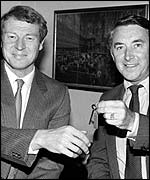
| |  Tuesday, 25 March, 2003, 15:13 GMT Tuesday, 25 March, 2003, 15:13 GMTDavid Steel bows out  'A manoeuverer, not a dreamer, a brilliant maximiser of small positions' - Hugo Young on David Steel After 38 years in frontline politics, Sir David Steel is to stand down this week. A keen advocate of Scottish devolution, the Presiding Officer can quit with peace of mind after seeing one of his biggest political ambitions achieved. Sir David returned from early retirement to stand for the Scottish Parliament. He began his career as a BBC journalist and reporter. But the son of a Church of Scotland Minister confessed recently he nearly chose the pulpit over politics. In 1965, he was elected to Westminster in a by-election representing Roxburgh, Selkirk and Peebles. Liberal leader For 12 years he led the Liberal Party, succeeding Jeremy Thorpe. In 1977, Labour Prime Minister Jim Callaghan offered him a Cabinet seat after he supported the government in a vote of no-confidence. A Lib-Lab pact was set up, but the coalition ended the following year.
He took the Liberals into an official Alliance. But for years he would be characterised in 'Spitting Image' as a puppet in David Owen's breast pocket. At the 1983 election, the SDP/Liberal Alliance polled 25.4% of the vote, while Labour slumped to 27.6%. But the first-past-the-post system meant the Alliance polled just 23 seats to Labour's 209 - while the Conservatives won a landslide victory. The Labour faithful blamed the Alliance for shattering Labour's chances and helping Thatcher's Conservatives. In 1987, David Steel proposed a formal merger. And although many movers and shakers in the SDP agreed (including Charles Kennedy), his political ally David Owen remained adamant the SDP should remain a separate distinctive force. Relations between the 'two Davids' soured. David Owen never aligned himself to what was to become the Liberal Democrats, and today sits in the Lords as a Cross-Bencher. Merger troubles In January 1988, Steel re-opened negotiations with the new SDP Leader Bob McLennan for a formal merger of the parties. They decided on a fresh programme, rather than a mix of both parties' policies. But leaks of the document stirred opposition from all sides: Steel dubbed it 'the dead parrot document.' Its launch was cancelled, and the future of a strong third party delayed. When a merger was finally agreed, Steel chose not to run for party leader.
Paddy Ashdown led the Liberal Democrats for eleven years, and David Owen's SDP folded. In 1990, David Steel was knighted, and in 1997 he left the Commons to sit as Lord Steel of Aikwood. Devolution - for which he had campaigned since the 1980s - proved irresistible for Steel. He relinquished retirement to help draft the Scotland Act - into which was written the proportional representation long fought for by his party - and later stood for the Scottish Parliament. His fellow MSPs elected him the Parliament's first 'Speaker' - a term he would like to see instead of the 'bizarre' Presiding Officer. He has been instrumental in embedding the institution firmly into the country's political landscape. It is easy to underestimate how different the political landscape might be today without Sir David's political manoeuverings. Steel's thumbprint in political history will be clearly marked; a founding father of modern three-party politics, an architect of Scottish devolution. | | Internet links:  The BBC is not responsible for the content of external internet sites | |||||||||||||||||||||||||||||||||||||||||||||||||||||||||||||||||||||||||||||||||||||||||||||||||||||||||||||||||||||||||||||||||||||||
 | |
|  E-mail this story to a friend E-mail this story to a friend |
| |
| Links to more BBC Parliament stories |
| | | ||
 | ||||
 | | Back to top
| ||
| ---------------------------------------------------------------------------------- To BBC Sport>> | To BBC Weather>> | To BBC World Service>> ---------------------------------------------------------------------------------- © MMIII | News Sources | Privacy |




 A manoeuverer, not a dreamer, a brilliant maximiser of small positions rather than a field marshal who might transform the course of the war